
Discover The Best Of Kumamoto: From Aso To Kurokawa Onsen In Kyushu
-
Kumamoto
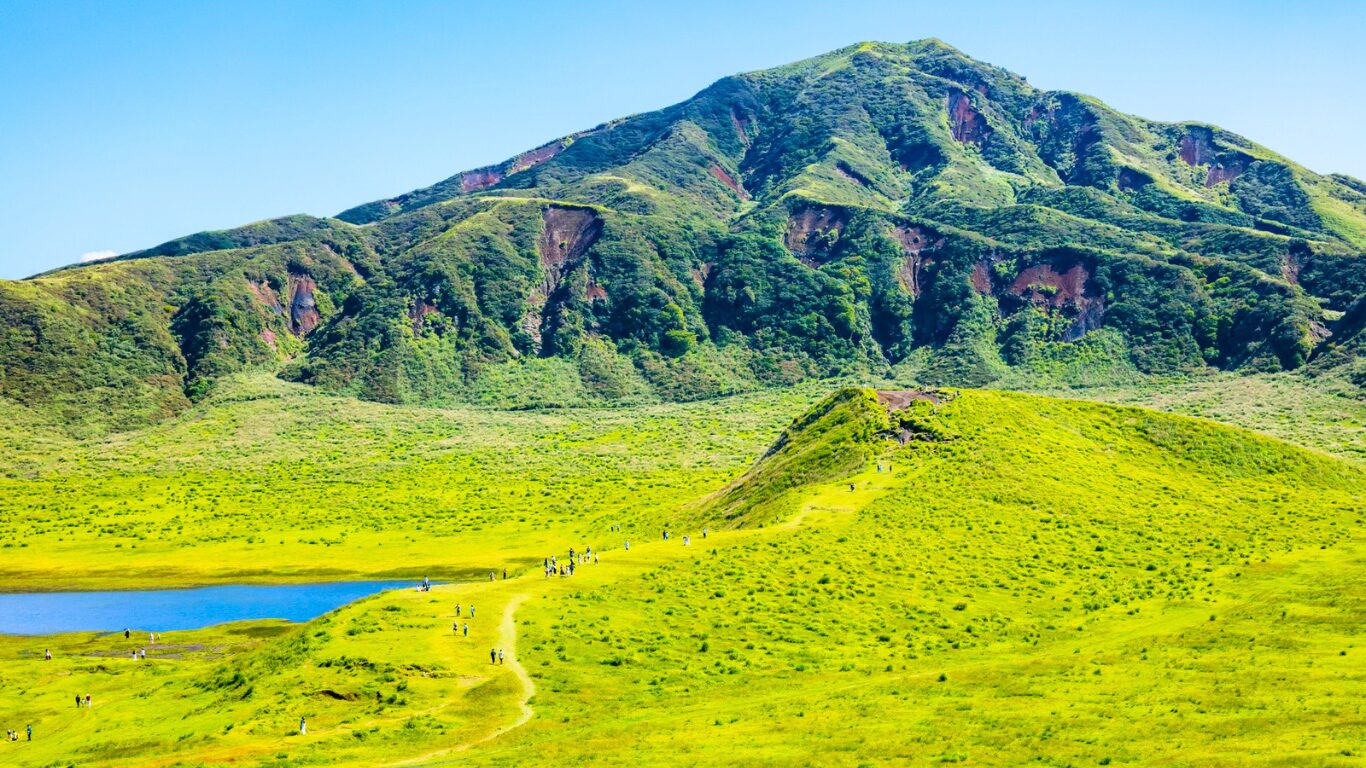
Fukuoka may often be the first stop for many travellers visiting Kyushu, especially with the increasing availability of Singapore to Fukuoka Direct Flight options. But beyond the bustling areas of Fukuoka and Hakata lies another side of Japan, where vast volcanic landscapes, hot spring towns, and countryside experiences begin to unfold. From the sweeping scenery of Aso to centuries-old castles and traditional cultural experiences, Kumamoto Prefecture offers a slower and more scenic side of Japan to explore.
While Kumamoto, Japan is often known for landmarks like Kumamoto Castle and the increasingly popular ONE PIECE statues inspired by the globally famous Japanese anime and manga series ONE PIECE, the prefecture offers far more than just sightseeing. Here, you can cycle through one of the world’s largest volcanic calderas, soak in open-air baths surrounded by mountains at Kurokawa Onsen, discover centuries-old artisan crafts, and even step briefly into the world of the samurai. Visitors can also learn about the inspiring story behind the ONE PIECE Kumamoto Revival Project, where iconic anime characters became symbols of hope and resilience following the 2016 earthquake.
What makes Aso especially memorable is how dramatically the scenery changes from what many travellers typically imagine Japan to be. Vast grasslands, fresh mountain air, and open landscapes stretch endlessly across the region, revealing a side of Japan that feels completely different from the usual neon-lit streets and crowded city attractions. Depending on the season, the scenery transforms entirely, which is also why Aso continues to appeal even to repeat visitors to Japan. Beyond sightseeing, the region also offers experiences deeply connected to local Japanese culture, from agricultural activities and countryside stays to traditional hot springs and regional food culture.
One of the best ways to fully experience Kumamoto is by travelling via private car. While transportation within Kumamoto City is convenient, many of the region’s most scenic destinations are spread across wider areas like Aso and Kurokawa Onsen. Travelling by private vehicle allows for a far smoother and more comfortable trip, especially when carrying luggage or travelling between multiple destinations across Kyushu. Rather than worrying about routes or train schedules, travellers can simply enjoy the changing landscapes along the way. For those planning a multi-city itinerary from Fukuoka to Kumamoto, we can help arrange private transfer services to make travelling across Kyushu more convenient and comfortable.
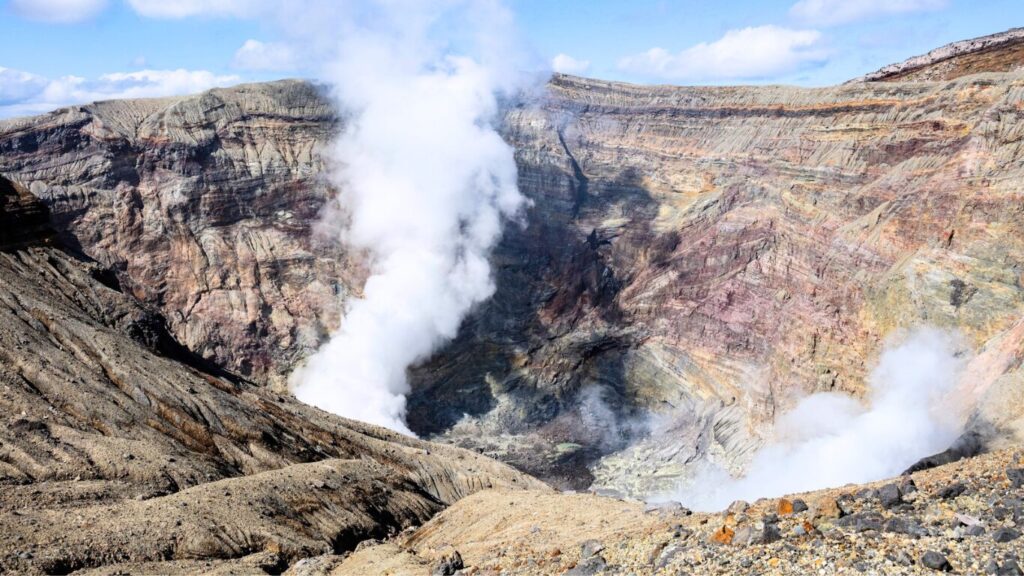
Often referred to as both the “Land of Fire” and the “Land of Water,” Kumamoto’s identity has long been closely connected to its natural environment and geography. The nickname “Land of Fire” is closely linked to the dramatic presence of Mount Aso, one of the world’s largest active volcanoes, as well as ancient legends surrounding mysterious fires seen across the region centuries ago. At the same time, Kumamoto is also known as the “Land of Water” due to its exceptionally abundant groundwater and natural springs. In fact, Kumamoto City is one of the few major cities in Japan where tap water comes entirely from natural groundwater sources. Filtered naturally through volcanic layers formed by Mount Aso over thousands of years, the water is known for its purity and mineral-rich quality, playing an important role in shaping Kumamoto’s agriculture, food culture, and everyday life. These natural landscapes and surroundings continue to shape the unique character of Kumamoto today.
In this guide, we explore Kumamoto through three different experiences: discovering the region’s rich history and traditions in Kumamoto City, exploring the magnificent natural landscapes of Aso, and unwinding amidst the mountain surroundings of Kurokawa Onsen.
A Look Into Kumamoto’s History And Traditions
Exploring Kumamoto Castle
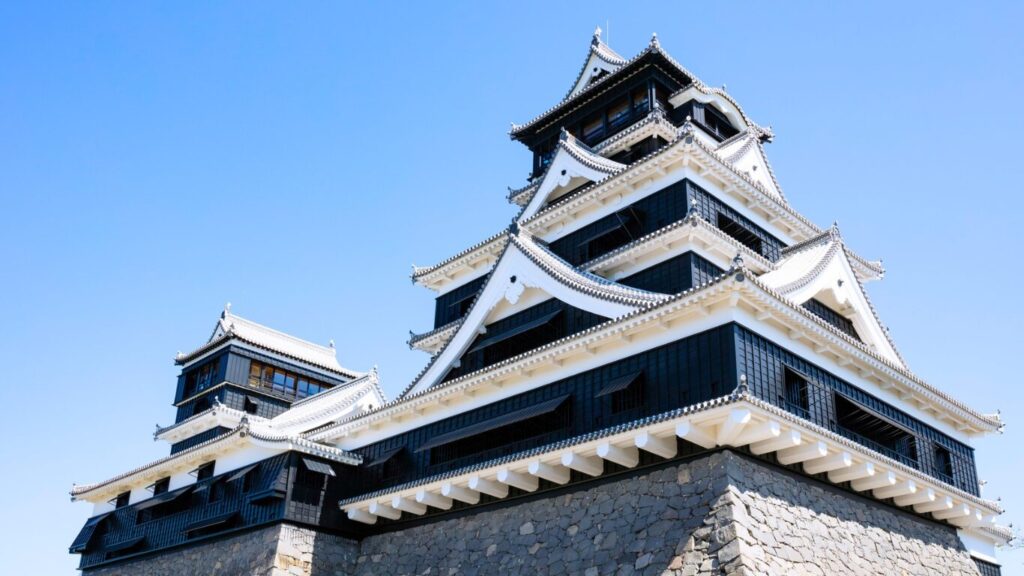
One of the most well-known landmarks in Kumamoto, Kumamoto Castle is widely regarded as one of Japan’s most impressive castles for its striking defensive design and historical significance. Built in the early 1600s by feudal lord Kato Kiyomasa, the castle became known as one of Japan’s strongest fortresses. Its curved stone walls were specially designed to become steeper towards the top, making them extremely difficult to climb. It was even said that not only samurai, but even agile ninjas, would struggle to scale them.
Although the original large and small keeps were destroyed by fire in the late 1800s, they were later reconstructed and continue to overlook the city today. The 2016 Kumamoto earthquake also caused major damage across the castle grounds, including collapsed stone walls and fallen roof ornaments from the castle keep. Restoration of the castle became an important symbol of recovery for the region, with the castle officially reopening in 2021.
Today, visitors can head up to the top floor of the castle to enjoy panoramic views across Kumamoto City, with even the distant Aso mountain range visible on clearer days. Beyond the main keep, there are also several smaller areas worth exploring, including historic turrets, defensive gates, underground passageways, and structures such as the Uto Yagura turret, which still retains parts of its original Edo-period construction.
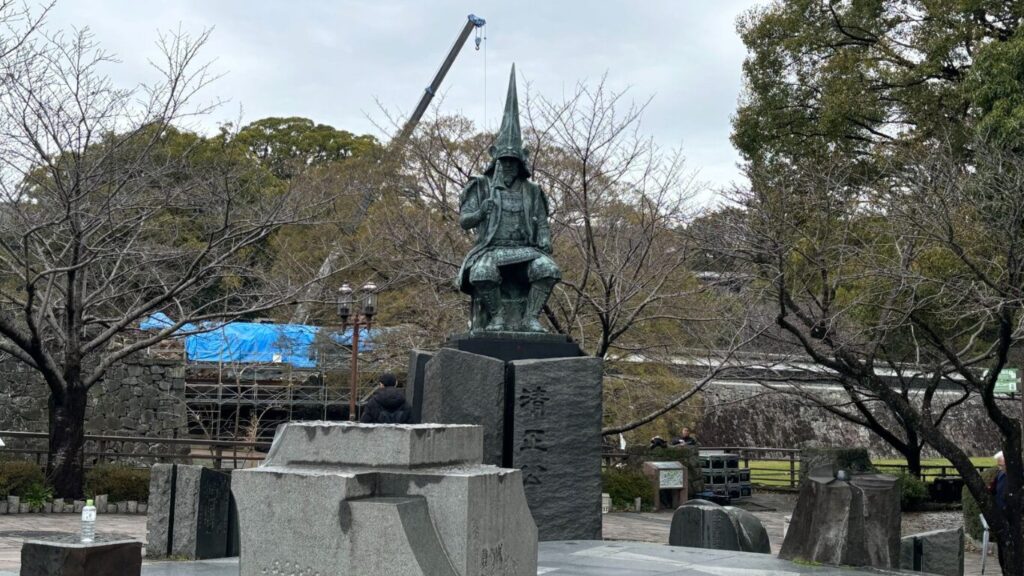
Inside, exhibitions introduce visitors to Kumamoto’s samurai history, castle architecture, and local culture. During spring, cherry blossoms surrounding the castle grounds create one of the city’s most popular seasonal views, while autumn brings colourful foliage across the historic landscape.
Discover The Art Of Higo Zogan (Traditional Metal Inlay Craft)
As part of Kumamoto’s long-standing history and traditions, another cultural experience worth exploring is Higo Zogan, a traditional metal inlay craft that has been preserved in the region for generations. Originally developed during the Edo period to decorate samurai sword fittings and gun barrels, the craft later evolved into jewellery, accessories, and decorative pieces that are still produced today.
Widely recognised as one of Kumamoto’s representative traditional crafts, Higo Zogan is known for its elegant contrast between gold and silver detailing set against a deep black iron surface. Unlike more elaborate styles of metalwork, the beauty of Higo Zogan feels far more understated and refined, reflecting the aesthetics and discipline closely associated with samurai culture.
The craft dates back to the early Edo period and is believed to have been established by a gunsmith named Hayashi Matashichi, who introduced intricate gold and silver inlay techniques onto firearm barrels and sword fittings after learning the craft in Kyoto. Over time, the technique evolved under the support of the Hosokawa clan and eventually became one of Kumamoto’s most recognised artisan crafts.
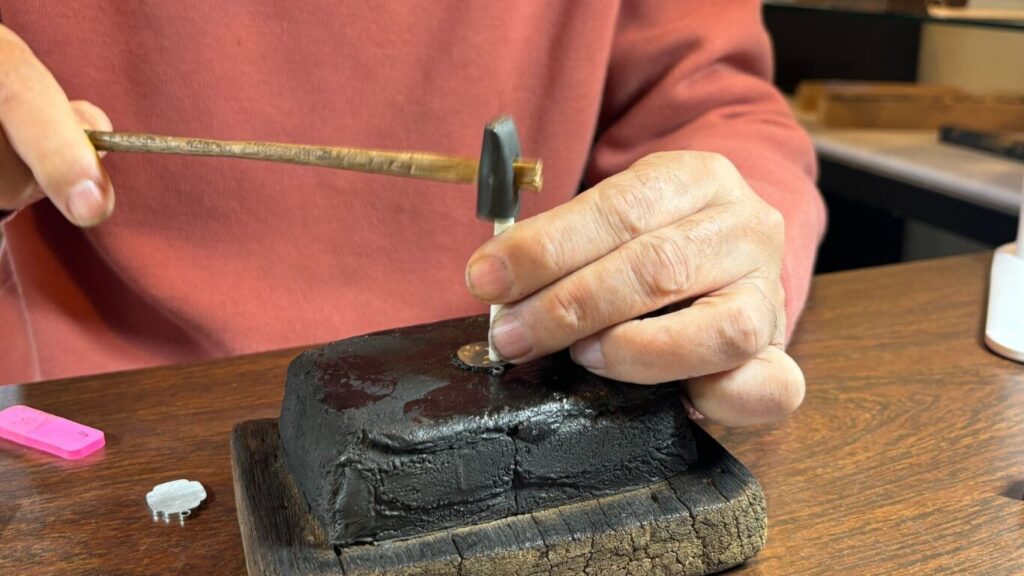
What makes the experience especially interesting is seeing how much patience and precision goes into even the smallest details. Despite the craft’s centuries-long history, many techniques are still carried out largely by hand today.
In recent years, Higo Zogan has also gained popularity among international visitors looking for uniquely Japanese cultural experiences and souvenirs. To make the workshops more accessible, some studios provide illustrated guides and videos to help overcome language barriers. The sessions are beginner-friendly, including for children from elementary school age and above, with participants able to experience hammering gold and silver into the iron surface themselves. Finished pieces are typically completed by the craftsmen afterwards and delivered at a later date.

Some workshops also create modern designs inspired by Kumamon, Kumamoto’s widely recognised mascot character, making Higo Zogan feel more approachable even for first-time visitors discovering Japanese artisan culture. For travellers interested in experiencing the workshop themselves, we can also help arrange Higo Zogan workshop experiences as part of your Kumamoto itinerary.
Slow Down At Suizenji Jojuen Garden
Source: ©熊本県観光連盟
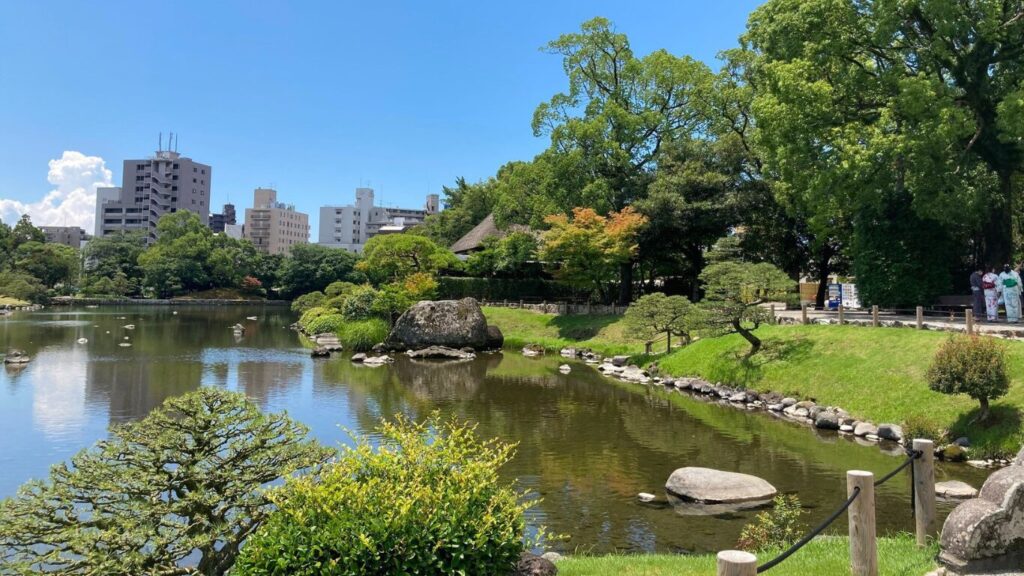
Located in the heart of Kumamoto City, Suizenji Jojuen Garden offers a quieter and more scenic side of the city away from the busy streets nearby. Originally established during the Edo period by the Hosokawa clan, the garden first began as a tea house area built around natural spring water before gradually expanding into the garden visitors see today.
Beautiful ponds, miniature hills, stone bridges, and carefully maintained pine trees come together to create a serene and picturesque setting. One of the garden’s most recognisable features is a small hill designed to resemble Mount Fuji.
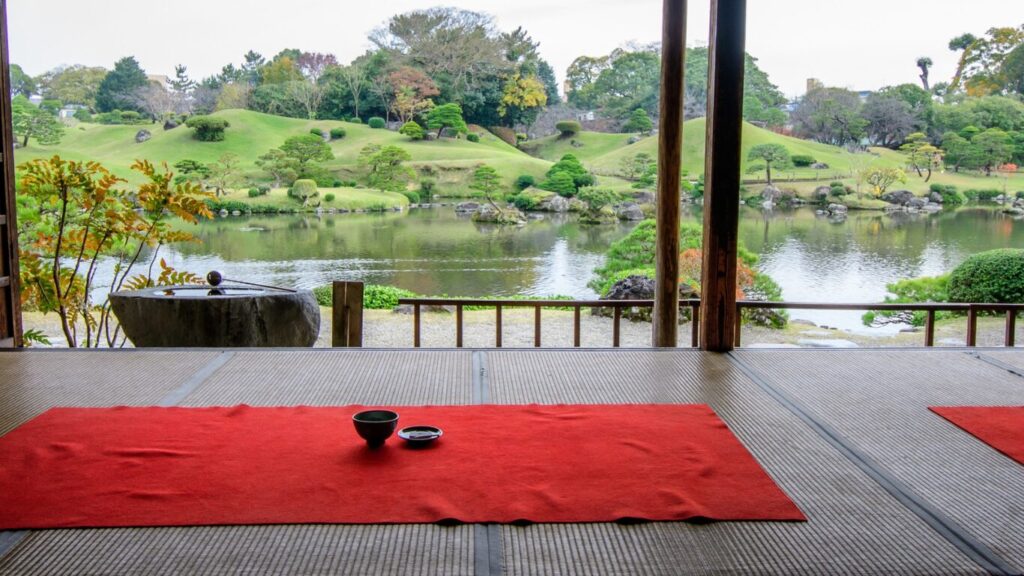
Enjoy a cup of matcha at one of the traditional tea houses overlooking the garden while taking in the tranquil surroundings. Depending on the season, the atmosphere also changes significantly, from cherry blossoms and fresh greenery in spring to colourful autumn foliage later in the year.
Beyond the scenery, visitors can also explore historical and cultural spots around the grounds, including Izumi Shrine, traditional Noh theatre facilities, and displays featuring the famous “Higo Rokka,” a collection of six traditional flower varieties associated with Kumamoto. Traditional annual events are also still held here throughout the year, preserving the garden’s longstanding connection to Kumamoto’s cultural heritage.
Step Into The World Of The Samurai At Kumamoto Musashikan Dojo
For travellers looking for a more immersive cultural experience, Kumamoto also offers the chance to experience Iaido, the traditional Japanese martial art of sword drawing closely associated with bushido, the samurai code that emphasises discipline, respect, and self-control.
At Kumamoto Musashikan Dojo, beginners can learn the basics of sword handling, posture, and movement while dressed in traditional hakama and martial arts attire. The experience feels especially meaningful in Kumamoto, where legendary swordsman Miyamoto Musashi spent his later years and developed the Niten Ichi-ryu swordsmanship style later documented in The Book of Five Rings.
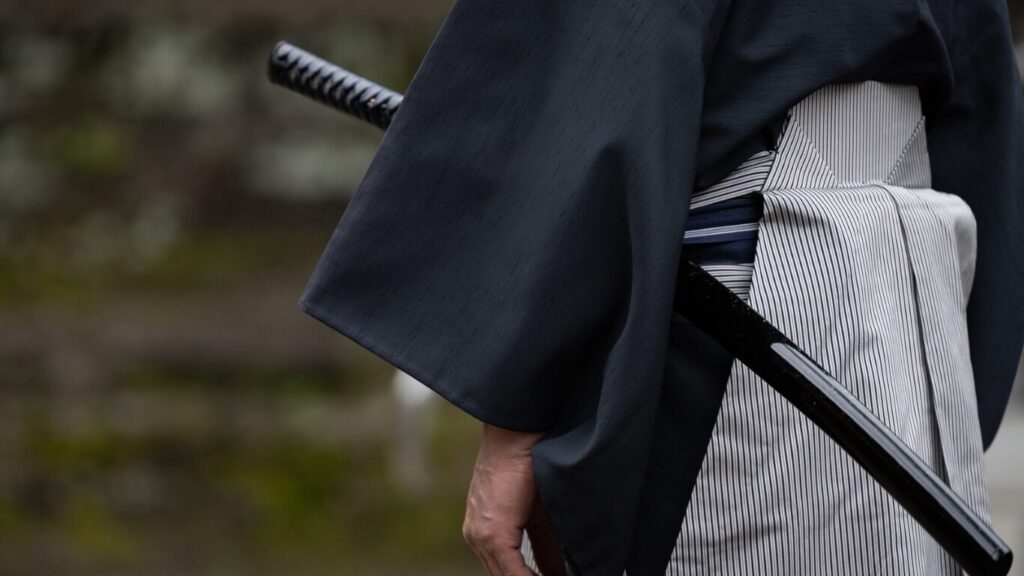
The session begins with an introduction to Miyamoto Musashi and Iaido before moving into practical training at the dojo. Participants receive one-on-one guidance while learning how to draw, swing, and sheath the sword properly. Beyond sword techniques, Iaido also places strong emphasis on concentration and mindfulness, with every movement performed deliberately and with control.
Even for beginners, the session offers a fascinating glimpse into samurai culture while creating memories that feel distinctly unique to Japan.
After exploring the culture and history of Kumamoto City, the experience continues into Aso, where visitors can experience the region’s vast natural landscape through all five senses.
Experience The Natural Beauty Of Aso
Discover The Volcanic Landscapes Of Mount Aso
Source: ©熊本県観光連盟
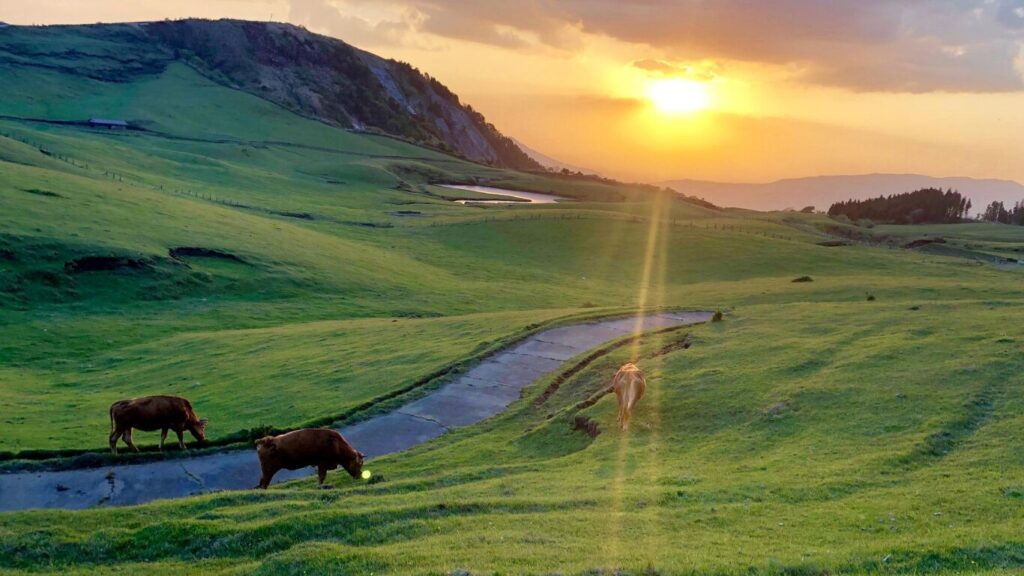
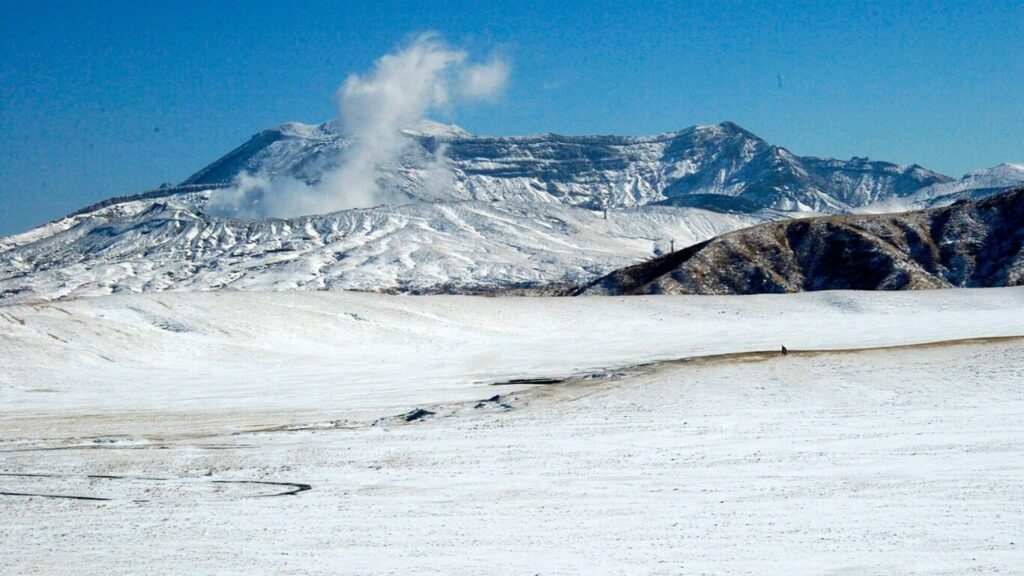
While Japan is often associated with bustling cities and neon streets, Aso reveals an entirely different side of the country. Located in central Kyushu, Aso is home to one of the world’s largest calderas, spanning approximately 25 kilometres north to south and 18 kilometres east to west.
The region was formed through a series of massive eruptions that took place hundreds of thousands of years ago, eventually creating the vast caldera that exists today.
What makes Aso so attractive compared to many other volcanic destinations around the world? Part of its uniqueness lies in the fact that it remains a rare example of a “living caldera,” where local communities continue to live and thrive within the volcanic landscape itself. Around 50,000 residents live within the caldera, with towns, farms, roads, and railway lines spread throughout the region. The close coexistence between daily life and the surrounding volcanic environment creates scenery that feels both dramatic and deeply connected to nature, making Aso one of Kyushu’s most distinctive landscapes to experience.
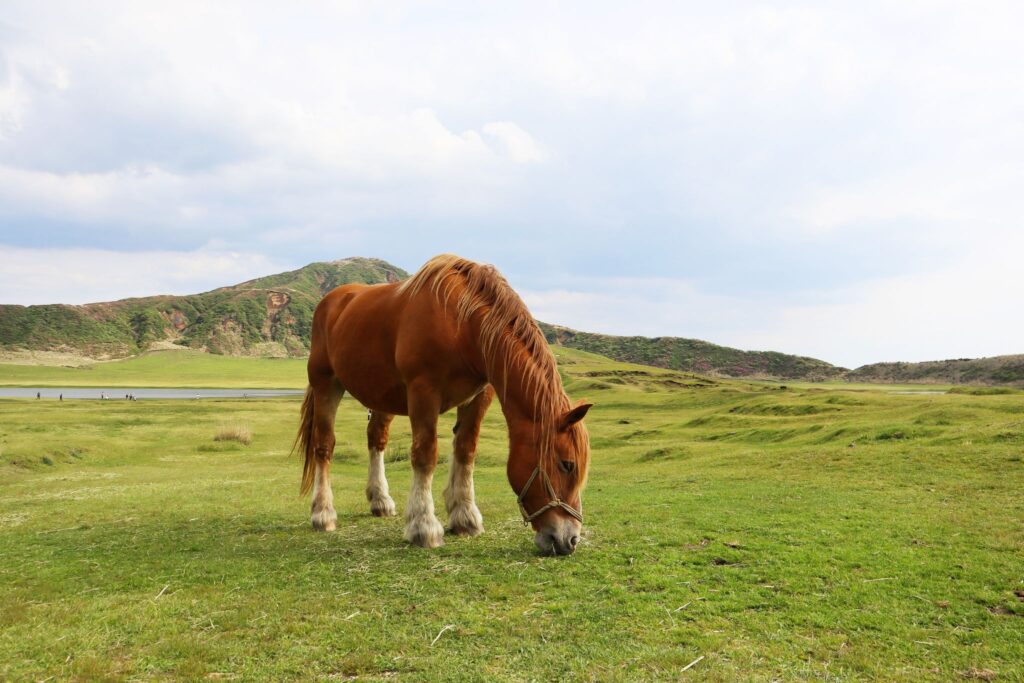
Instead of harsh volcanic terrain, Aso offers sweeping grasslands and open landscapes that feel remarkably tranquil. Grazing cattle and horses, scenic mountain roads, and wide open skies create scenery that feels completely different from the image many travellers typically associate with Japan. Visitors may also spot Komezuka, a cone-shaped volcano formed around 3,000 years ago that remains one of Aso’s most recognisable natural landmarks.
What makes Aso especially unique is how closely life here remains connected to nature. Mineral-rich groundwater filtered through volcanic layers continues to support agriculture and daily life throughout the area, including at Shirakawa Spring, one of the region’s famous natural spring water sources.
Source: ©熊本県観光連盟
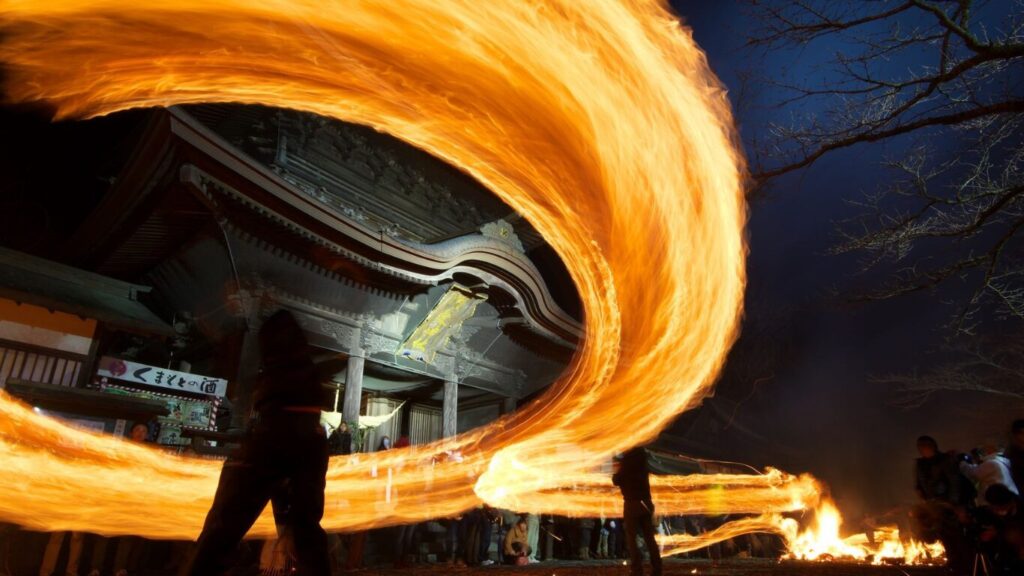
Aso’s connection to nature can also be seen through traditions such as the Aso Shrine Fire-Swinging Ritual, a Shinto ritual held each spring where burning bundles of reeds are swung through the night sky as prayers for a good harvest.
For travellers exploring Kyushu, Aso offers some of the region’s most memorable scenery and outdoor experiences.
Explore Aso By Cycling
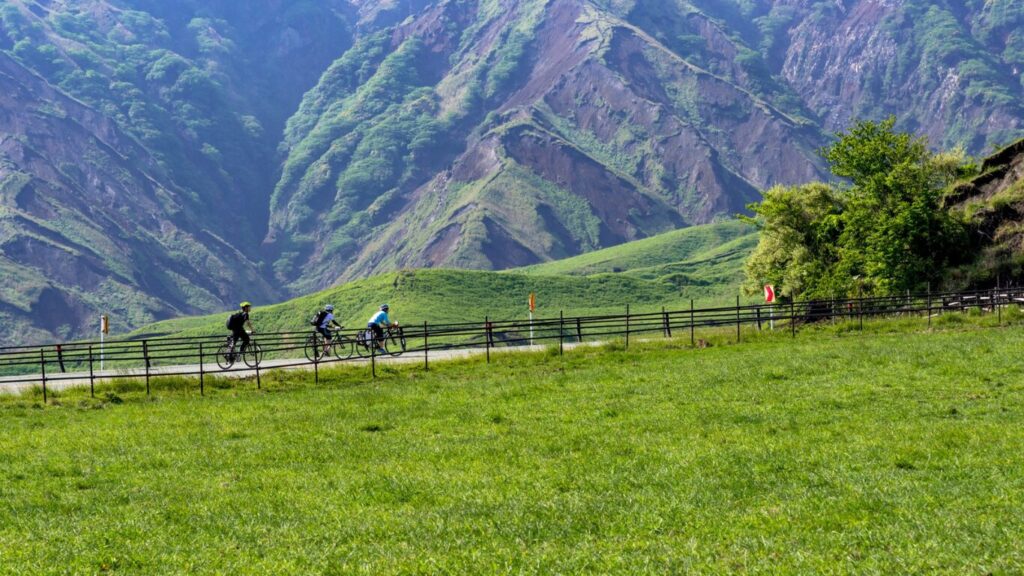
Cycling is one of the most immersive ways to explore Aso’s expansive scenery and countryside landscapes. With scenic mountain roads, open fields, and panoramic views stretching across the region, travellers can slow down and fully take in the natural beauty of Aso at their own pace.
Visitors can rent bicycles, including electric-assist e-bikes, and explore routes that pass through farmlands, smaller local villages, and volcanic scenery around Aso.
Some cycling experiences also include conservation fees that contribute towards maintaining and protecting Aso’s landscapes, allowing travellers to support local preservation efforts while exploring the area.
Depending on the route, visitors may also stop by scenic viewpoints, historical spots, or even areas near the active crater of Mount Nakadake. The scenery changes beautifully throughout the seasons as well, from fresh greenery in spring and summer to golden fields in autumn and frost-covered landscapes during winter.
Spend The Day At Rakunoh Mother’s Aso Milk Farm
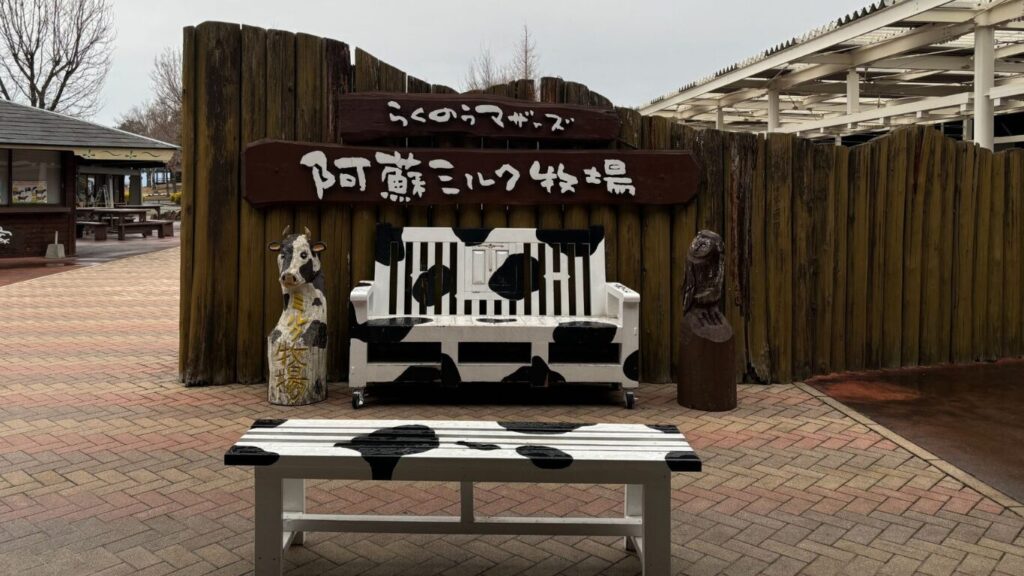
Another way to experience Aso’s connection to nature and agriculture is by visiting Aso Milk Farm, a dairy farm surrounded by the region’s natural volcanic landscapes. Located along the outer rim of Mount Aso at an altitude of around 430 metres, the farm overlooks the surrounding countryside and mountains.
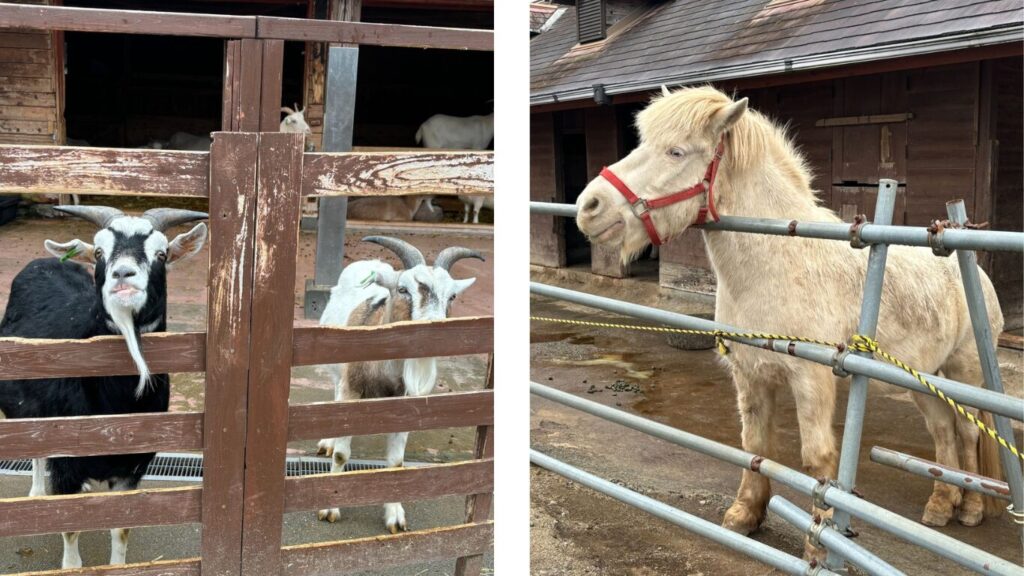
Established in 2000 to introduce the culture of dairy farming in Kumamoto, visitors can learn more about the connection between local agriculture, dairy production, and everyday life in Aso. Visitors can interact with animals through feeding sessions, pony rides, sheep walks, and petting areas, while those looking for more interactive activities can also join cheese-making and butter-making workshops. The grounds also feature a bakery, local products store, yakiniku restaurant, Moo Moo Soft’s House where visitors can enjoy soft serve made using milk produced on-site, and more.
Easily accessible from popular sightseeing spots such as Daikanbo and Aso Shrine, Aso Milk Farm has also become increasingly popular among international visitors through social media, with many travellers visiting specifically for its fresh milk soft serve and gelato.
One unique feature here is that five major dairy cow breeds from around the world are raised on-site, including Holstein, Jersey, Guernsey, Ayrshire, and Brown Swiss cows. Milk from these breeds is blended to create dairy products such as milk, cheese, and butter served across the farm.
Horseback Riding Across The Grasslands At Dream Earth Green Valley
Wide open grasslands, panoramic mountain views, and horseback trails stretching across the landscape make Yume Daichi Green Valley one of Aso’s most memorable outdoor experiences. Located along the northern outer rim of the Aso caldera at an altitude of around 850 metres, the area overlooks the Aso Five Peaks and the Kuju mountain range, with vast grasslands stretching across a space said to be equivalent to around 33 Tokyo Domes.
What makes the experience here especially memorable is that it goes far beyond the usual guided horseback rides within enclosed areas. Visitors can ride across actual grasslands and trails through mountains and valleys, creating a far more immersive outdoor experience. Even beginners can participate, with courses available ranging from shorter introductory rides to longer trekking experiences.
The scenery itself is also a major highlight. Expansive plains, rolling landscapes, and panoramic mountain views create a setting that feels almost cinematic, which is also why horseback riding photos taken here have become increasingly popular on social media among international travellers visiting Aso.
Take In The Views From Daikanbo
Source: ©熊本県観光連盟
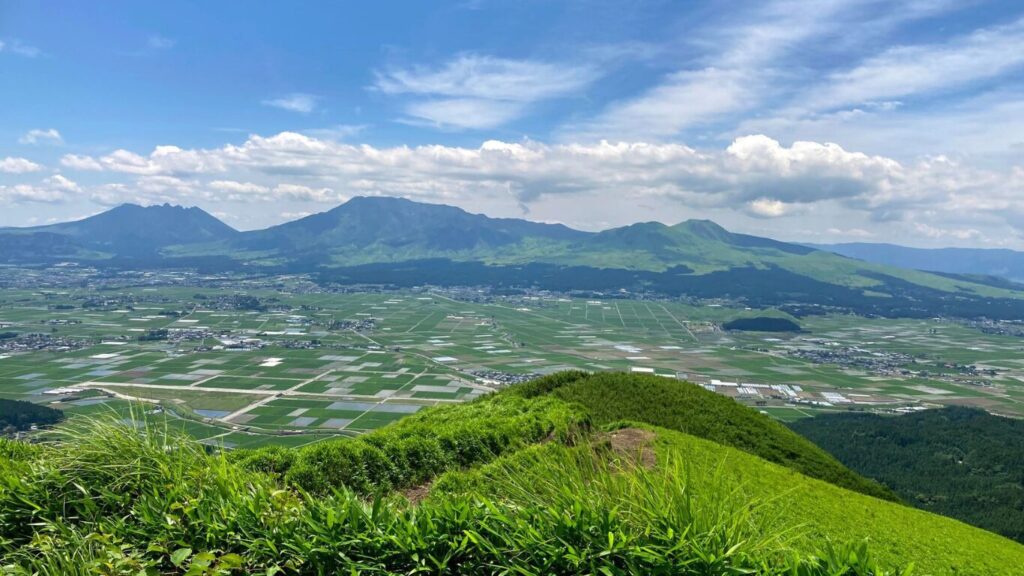
For panoramic views across the Aso caldera, Daikanbo remains one of the region’s most popular viewpoints, located along the northern outer rim of the caldera. Sitting at an altitude of around 936 metres, Daikanbo overlooks Aso Valley below and offers sweeping 360-degree panoramic views of the Aso Five Peaks and the distant Kuju mountain range.
During certain mornings from autumn to winter, visitors may also be lucky enough to catch a sea of clouds blanketing the valley below.
Beyond the scenery itself, the area also features souvenir shops and restaurants nearby, and is known as a popular spot for stargazing at night.
Relax Among The Grasslands At Kusasenrigahama
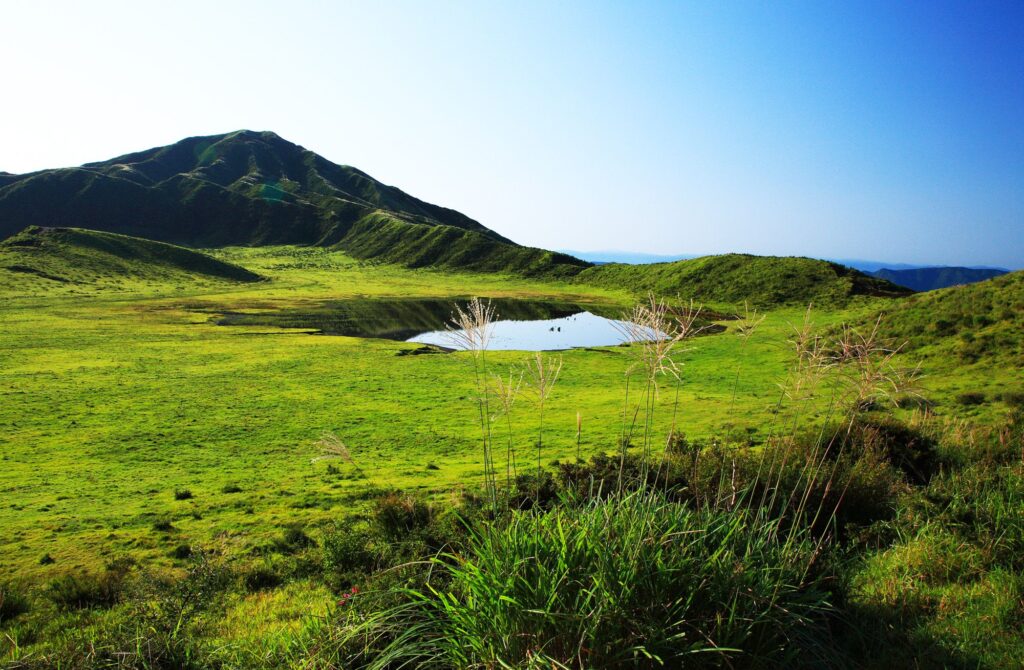
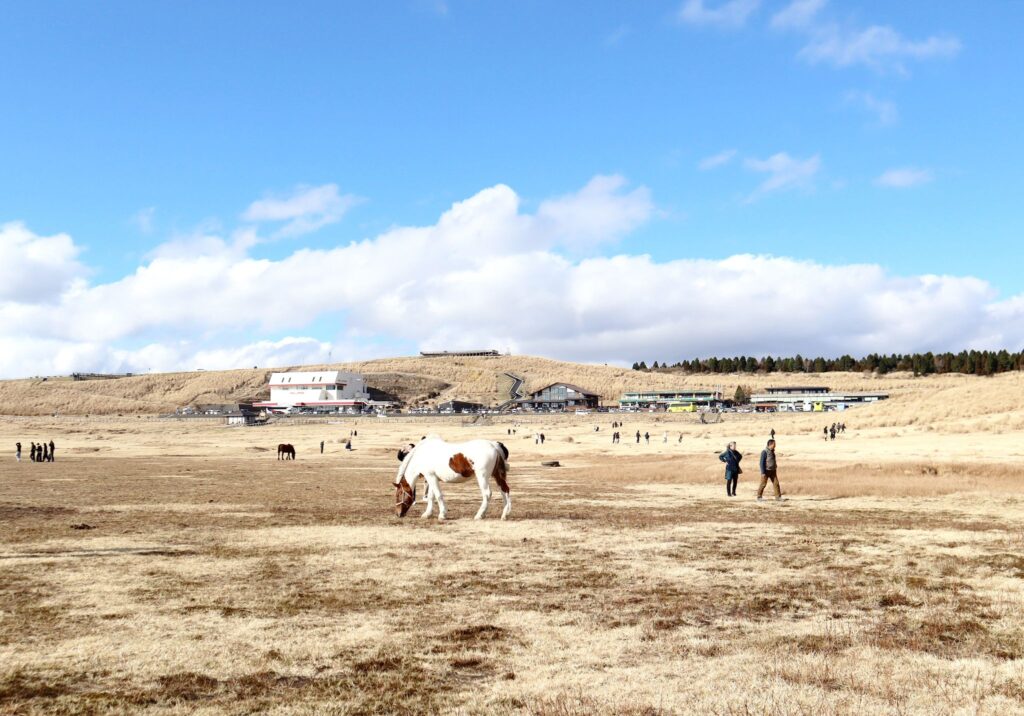
Kusasenrigahama captures the open and tranquil scenery that Aso is best known for. Located along the northern slopes of Mount Eboshidake at an altitude of around 1,140 metres, the area was formed from a volcanic crater approximately 30,000 years ago and continues to be one of the region’s best-known scenic spots.
Source: ©熊本県観光連盟
Wide open fields, grazing horses, and the sight of Mount Nakadake emitting volcanic smoke in the distance create scenery that showcases the sweeping beauty of Aso’s volcanic landscapes. Visitors often stop here to take leisurely walks, enjoy horseback riding experiences, or simply admire the scenery and open surroundings.
Learn About Aso’s History At Aso Volcano Museum
Source: ©熊本県観光連盟
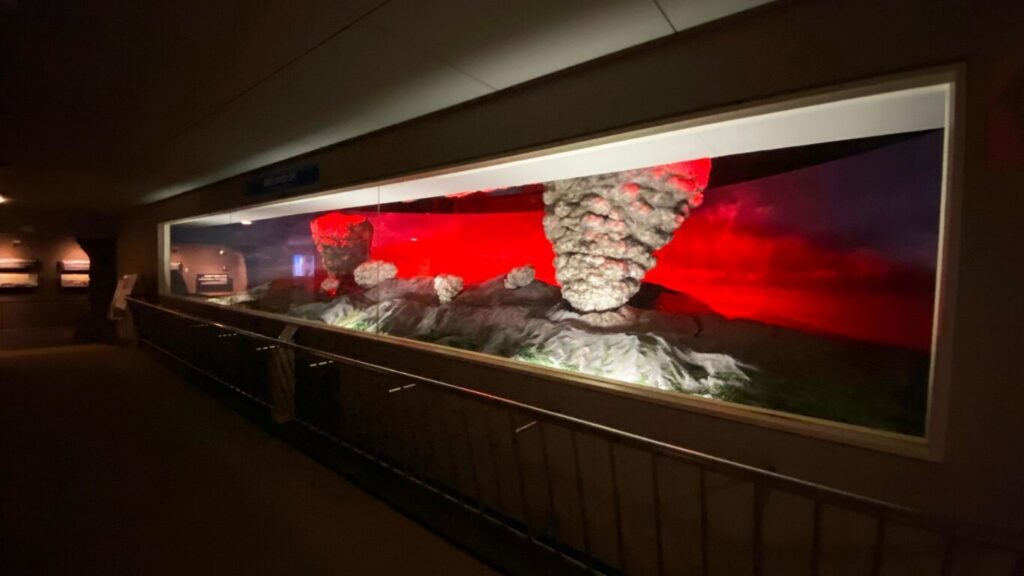
Before leaving Aso, a visit to Aso Volcano Museum is well worth adding to the itinerary for visitors wanting a deeper understanding of the powerful volcanic forces and natural environment that continue to shape the region today. Located near Kusasenrigahama, the museum introduces the history, formation, and ongoing activity of Mount Aso through interactive exhibits and immersive visual displays.
One of the highlights here is the real-time crater projection mapping system, where visitors can observe volcanic activity from Mount Nakadake live through crater cameras. The museum also features a large-scale diorama of Mount Aso and a multi-screen theatre experience that explores the volcano’s formation, surrounding ecosystems, and the culture that developed around the caldera over thousands of years.
Planning your journey from the grand landscapes of Aso to the secluded mountains of Kurokawa?
[Contact us here] to arrange your private transport and bespoke itinerary.
Unwind In The Tranquil Atmosphere Of Kurokawa Onsen Amidst The Mountains
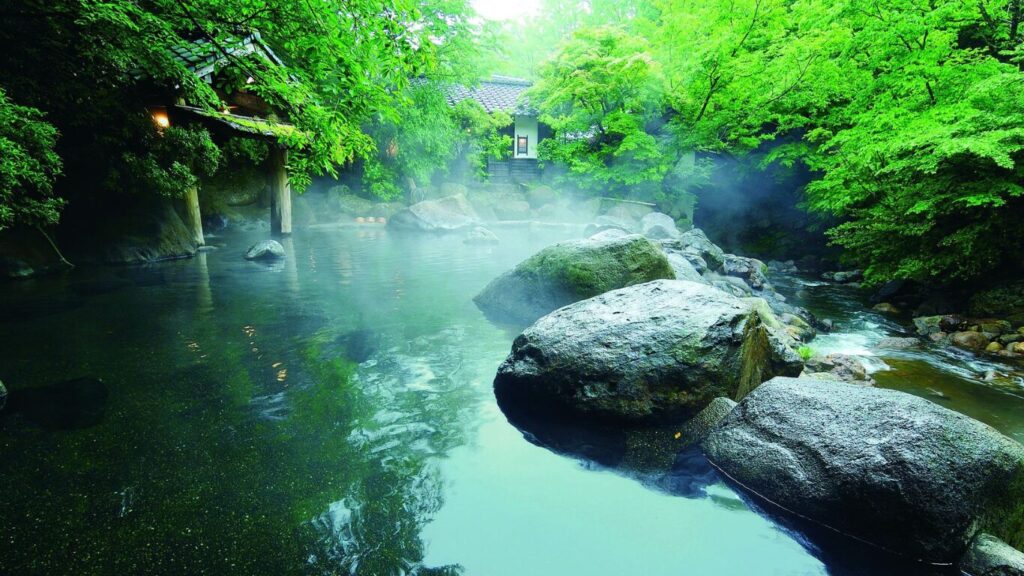
After exploring Kumamoto City and Aso, Kurokawa Onsen offers the perfect place to slow down and unwind amongst nature. Nestled within the mountains near the Kumamoto and Oita prefectural border, the town is home to around 30 traditional ryokan inns set amongst forests, rivers, and seasonal landscapes. The quiet surroundings and rustic charm give Kurokawa Onsen a different feel compared to larger onsen towns across Japan.
How Kurokawa Onsen Became One Of Japan’s Most Well-Known Onsen Towns
Source: ©熊本県観光連盟
Kurokawa Onsen was originally known as a therapeutic hot spring area during the Edo period, where officials from the Higo Hosokawa domain once visited to rest. Even after the Meiji era, many inns continued operating alongside farming activities, preserving the town’s countryside character and traditional lifestyle.
The Kurokawa Onsen visitors see today was shaped gradually over several decades through the efforts of local ryokan owners working together to revitalise the town. While nearby hot spring towns focused on larger-scale development, Kurokawa instead chose to preserve its rural scenery and create a stronger sense of unity throughout the area.
From the 1970s onwards, younger generations of inn owners began introducing new ideas that would eventually shape Kurokawa’s identity today. Trees and greenery were planted throughout the town, signboards were redesigned into a unified style, and the surrounding streetscape was carefully maintained to create the relaxing environment visitors see today.
It was also during this period that the famous open-air bath hopping culture and bathing pass were introduced. Over time, this led to the philosophy of “Kurokawa Onsen: One Inn,” where the entire town is collectively treated as one ryokan experience. Instead of viewing each inn separately, the streets, rivers, trees, and surrounding landscapes all become part of the shared experience connecting the town together.
Kurokawa Onsen was also affected by the 2016 Kumamoto earthquake, which temporarily impacted tourism and access routes across the region. While some ryokan required repairs following the earthquake, recovery efforts gradually helped the town regain visitors over the following years. Today, Kurokawa Onsen continues to preserve the traditions and scenery that have shaped the town for generations.
Experience Kurokawa’s Famous Onsen Hopping Culture
Kurokawa Onsen is known for its open-air bath hopping culture, where visitors can purchase a bathing pass that allows access to selected participating hot springs throughout town.
Each onsen offers a different setting, ranging from open-air baths surrounded by forests to rustic indoor baths featuring mineral-rich waters.
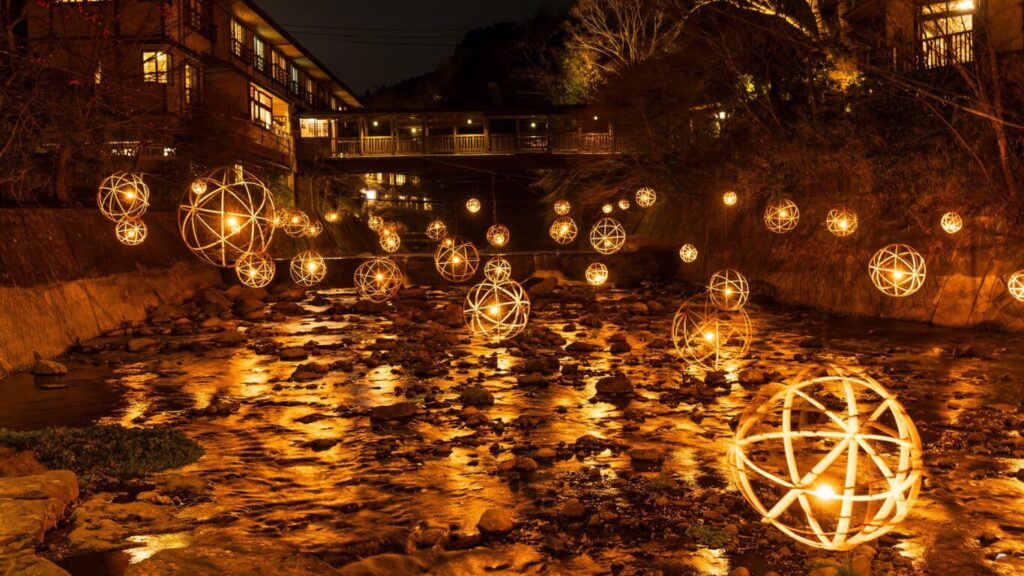
Visitors travelling between December and March may also have the opportunity to experience Yuakari, Kurokawa Onsen’s annual bamboo lantern festival. The event began as part of an environmental conservation initiative, where bamboo from overgrown local bamboo forests is carefully harvested and repurposed into lanterns.
What makes Yuakari particularly special is that the lanterns are handcrafted by local residents and ryokan staff. From cutting and shaping the bamboo to assembling the intricate lantern designs, each piece is created by hand before being carefully installed around the town. Combined with the traditional streetscape, the lanterns create one of the most picturesque winter scenes in Kurokawa Onsen.
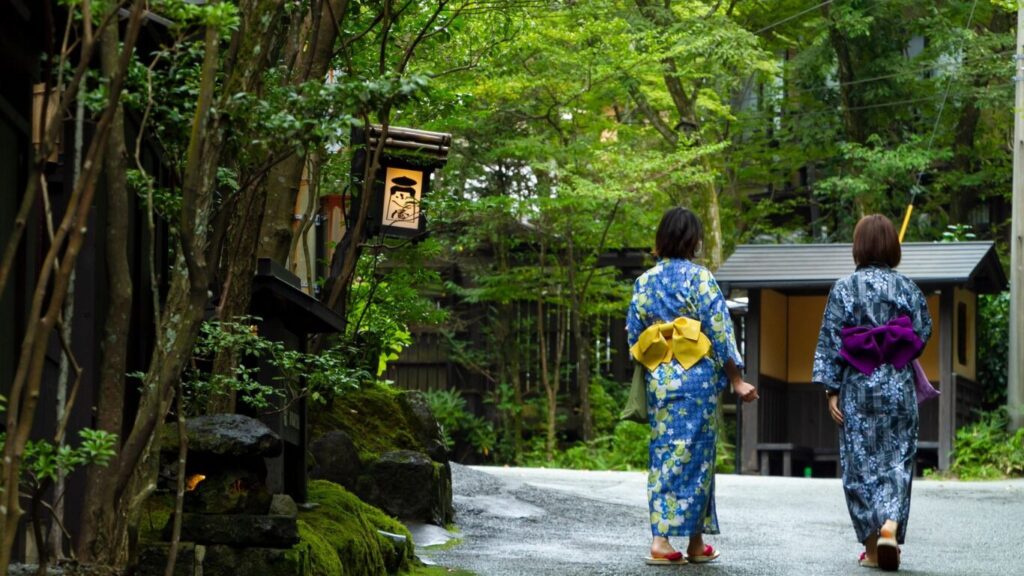
Beyond the hot springs, exploring the streets of Kurokawa Onsen is part of the experience. Traditional ryokan inns, cafés, local snack shops, and souvenir stores line the town, creating a setting that feels almost untouched by time.
Source: ©熊本県観光連盟
Visitors can also rent yukata and stroll around town while taking in the nostalgic scenery and riverside pathways, making it a popular experience for Instagram-worthy photos as well.
Local Traditions and Hidden Stories
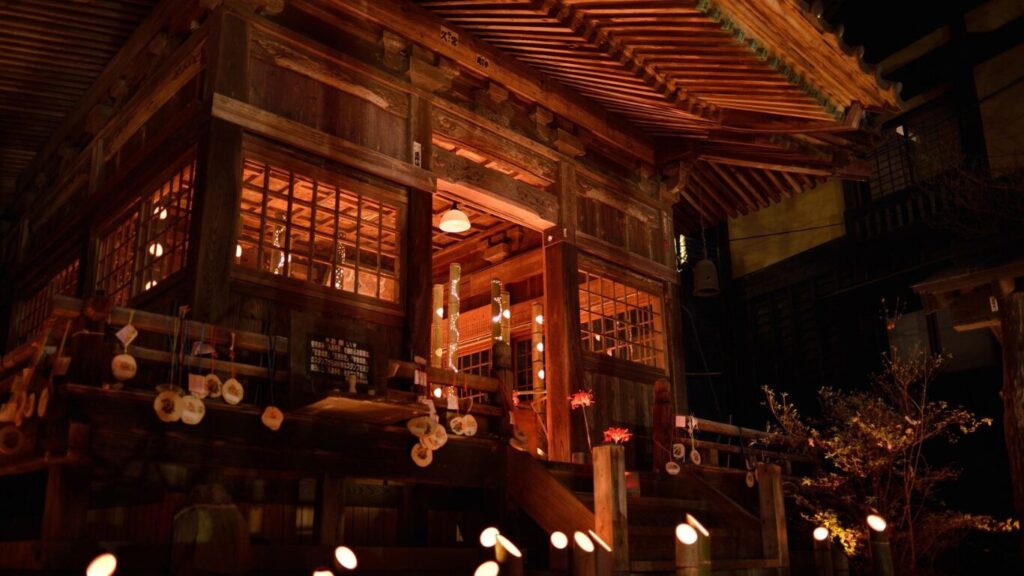
Another unique part of Kurokawa Onsen’s history is the headless Jizo statue located at the Jizo Hall in the centre of town. According to local legend, the Jizo statue sacrificed itself long ago to protect a young man, and over time became closely tied to the origins of Kurokawa Onsen itself.
Source: ©熊本県観光連盟
Built during the early Showa period, the Jizo Hall later became closely associated with the town’s bathing pass tradition. Today, many visitors dedicate their used bathing passes here after completing their onsen hopping experience, with countless passes now hanging around the space.
Located directly in front of the hall is Jizo-yu, a small public bathhouse said to stand at the very spot where the hot spring first emerged, and is regarded as the birthplace of Kurokawa Onsen.
Discover The Kumamoto One Piece Revival Project
Beyond its castles, volcanic landscapes, and hot springs, Kumamoto has also become an increasingly popular destination for anime fans through the ONE PIECE Kumamoto Revival Project.
The project began following the 2016 Kumamoto earthquake, after Kumamoto-born manga artist Eiichiro Oda shared a heartfelt message expressing his support for the region and promising to contribute towards recovery efforts. This eventually led to the launch of the ONE PIECE Kumamoto Revival Project, a large-scale collaboration between the prefecture and the globally popular manga series ONE PIECE.
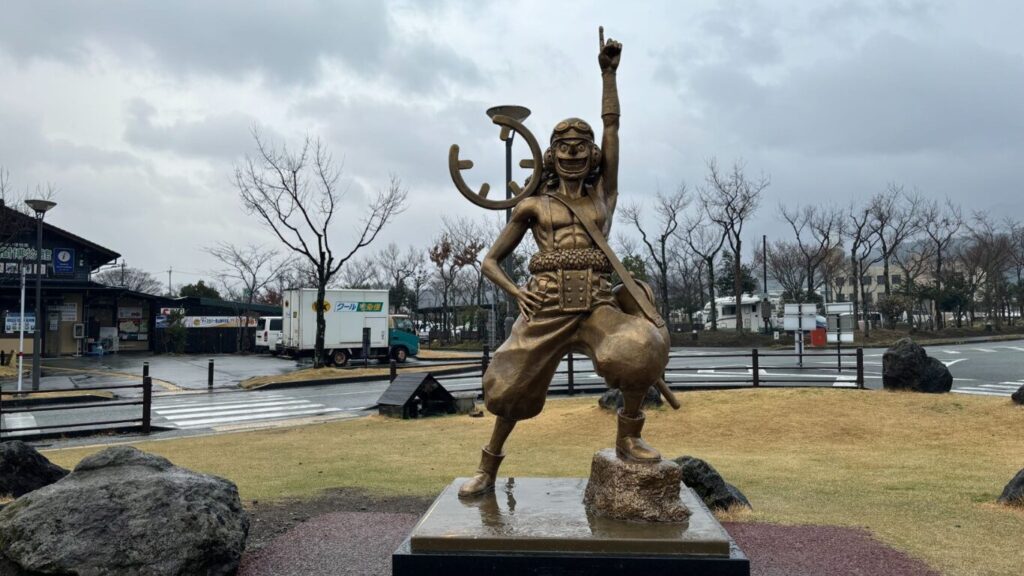
As part of the project, statues of the Straw Hat Pirates were installed across different municipalities throughout Kumamoto between 2018 and 2022 as symbols of hope, recovery, and resilience following the earthquake. Today, many visitors travel across the prefecture to visit statues of Luffy, Chopper, Zoro, and the rest of the crew, turning the experience into both an anime pilgrimage and a unique way to explore different parts of Kumamoto.
From Kumamoto Castle and local food culture to the volcanic landscapes of Aso and relaxing stays at Kurokawa Onsen, Kumamoto offers a side of Japan that feels both adventurous and deeply restorative at the same time.
Source: ©熊本県観光連盟
Especially for travellers coming from cities, the vast grasslands, fresh mountain air, and scenery that changes beautifully throughout the seasons offer a refreshing change of pace from everyday city life. Even for those who have visited Japan multiple times, Aso and Kumamoto continue to reveal new experiences and different sides of the country to explore.
Beyond sightseeing, the region also offers experiences closely connected to local Japanese culture, from farming activities and regional cuisine to traditional ryokan stays and hot spring towns. With direct flights available from Singapore to Fukuoka, it is easy to include Kumamoto and Aso within a wider Kyushu itinerary, allowing travellers to experience both the city atmosphere of Fukuoka and the scenic landscapes of rural Kyushu in one trip.
Plan Your Trip With Us
For travellers looking to explore Kumamoto and the wider Kyushu region more comfortably, we are able to assist with curated itineraries, private transport arrangements, and personalised travel recommendations based on your interests and travel style.
As many destinations across Kumamoto and Aso are spread across different parts of the prefecture, travelling by private vehicle often allows for a far more seamless and flexible experience, especially for visitors planning to cover multiple areas within a limited timeframe.
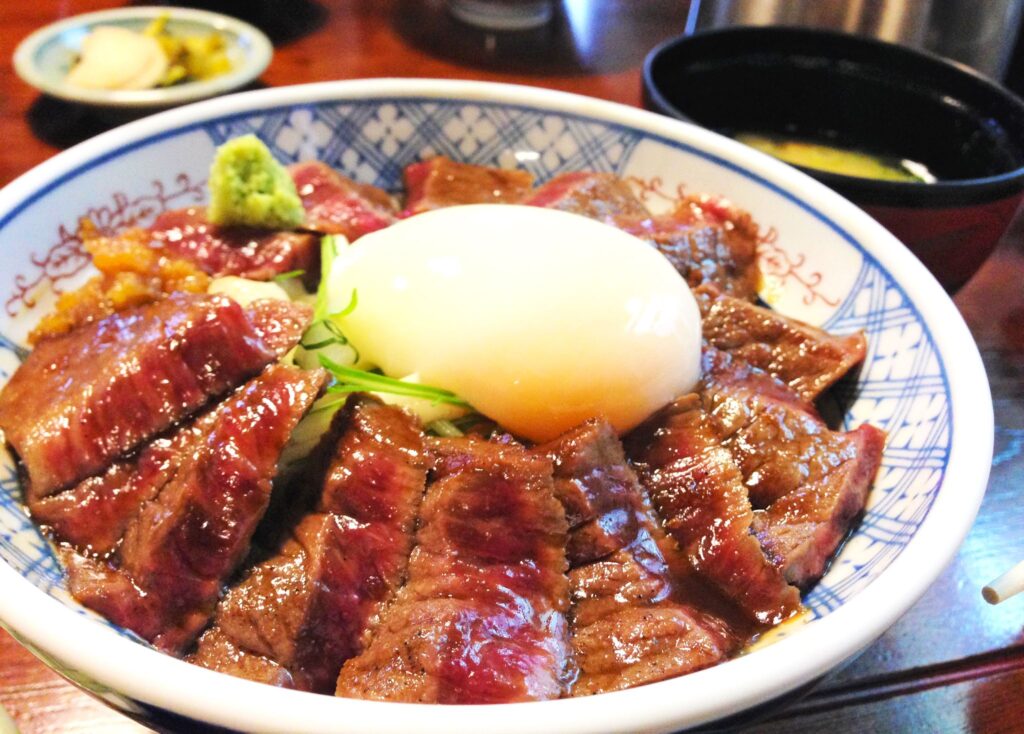
We can also arrange foreign language-speaking local guides who are familiar with the region, allowing travellers to better understand the history, culture, and stories behind each destination throughout the trip. For those looking for a more personalised experience, we are also able to recommend and arrange unique cultural and local experiences across Kumamoto and Kyushu.
Source: ©熊本県観光連盟
Whether you are looking to experience scenic landscapes, traditional ryokan stays, local food culture, or outdoor activities around Aso and Kumamoto, we can help create a more personalised and well-planned trip throughout the region.
If you are interested in planning a customised trip to Kumamoto and Kyushu, feel free to contact us for more details.
The next time you are in the Land of the Rising Sun, don’t just stick to the usual favourites. Take some time to explore places outside the main cities. You might just discover something you did not expect. Check out our travel guides for more inspiration.