Autumn in Tohoku Travel Guide: Best Foliage Spots, Onsen & Local Food
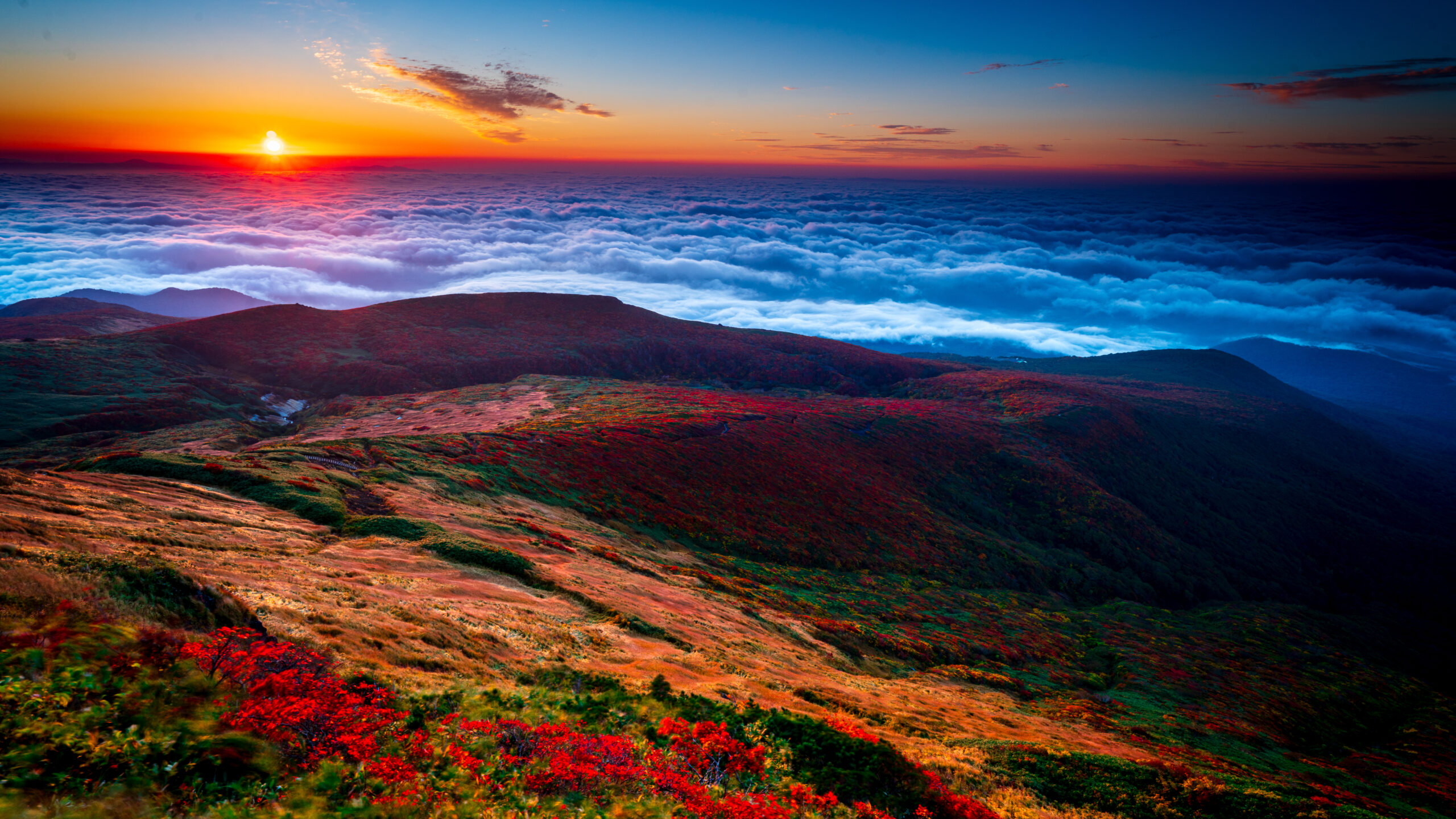
Autumn in Japan is famous for landscapes painted in brilliant shades of red, orange, and gold. But if you are looking for more than colourful autumn leaves, head north to Tohoku, where the season unfolds across mountains, river valleys, onsen towns, and traditional neighbourhoods.
If you have not heard of Tohoku, it is a region in northeastern Japan made up of six prefectures: Aomori, Iwate, Miyagi, Akita, Yamagata, and Fukushima. While there is plenty to discover across the region, this guide takes you to Aomori, Akita, and Yamagata for some of Tohoku’s most scenic autumn views with fewer crowds, while also introducing onsen and seasonal experiences in other parts of the region. Tohoku also offers a long and varied autumn season. As temperatures cool, the colours gradually travel from the northern prefectures and higher elevations towards the south and lower valleys. This means Tohoku autumn leaves can be enjoyed across different destinations from around October through November, giving you more flexibility when planning your trip.
Autumn in Tohoku is not just about seeing the changing leaves. Imagine walking beside a forest stream surrounded by golden leaves, soaking in an open-air hot spring as cool autumn air settles around you, picking crisp apples at their seasonal peak, or warming up over a steaming bowl of local hot pot. Autumn brings together many of the experiences Tohoku is best known for.
With mountain scenery, onsen towns, and attractions spread across the region, planning how to get from one place to another is an important part of the trip. This guide will take you through places worth visiting and experiences to include in your itinerary, along with the option of a private car journey for a more convenient and flexible way to explore Tohoku.
If you are planning your next Japan autumn travel adventure, here are some of the best things to do in Tohoku in autumn, from vibrant foliage and relaxing onsen to seasonal flavours worth travelling for.
Where to See the Best Autumn Foliage in Tohoku
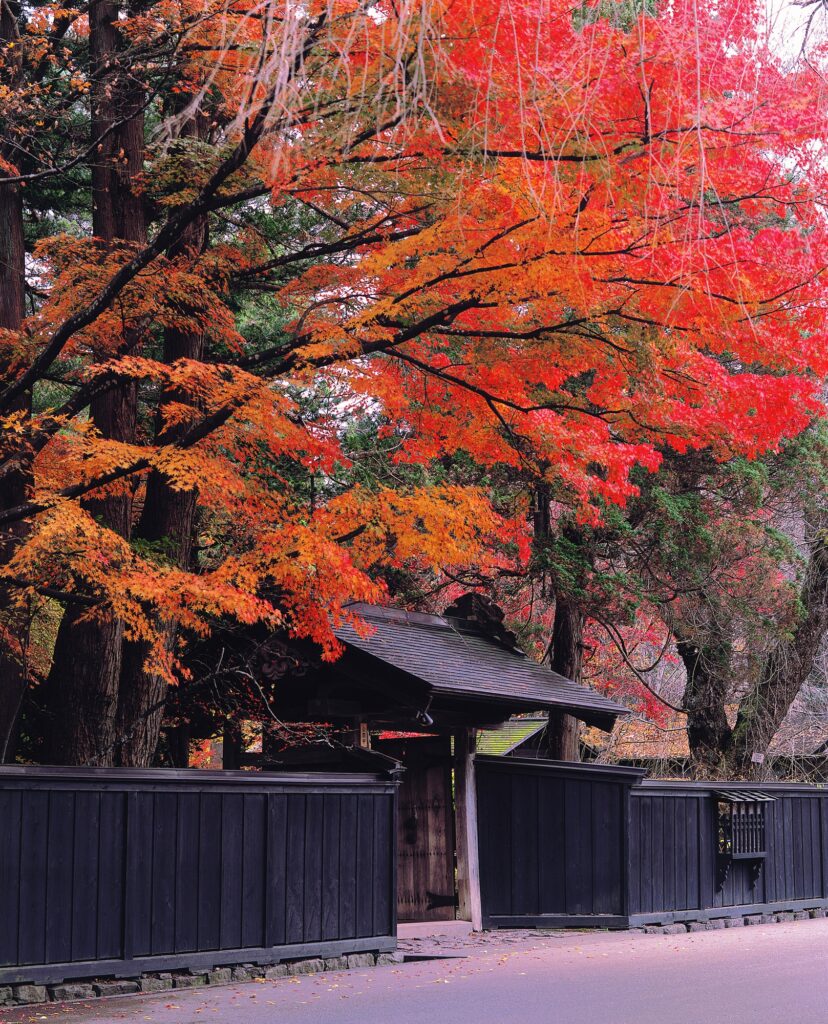
One of the best things about autumn in Tohoku is how different the scenery can be from one place to another. You can walk beneath towering trees along a river gorge in Aomori, look down upon layers of colourful mountains in Yamagata, or stroll through an old samurai district framed by fiery maple leaves in Akita.
Here are three places to consider adding to your Tohoku autumn itinerary.
Oirase Gorge, Aomori Prefecture
Best viewing period: Late September to mid-November, with the most brilliant colours typically around mid-to-late October
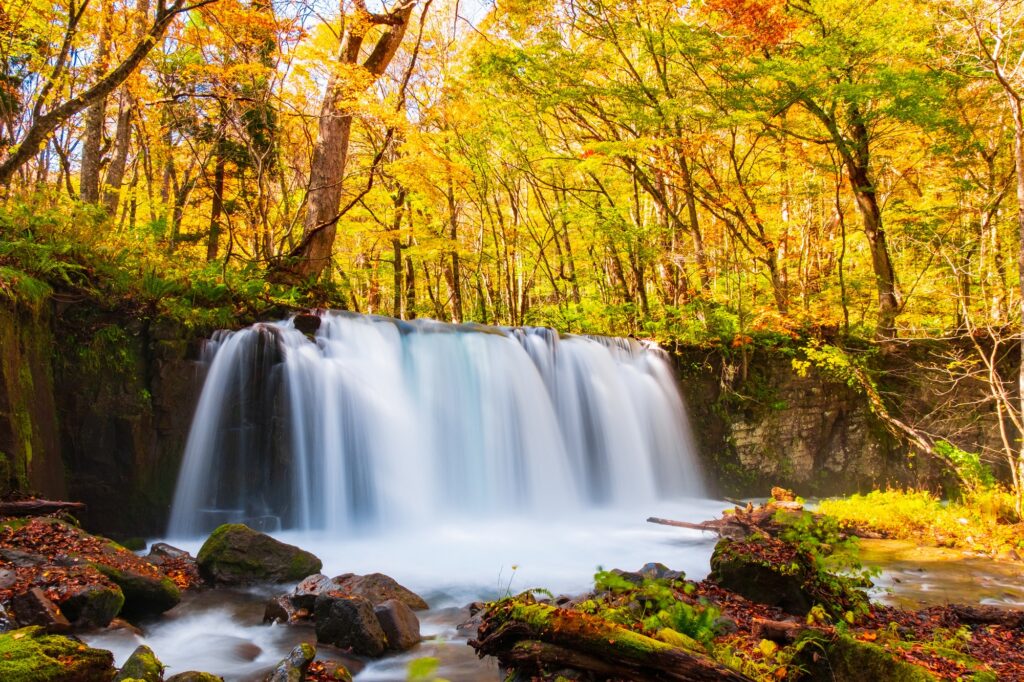
If you prefer exploring autumn scenery on foot, Oirase Gorge is one of Tohoku’s most rewarding places to visit.
Located in Aomori Prefecture, Oirase Gorge stretches for approximately 14 kilometres from Nenokuchi on the shore of Lake Towada to Yakeyama. Oirase Stream is the only river flowing out of Lake Towada, and this particular section of the river is known as Oirase Stream. The gorge forms part of Towada-Hachimantai National Park and is nationally protected for both its scenery and natural environment.
Oirase Gorge’s landscape was formed through volcanic activity in the Hakkoda and Towada areas, as well as years of erosion from the flowing river. Despite an elevation difference of around 200 metres between the upper and lower sections, the route follows a gentle gradient, making the change in elevation barely noticeable as you explore.
The gorge is known for its clear-flowing stream, dense forests, moss-covered rocks, ferns and waterfalls. Beech trees are also found throughout the area, while the cool and humid environment supports the rich vegetation found across the gorge. When autumn arrives, the forest turns shades of yellow, orange and red, with the autumn colours stretching along the stream.
Walking is one of the best ways to appreciate the area. A nature trail runs alongside much of the stream, allowing you to stop at waterfalls, rapids and viewpoints as you make your way through the forest.
Make sure your phone or camera is ready because you will want plenty of photos here! You can capture autumn leaves along the stream, moss-covered rocks and colourful trees reflected in calmer sections of the water. For those searching for the best photo spot in Tohoku in autumn, Oirase Stream is well worth adding to your list.
Short on time? You do not have to complete the entire route. Choose a shorter section of the trail depending on your schedule.
After your walk, you can continue to Lake Towada to enjoy more autumn views around the lake and nearby mountains. The gorge and lake can be covered together in a day.
Zao Ropeway, Yamagata Prefecture
Best viewing period: Late September to early November, with different elevations reaching their peak at different times
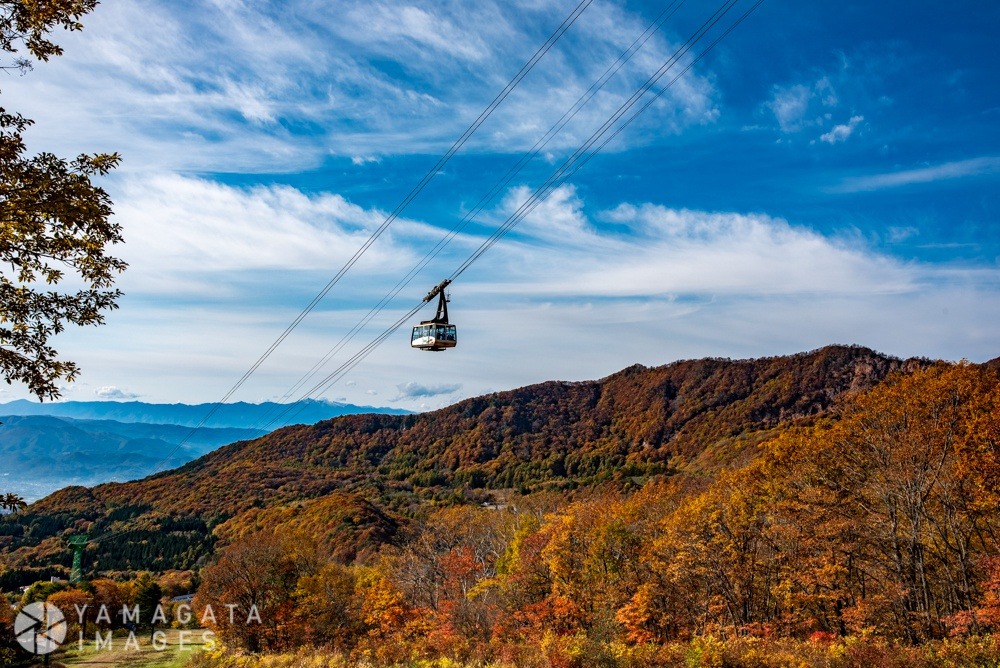
Ready to take your autumn sightseeing to new heights? Hop on the Zao Ropeway and watch the mountains change colour beneath you.
The Zao Ropeway takes you from the foot of Mount Zao towards the summit, offering views across the mountain throughout the ride. As the gondola climbs, you can look down over slopes covered with maple, oak and beech trees in shades of yellow, orange and red.
One of the highlights of riding the ropeway in autumn is seeing how the season progresses from the summit down to the foothills. With an elevation difference of around 800 metres between the base and summit, the foliage begins near the higher elevations in late September before gradually reaching the foot of the mountain towards early November.
During this period, you may be able to see different stages of autumn across the mountain during the same ropeway ride, creating the three-tiered autumn foliage that Zao is known for.
To take the Zao Ropeway, start at Zao Sanroku Station, where you board the first section of the Zao Ropeway to Juhyo Kogen Station. From there, you can transfer to the summit line, which continues to Jizo Sancho Station at an altitude of 1,661 metres. Together, the two sections cover approximately 3.6 kilometres, giving you plenty of opportunities to enjoy the Tohoku autumn leaves from above.
The views continue once you step off the gondola. There are observation terraces at both Juhyo Kogen Station and Jizo Sancho Station where you can stop and take in the mountain scenery.
The same ropeway offers a completely different experience once winter arrives. From around January to February, Mount Zao becomes known for its frost-covered trees, often called “snow monsters”. These unusual formations are created by Zao’s winter weather conditions and can be viewed from the ropeway and around the summit area, giving you another reason to return to Yamagata in a different season.
For travellers who want panoramic Tohoku fall foliage without committing to a long mountain hike, Zao Ropeway offers an accessible way to experience Mount Zao’s autumn scenery from above.
Kakunodate, Akita Prefecture
Best viewing period: Late October to early November, with peak colours generally around late October
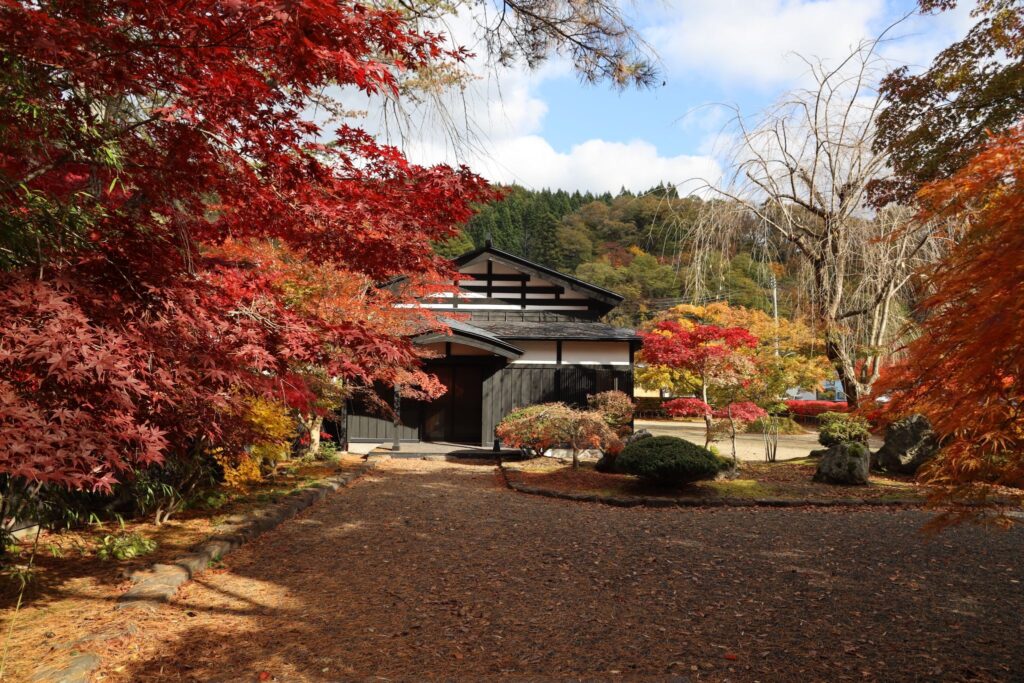
Not every autumn experience in Tohoku takes you into the mountains. In Kakunodate, you can enjoy the season among traditional samurai residences that make you feel like you have stepped back in time to the Edo period.
Located in Akita Prefecture, Kakunodate is a small town in Senboku City, situated between Morioka and Akita. One of its main attractions is its samurai district, where a wide central street runs from north to south, lined with traditional residences and long stretches of black wooden fencing.
Much of the town’s layout dates back to the beginning of the Edo period, when the area was developed under the Ashina clan. The main street has remained largely unchanged over the centuries.
Behind the black wooden fences are large gardens filled with weeping cherry, fir, oak and maple trees. As you make your way along the samurai district, autumn leaves frame the black wooden fences and traditional homes, adding seasonal colour to the centuries-old streets.
To understand more about the area’s samurai history, make time to step inside some of the residences rather than only viewing them from the street. Six can be visited today, including the Aoyagi and Ishiguro residences, where you can see armour, weapons, furnishings and other items that have been preserved over the years.
Kakunodate is also well known for its weeping cherry trees, which are particularly popular during spring. There are 162 designated weeping cherry trees in the town. While spring brings cherry blossoms, autumn offers another opportunity to see the samurai district framed by the changing leaves of its mature trees.
Kakunodate works especially well as part of a Tohoku autumn itinerary, particularly if you want to combine seasonal scenery with an introduction to the region’s samurai history and preserved townscape.
Soak in an Onsen Among Tohoku’s Autumn Leaves
Seeing the changing leaves is only one part of autumn in Tohoku. As temperatures begin to fall, the season is also one of the most enjoyable times to experience Tohoku onsen.
There is something particularly satisfying about lowering yourself into steaming mineral-rich water while cool autumn air surrounds you. Add forests filled with red and gold leaves, and an ordinary bath becomes one of the most memorable experiences of the trip.
Nyuto Onsen, Akita Prefecture
Best viewing period: The leaves generally begin changing in early October, with the best autumn colours typically appearing from mid-to-late October.
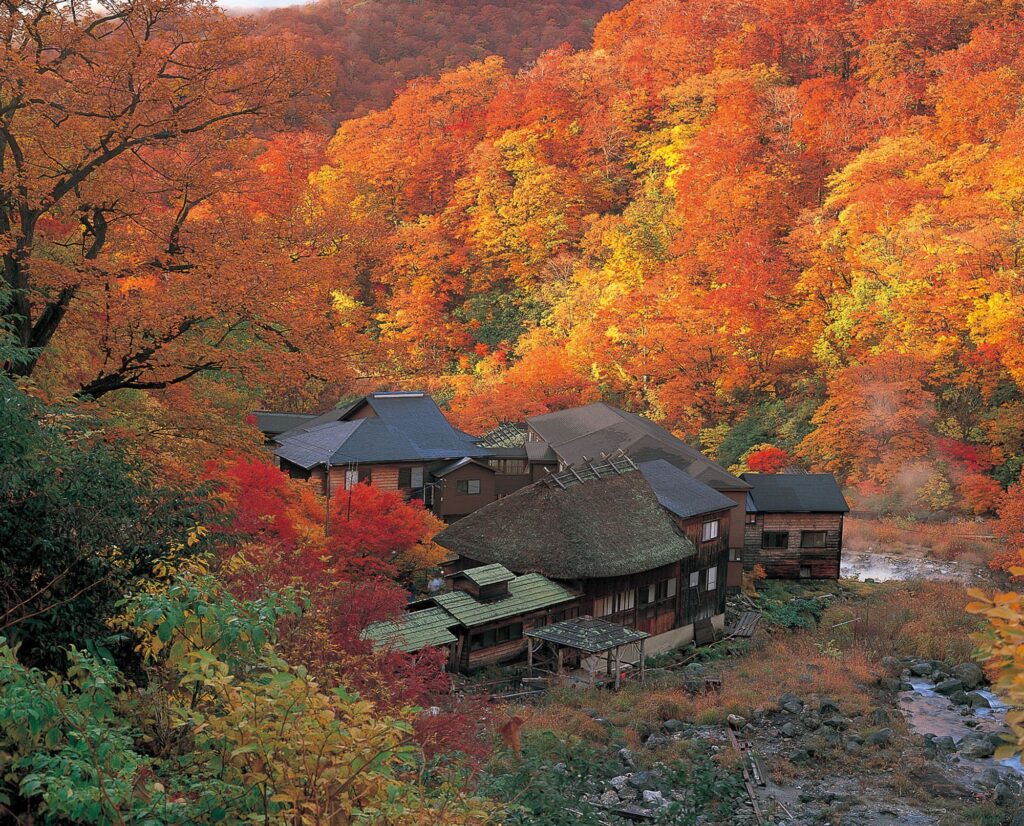
Tucked away at the foot of Mount Nyuto in Towada-Hachimantai National Park, Nyuto Onsenkyo is a mountain hot spring village where you can enjoy one of autumn’s best combinations: colourful foliage and a warm outdoor bath.
Nyuto Onsenkyo is made up of seven hot spring inns: Tsuru-no-yu, Myono-yu, Kaniba, Ogama, Magoroku, Kuroyu and Kyukamura. Each has its own hot spring source, and more than ten types of spring water can be found across the area. This gives each inn a different bathing experience and is one of the reasons you may want to visit more than one during your stay.
Autumn adds another reason to explore the different baths. Many of the open-air baths, or rotenburo, offer views of the changing leaves, but the scenery varies depending on where you soak. Myono-yu Onsen has an open-air bath beside the river, with autumn foliage visible around the area. At Tsuru-no-yu Onsen, the open-air bath looks out towards the mountain slopes as the leaves change colour. For an earlier glimpse of the season, Kuroyu Onsen’s higher elevation means its autumn colours typically appear before those at the other hot springs.
If you are planning an overnight stay, you can choose from seven inns, ranging from traditional and secluded mountain stays to more modern Japanese-style accommodation. Some have histories dating back to the Edo period, giving travellers several styles of accommodation to choose from.
A stay at Nyuto Onsenkyo is also an opportunity to experience the area’s seasonal ingredients. Wild vegetables and mushrooms grow naturally in the region and are among the local foods associated with its mountain environment, bringing a taste of autumn to the dining experience as well.
For a relaxing autumn escape that brings together hot springs, changing foliage and seasonal food, Nyuto Onsenkyo is well worth adding to your itinerary.
Naruko Onsen, Miyagi Prefecture
Best viewing period: Late October to early November
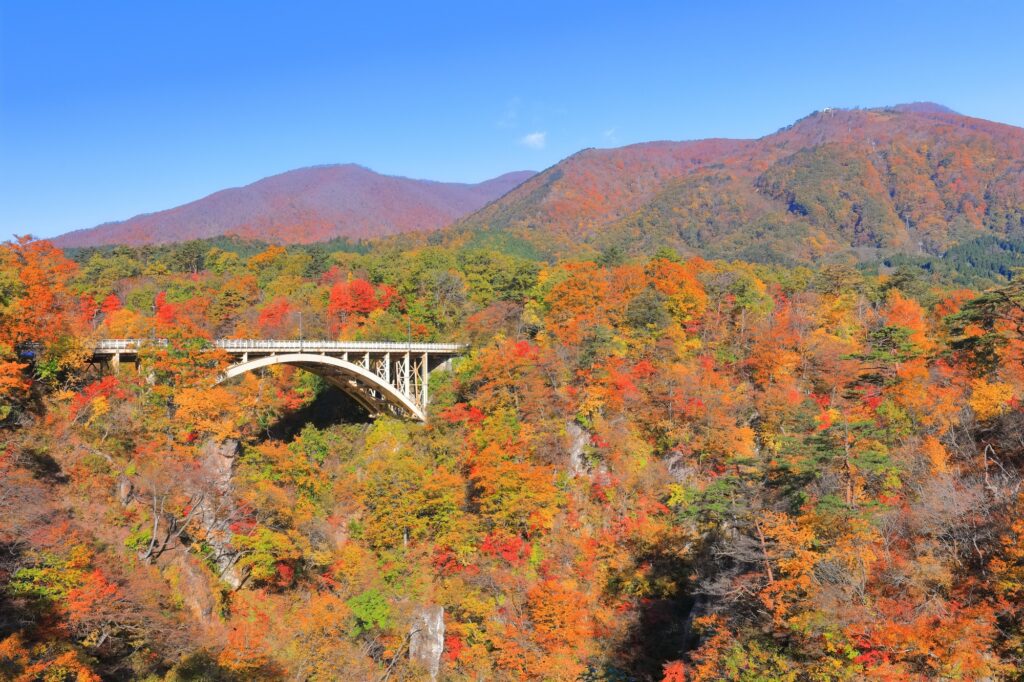
Another Tohoku onsen worth visiting in autumn is Naruko Onsen, located in the northwestern part of Miyagi Prefecture. What makes this area particularly appealing during the season is how easily you can combine a hot spring stay with some of Miyagi’s autumn foliage spots.
One of the highlights is Naruko Gorge, located around 10 minutes by car from JR Naruko Onsen Station. From late October to early November, the valley is filled with autumn colours from trees such as maple, beech and oak. For a panoramic view, head to the observation deck at the Naruko Gorge Rest House, where you can look across the gorge towards Ofukazawa Bridge.
If you prefer to see the foliage on foot, there are several walking options around the area. The Ofukazawa Walking Trail stretches for approximately 2.2 kilometres and takes around 50 minutes to complete.
Another spot to consider is Katanuma, a volcanic caldera lake around seven minutes by car from JR Naruko Onsen Station. The lake is known for its emerald-green water, which changes in appearance depending on the weather and time of day. During autumn, the colourful trees around the lake can be seen reflected on the water. A walking path circles the lake and takes approximately 30 minutes to complete.
After a day spent enjoying the seasonal scenery, return to Naruko Onsen and unwind with a relaxing hot spring soak.
With autumn foliage spots and hot springs located close to one another, Naruko Onsen makes it easy to enjoy both during the same autumn trip.
Taste Tohoku’s Best Autumn Flavours
Autumn in Japan is often associated with shokuyoku no aki, or “autumn appetite”, reflecting the abundance of seasonal ingredients harvested at this time of year.
After treating your eyes to the autumn views and your body to a relaxing onsen soak, it is time to treat your appetite too. Autumn is a great time to enjoy fresh local produce across Tohoku, from fruits at their seasonal peak to freshly harvested rice, vegetables and other ingredients grown throughout the region. Not sure what to try first? Here are some of the seasonal foods worth adding to your Tohoku autumn itinerary.
Bite Into Peak-Season Aomori Apples

Aomori is Japan’s leading apple-producing prefecture, and autumn is one of the best times to enjoy the fruit at its freshest. Orchards and markets offer different varieties, each with its own balance of sweetness, acidity and texture. Depending on where you visit, you may even be able to take part in an apple-picking experience and taste fruit directly from the orchard.
Aomori apples are more than just a seasonal treat. They are an important part of the prefecture’s local culture, with a long history and tradition behind them.
Try Sendai’s Famous Gyutan
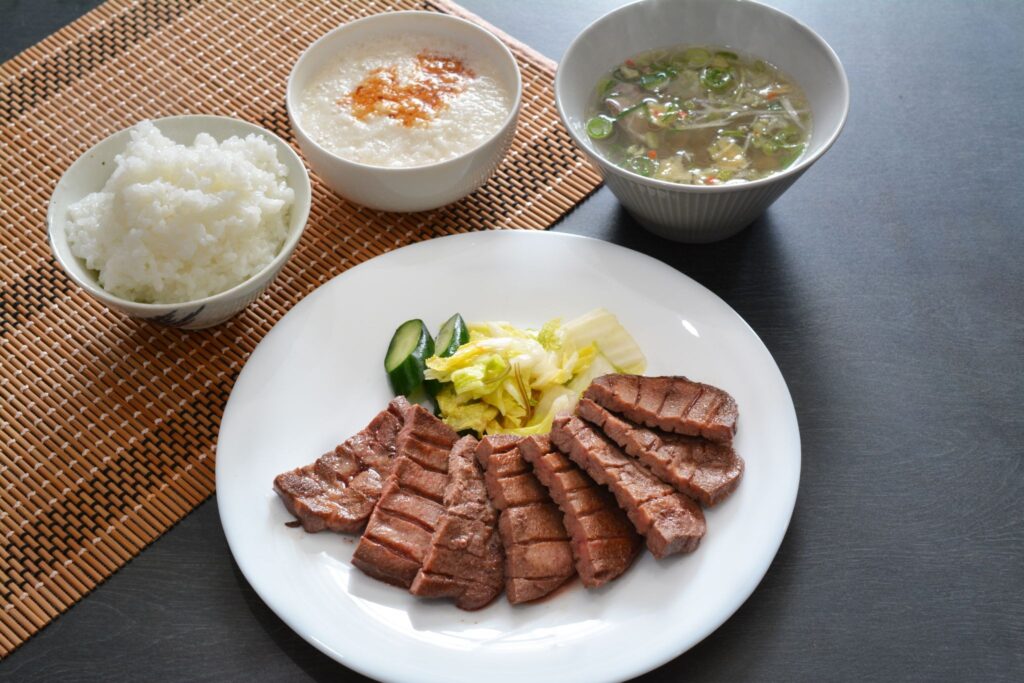
Head south to Sendai, the capital of Miyagi Prefecture, where one of the city’s best-known specialities is gyutan, or grilled beef tongue.
Thick, well-marbled slices of beef tongue are seasoned and grilled until lightly charred, giving them a tender texture and savoury flavour. Gyutan is typically served alongside rice, soup, and pickles. It is a hearty meal that is perfect for warming up during the cooler autumn season.
You will find plenty of restaurants specialising in gyutan across Sendai, so make sure to try this local favourite while you are in the city.
Warm Up With Akita Kiritanpo
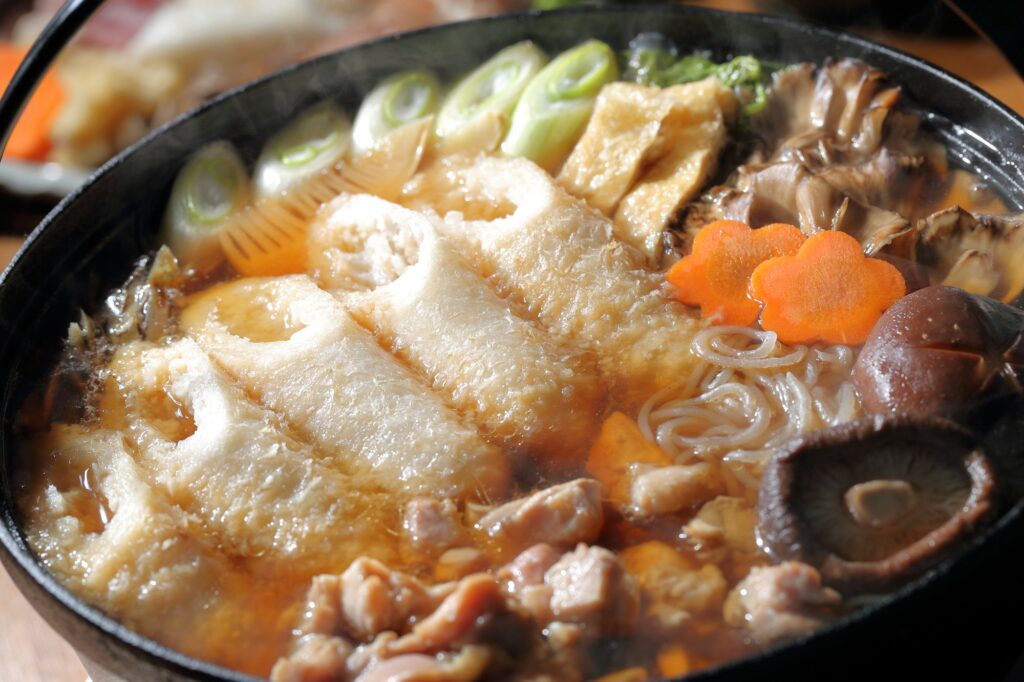
When the temperatures start to drop in autumn, warm up with kiritanpo, one of Akita’s local specialities.
Kiritanpo is made by pounding freshly cooked rice, shaping it around a skewer, and grilling it. It can then be served with miso or added to a warming hot pot.
Kiritanpo nabe is a hot pot featuring grilled kiritanpo and is commonly served with the grilled rice, chicken, vegetables, and a flavourful broth. Served bubbling hot at the table, it is exactly the kind of dish you will appreciate after a day spent outdoors viewing Tohoku autumn leaves.
As autumn also marks the rice harvest season, it is a great time to enjoy a dish made from locally grown rice in Akita.
Enjoy Freshly Harvested Rice and Local Sake
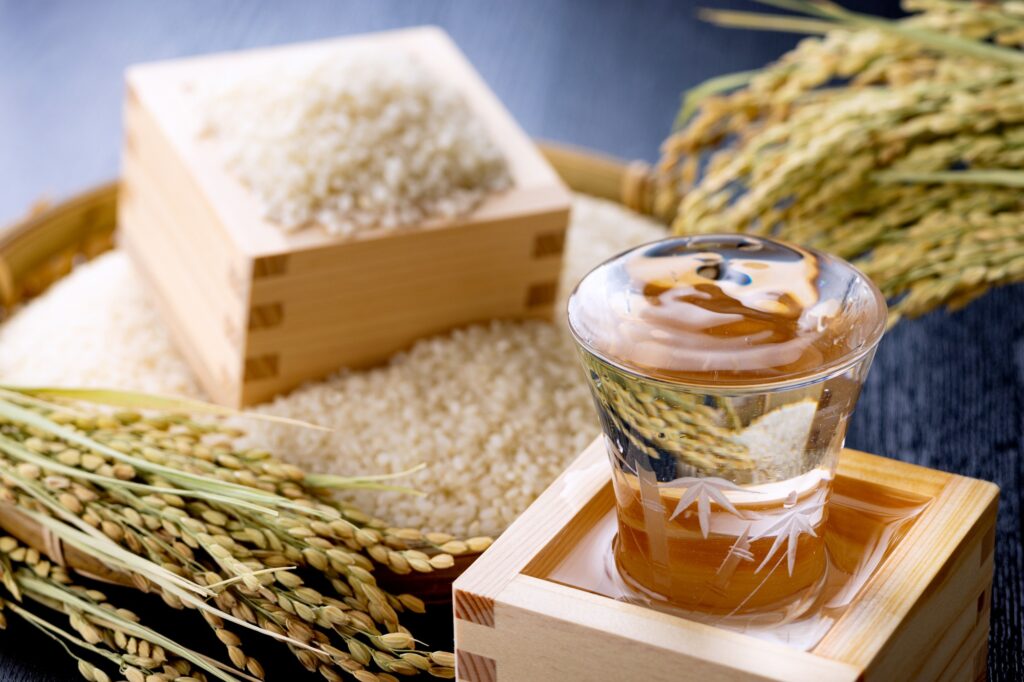
Yes, rice! While it may sound simple, freshly harvested rice is something to look forward to in Tohoku during autumn, when you can enjoy the new crop for its fresh taste and texture.
As the year’s new crop becomes available, restaurants and ryokan start serving freshly harvested rice. Its freshness and texture can be enjoyed even when served simply, particularly alongside regional dishes made with seasonal ingredients.
Rice is also one of the main ingredients used to make sake, and Tohoku has a long tradition of sake brewing. This makes local sake a natural pairing with the seasonal dishes and freshly harvested rice you may enjoy during your trip.
With so many seasonal ingredients and local specialities to try, food is an experience in itself on a Japan autumn tour through Tohoku.
Plan Your Tohoku Autumn Trip with Us
With mountain landscapes, onsen villages, cities, and small towns spread across its six prefectures, there is plenty to see and do in Tohoku during autumn. From autumn foliage and local cuisine to cultural attractions and hot spring stays, there are many experiences you may want to include in your itinerary.
Planning how to bring everything together can take some coordination, especially if your Tohoku autumn itinerary covers several prefectures. While trains and buses connect many parts of the region, getting to some countryside attractions may require a little more planning.
Skip the headache of organising everything yourself. We can create a personalised itinerary based on the places you want to visit, the experiences that interest you and your travel preferences.
From accommodation and activities to dining arrangements, we can help organise the different parts of your trip. Dietary requirements can be taken into consideration when arranging ryokan stays and restaurants, so your itinerary can be planned around your needs from the start.
You can also opt for a private car journey when travelling around Tohoku. Read on to find out how it can make your autumn trip even more enjoyable.
Discover Tohoku Through a Private Car Journey
What does travelling around Tohoku by private car look like? Here are some of the ways it can make your trip more convenient.
Travel at Your Own Pace
Take your time and enjoy each stop without having to plan your day around the next train or bus. If you find somewhere you would like to spend a little longer, you have the flexibility to do so.
Door-to-door transportation also makes travelling between accommodations more convenient, particularly when you have luggage. You can be picked up directly from your hotel or ryokan and travel to your next stop without carrying suitcases between stations or making multiple transfers.
This can be especially useful when your Tohoku autumn itinerary takes you into countryside areas where public transportation may be less frequent.
Autumn temperatures can also vary depending on where you are and the elevation. After spending time outdoors in the cooler mountain air, you can return to the comfort of your private vehicle before continuing with the rest of your day.
Plan Around the Autumn Colours
Autumn colours reach their peak at different times across Tohoku, so timing your visits can make a difference. With a private car journey, you have more flexibility to plan your day around the latest foliage conditions. You can also adjust your plans along the way depending on the weather and viewing conditions.
This flexibility can help you make the most of the Tohoku autumn leaves during the limited viewing season.
Discover More Along the Way
Travelling by car makes it easier to make stops between your main attractions. You can make an unplanned stop at a local shop, restaurant or viewpoint you come across along the way.
With a local driver and English-speaking guide, you can experience places outside the major sightseeing areas more comfortably. Your guide can help with communication and share more about the places you visit along the way.
Your itinerary can then be tailored around the places and experiences you are most interested in.
There is more to autumn in Tohoku than its colourful foliage. It is a chance to experience the region at one of its most beautiful times of year, while enjoying its onsen, seasonal flavours and local culture.
Instead of following a fixed tour, your trip can be planned around the places and experiences that interest you. A private car journey gives you the flexibility to travel at your own pace while making it more convenient to get from one place to another.
The Tohoku autumn leaves have a relatively short viewing season, with peak periods depending on the location and elevation. If Tohoku is on your Japan autumn travel list, start planning early so you can make the most of this special season.
Ready to experience autumn in Tohoku? Contact us and let us create a personalised itinerary based on your travel preferences.
The next time you are in the Land of the Rising Sun, don’t just stick to the usual favourites. Take some time to explore places outside the main cities. You might just discover something you did not expect. Check out our travel guides for more inspiration and discover even more local travel experiences across Japan.