
Things to Do in Oita: Experience Japan’s Finest Hot Springs and Local Cuisine
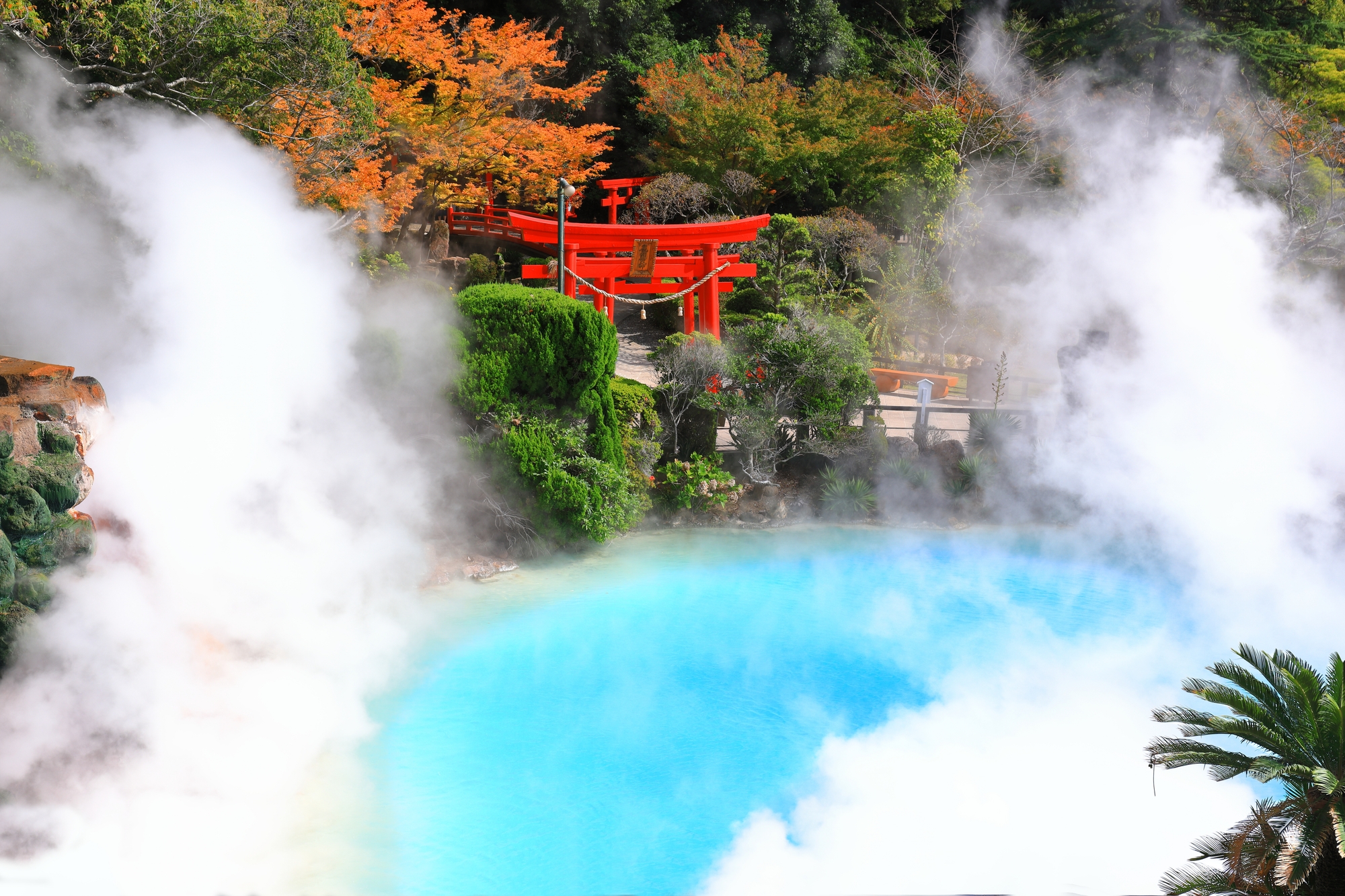
Imagine soaking in a steaming outdoor onsen as crisp winter air surrounds you, before savouring melt-in-your-mouth wagyu beef, exceptionally fresh seafood, and regional delicacies that showcase the flavours of Kyushu. If this sounds like your ideal winter getaway, Oita Prefecture might just be the destination you have been looking for.
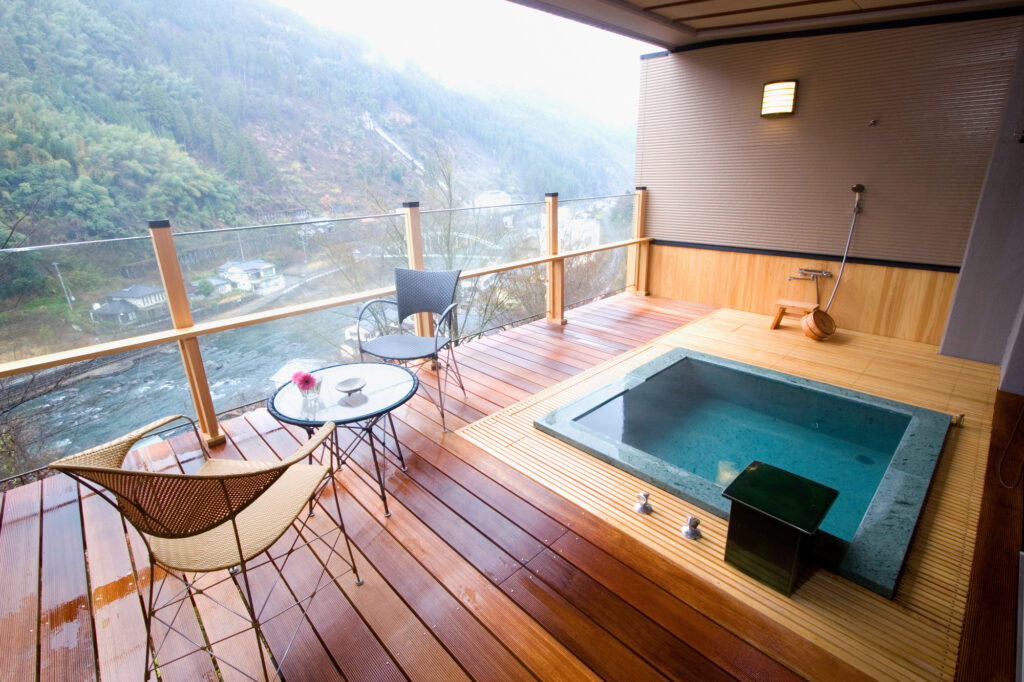
Located in the heart of Kyushu, Oita is known as Japan’s “Onsen Prefecture,” home to 5,093 natural hot springs, the highest number in the country. Positioned along the Beppu-Shimabara Rift, the prefecture’s volcanic landscape has created an abundance of mineral-rich hot springs with a wide variety of spring qualities, offering visitors a diverse range of bathing experiences. From the quaint hot spring town of Yufuin, renowned for its tranquil atmosphere, boutique shops, and traditional ryokan, to the famous steam-filled cityscape of Beppu, known for its geothermal activity and unique onsen attractions, the prefecture offers a mix of scenic landscapes, centuries-old hot spring culture, and authentic local experiences.
Whether you are looking to relax in a traditional Yufuin ryokan or enjoy some of Kyushu’s finest local cuisine, Oita offers something for every traveller.
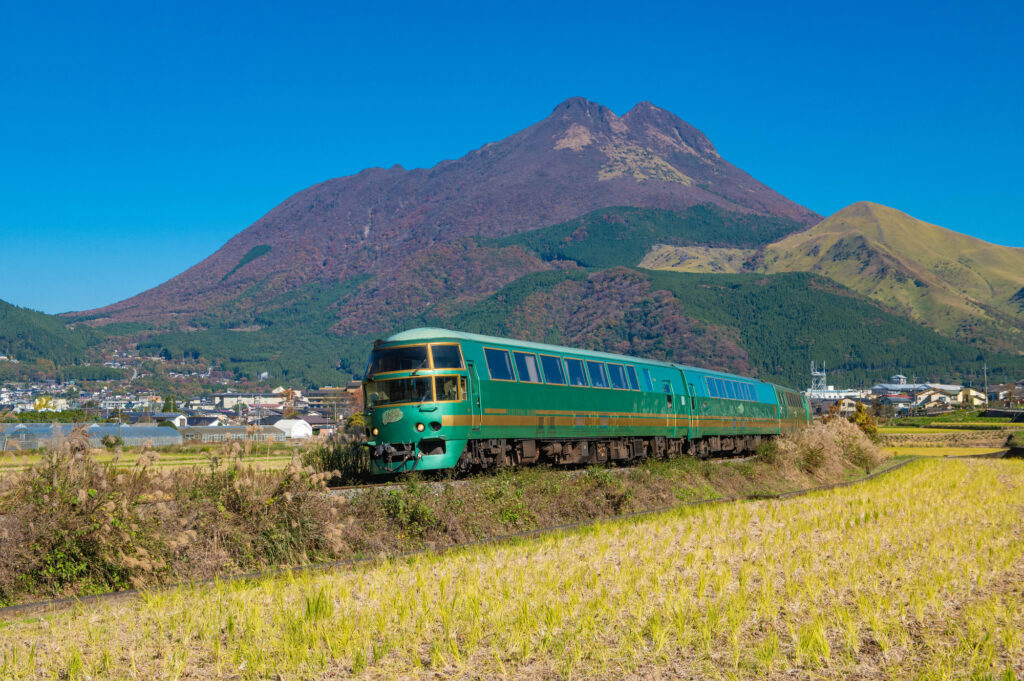
With direct flights from Singapore to Fukuoka, getting to Oita is both convenient and straightforward. Travellers can choose from a variety of transport options. If you are travelling from Fukuoka to Yufuin, the scenic Yufuin no Mori sightseeing train offers beautiful views along the route. However, as the train operates on a fixed schedule, it may not be the most convenient option for travellers planning to visit multiple destinations across the region. Those looking for greater flexibility may find travelling by private car a more suitable option.
Travelling by private vehicle allows you to maximise your time by avoiding lengthy transfers and waiting times, while giving you the flexibility to adjust your itinerary should the weather or your plans change. It also provides a comfortable and private way to travel between destinations, making it easier to enjoy everything from Yufuin to Beppu while exploring more of Kyushu. If you are planning to explore more of Kyushu, feel free to reach out to us at Japan Navi Journey to arrange your private transport in advance and enjoy a smooth, hassle-free trip.
Ready to discover one of Kyushu’s most rewarding destinations? Scroll down as we take you through the best things to do, see, and eat in Oita, from the quaint streets of Yufuin to the steam-filled wonders of Beppu.
Explore Yufuin Hot Springs with Stunning Views and Exceptional Cuisine
Yufuin Onsen: A Hot Spring Town Shaped by Nature
At the foot of Mount Yufu lies Yufuin Onsen, one of Japan’s most celebrated hot spring destinations. Surrounded by rolling mountains and lush countryside, the town has long attracted visitors seeking a peaceful retreat where nature, traditional ryokan, and therapeutic hot springs come together.
Yufuin’s connection with hot springs dates back more than a thousand years. The town was already mentioned in the Bungo Fudoki, a historical record compiled during Japan’s early Nara period, highlighting its long-standing reputation as a place of healing. From the late 1950s onwards, the local community worked to develop Yufuin as a hot spring destination while preserving its rural landscapes and natural surroundings. These efforts have helped the town retain its tranquil atmosphere and traditional appeal, continuing to attract visitors today.
Yufuin’s hot springs are the result of the region’s volcanic landscape. Rainwater gradually seeps deep beneath the mountains before being naturally heated by geothermal energy generated by nearby volcanoes, including Mount Yufu, Kuju, and Mount Tsurumi. As the heated water rises back to the surface, it creates the abundant hot springs that have made Yufuin famous throughout Japan.
Today, the Yufuin area is home to around 850 natural hot spring sources, producing an abundant supply of mineral-rich water. Visitors can enjoy a variety of bathing experiences thanks to the area’s diverse spring waters, including alkaline simple hot springs known for leaving the skin feeling smooth, sodium chloride springs prized for their heat-retaining properties, and springs containing a balanced mix of sodium chloride, sulphate, and bicarbonate, each offering its own unique bathing experience.
Lake Kinrin: Yufuin’s Most Enchanting Morning View
No visit to Yufuin is complete without stopping by Lake Kinrin, one of the town’s most well-known landmarks. Surrounded by verdant greenery at the foot of Mount Yufu, the lake offers a peaceful escape where visitors can slow down and immerse themselves in the tranquil natural scenery.
Originally known as Take no Shita no Ike, meaning “the pond at the foot of the mountain” in the local Oita dialect, the lake was renamed Kinrin, or “Golden Scale Lake,” in 1884. The name was inspired by the sight of fish glimmering beneath the evening sun, their golden scales reflecting beautifully across the water’s surface.
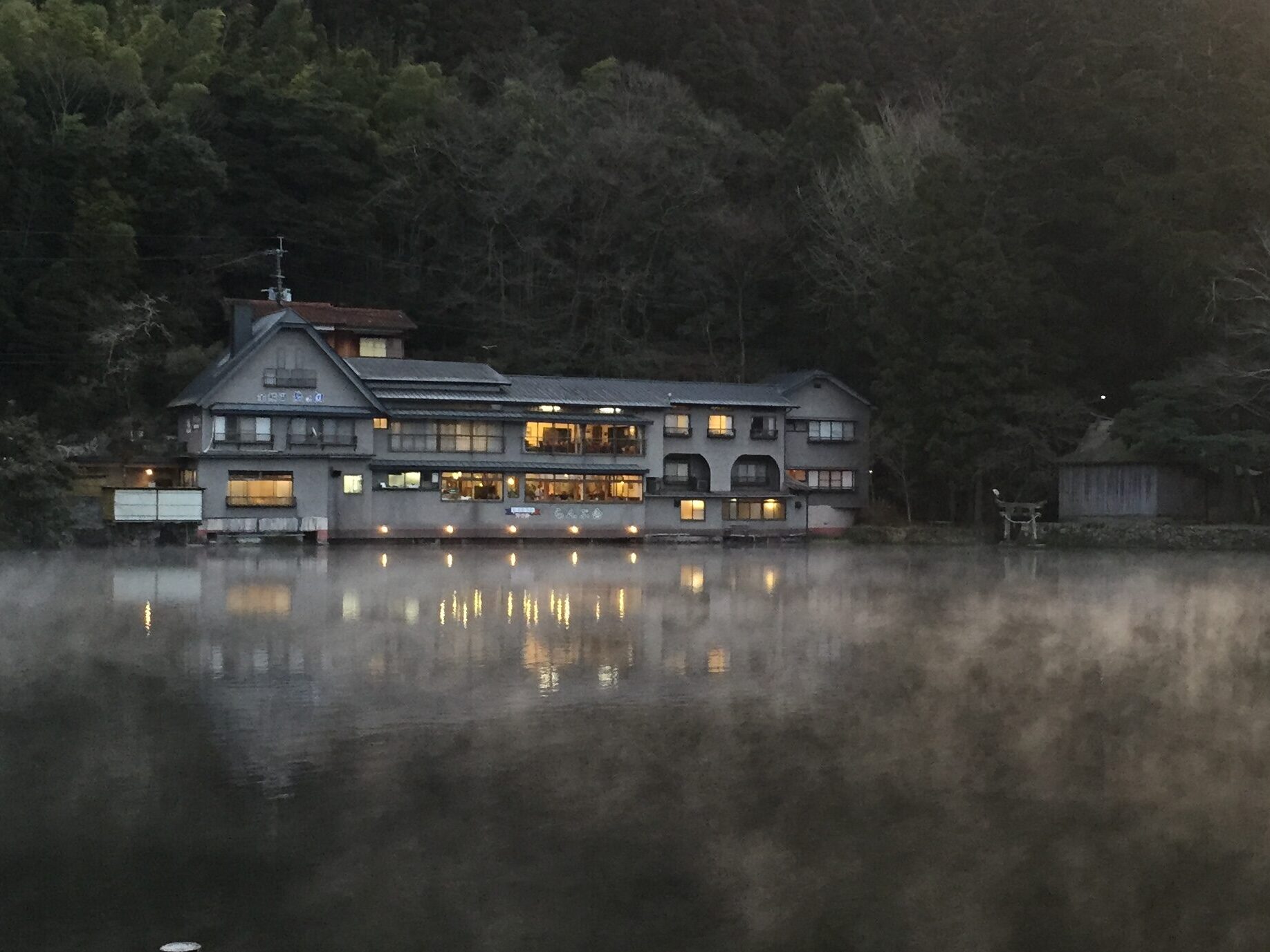
One of Lake Kinrin’s most beautiful sights can be experienced during the early mornings from autumn to early winter. As the warm spring water beneath the lake meets the cool morning air, a gentle veil of mist forms above the surface, creating a dreamlike landscape that has become one of Yufuin’s most photographed scenes.
A leisurely walking path circles the lake, offering plenty of opportunities to admire the tranquil scenery while spotting fish that call the area home. Whether you visit at sunrise to witness the mystical morning mist or later in the day for a relaxing stroll, Lake Kinrin is a place that perfectly captures Yufuin’s peaceful charm.
Stroll Along Yunotsubo Kaido and Discover Oita’s Local Flavours
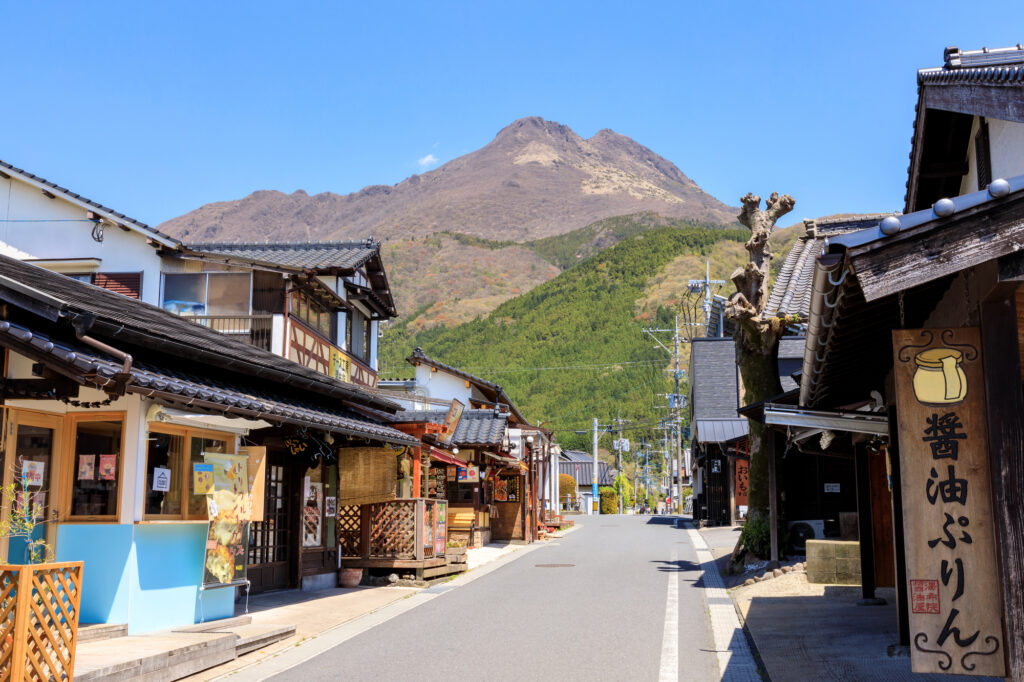
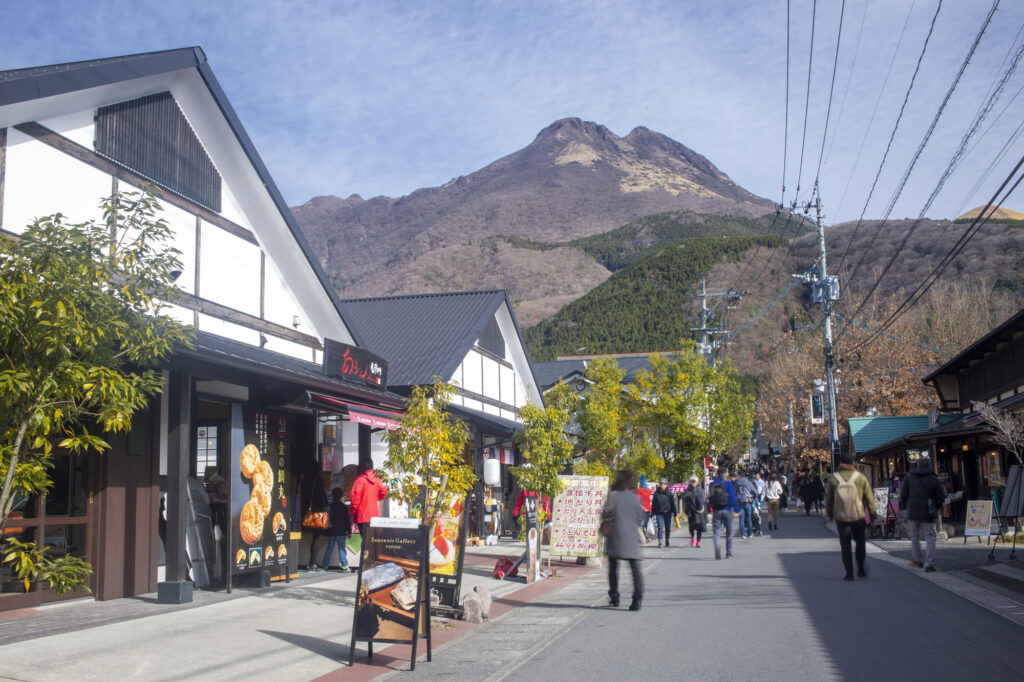
Stretching from Yufuin Station to Lake Kinrin, Yunotsubo Kaido is one of the town’s most vibrant streets and a must-visit spot for anyone exploring Yufuin on foot. Lined with charming cafés, souvenir shops, boutiques, and speciality stores housed in traditional-style buildings, the approximately 800-metre street offers plenty to discover around every corner. Be sure to wander into the smaller side streets too, where you’ll find even more cafés and unique local shops.
Besides its picturesque setting, Yunotsubo Kaido has also become a favourite spot for foodies. From local delicacies to freshly made desserts, the street offers plenty of opportunities to try Yufuin’s culinary delights while strolling through the town. If you prefer a quieter experience, consider visiting in the morning before the crowds begin to arrive, especially on weekends and public holidays.
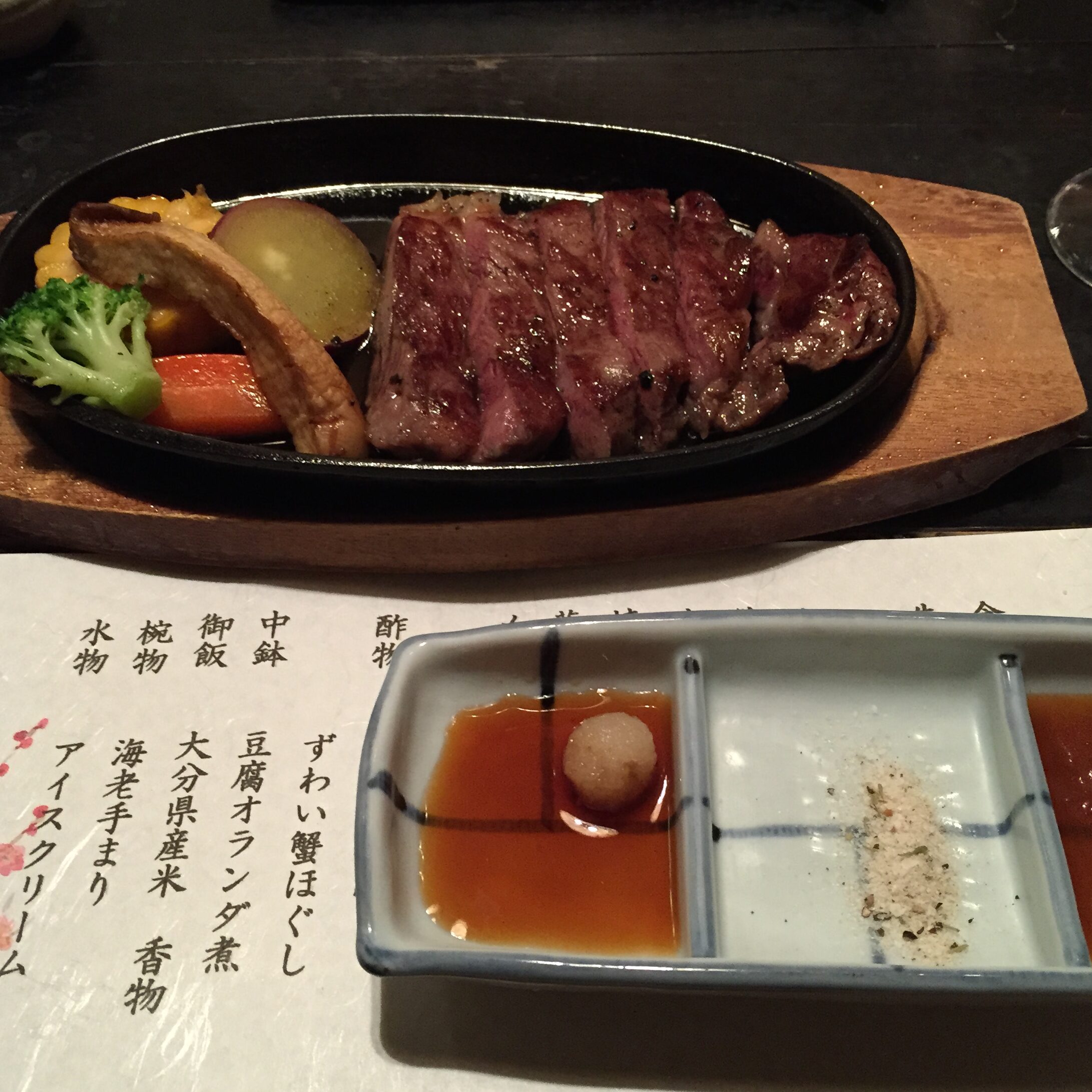
For lunch, be sure to try Oita Wagyu (Bungo Beef), one of Japan’s premium Kuroge Wagyu brands, celebrated for its fine marbling and rich flavour. Many eateries also serve traditional dishes prepared with locally raised chicken, another regional speciality loved for its tender texture and savoury taste.
Don’t forget to leave some room for dessert. Yunotsubo Kaido is well known for its wide selection of freshly made sweets, seasonal treats, and light snacks, making it easy to enjoy a bite or two as you continue exploring the town.
The street is also filled with photo-worthy spots, from charming shopfronts and traditional Japanese-style architecture to the nearby scenery around Lake Kinrin. Whether you’re taking photos or simply enjoying the surroundings, Yunotsubo Kaido offers a great way to experience the charm of Yufuin.
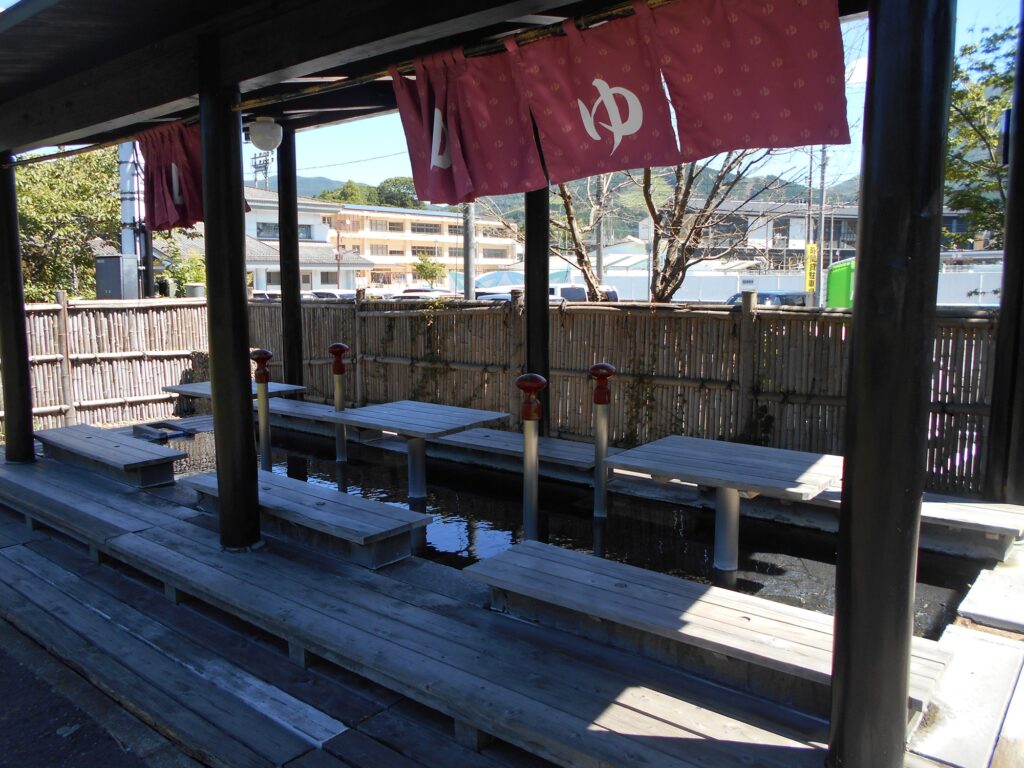
If your feet need a rest after exploring, several foot baths can be found along Yunotsubo Kaido and near Lake Kinrin, offering a relaxing way to unwind before continuing your trip. While some foot baths are free to use, others charge a small admission fee, and bringing a small towel is recommended for added convenience.
Just a short walk from Yunotsubo Kaido is Yufuin Floral Village, a whimsical attraction inspired by the picturesque villages of England’s Cotswolds. Opened in 2012, the compact village is filled with colourful flowers, storybook-style cottages, boutique shops, and cafés, creating an atmosphere that feels as though you’ve stepped into a fairytale.
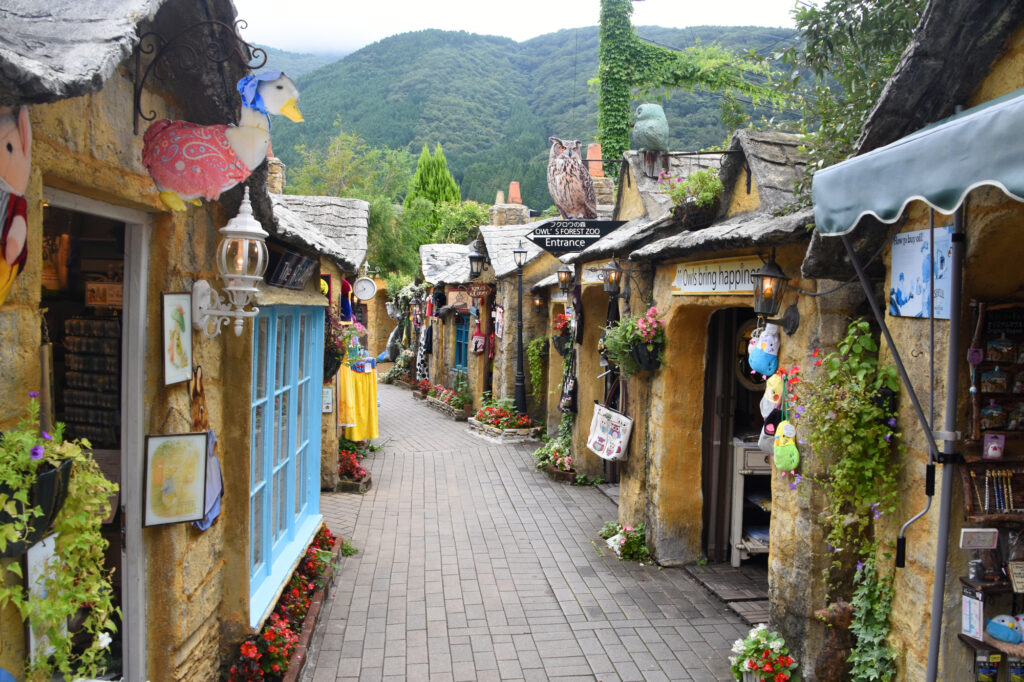
Many visitors liken its streets to scenes from the Harry Potter films, as parts of the Cotswolds served as inspiration for the magical world portrayed on screen. Whether you’re wandering through the flower-lined pathways or browsing the unique shops, Floral Village offers a refreshing change of scenery from Yufuin’s traditional streets.
The village is also home to several themed attractions and speciality stores, including an owl experience, character merchandise shops, and cafés, making it a popular stop for families and couples. It offers a different side of Yufuin that’s well worth exploring.
If you’re planning to explore Yufuin and other destinations across Kyushu, Japan Navi Journey can help you create an itinerary that suits your travel style. From arranging private transport to recommending the best routes, we’re here to help you make the most of your trip.
Now that you’ve seen the charm of Yufuin, it’s time to experience a completely different side of Oita. Continue reading as we explore Beppu, a city renowned for its spectacular steam-filled landscapes, unique hot spring attractions, and local specialities. If you’re still unsure where to begin, contact us and let us help you plan the perfect Oita itinerary.
Discover Beppu’s Steam-Filled Landscapes and Unique Local Flavours
Beppu Onsen: Japan’s Famous Hot Spring City
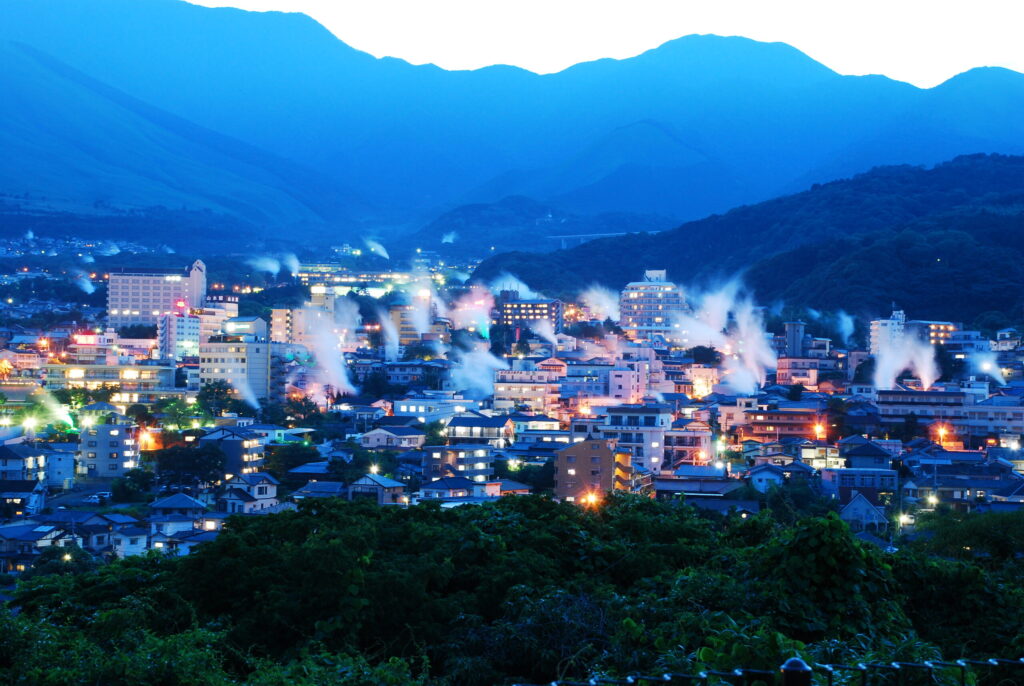
After experiencing the quieter side of Yufuin, it’s time to discover a completely different side of Oita in Beppu, a city renowned for its impressive geothermal landscape and rich hot spring culture. Unlike Yufuin’s tranquil countryside, Beppu is instantly recognisable by the clouds of steam rising from streets, rooftops, and hillsides throughout the city. This striking landscape is created by the city’s abundant geothermal activity, making Beppu home to the highest number of natural hot springs in Japan.
Beppu’s hot springs are closely linked to the region’s volcanic landscape. Rainwater gradually filters deep underground, where it is naturally heated by geothermal energy generated by volcanic activity around Mount Tsurumi and Mount Garan. As the heated water rises back to the surface, it absorbs naturally occurring minerals, creating the mineral-rich hot springs.
The city’s connection with hot springs dates back more than a thousand years. Historical records from the early eighth century already mention Beppu’s therapeutic waters, while later accounts describe the area as a place where travellers and injured samurai came to rest and recover. During the Meiji period, improvements in drilling technology led to the development of many more hot spring wells, allowing Beppu to grow into the renowned hot spring city visitors know today.
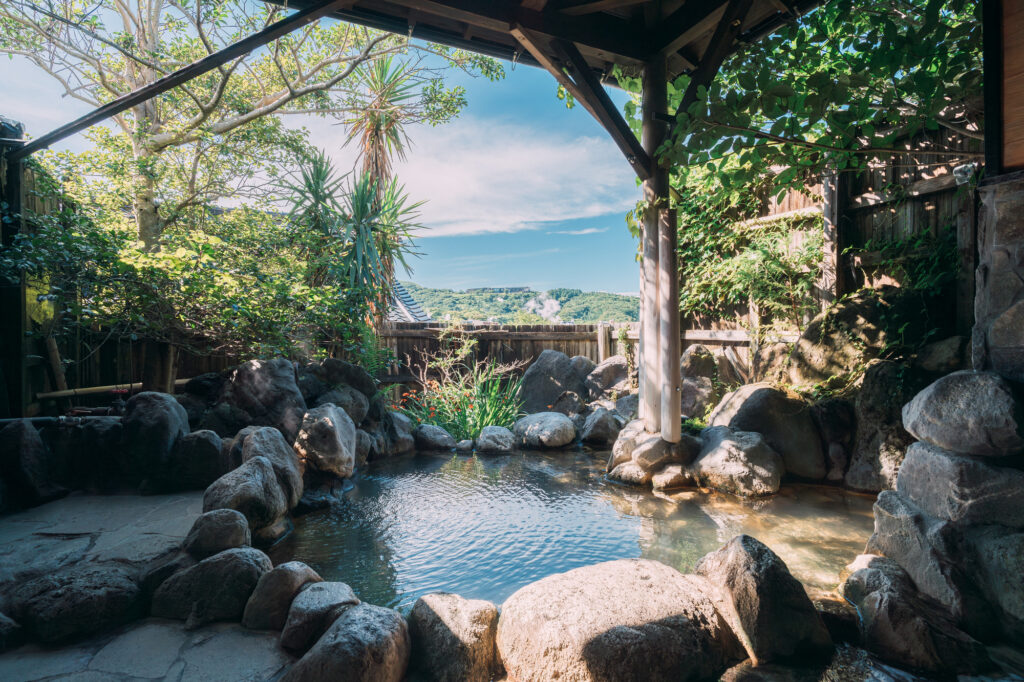
Beppu is also home to Beppu Hatto, or the Eight Hot Springs of Beppu, comprising Hamawaki Onsen, Beppu Onsen, Kankaiji Onsen, Horita Onsen, Myoban Onsen, Kannawa Onsen, Shibaseki Onsen, and Kamegawa Onsen. Each district offers its own atmosphere and bathing experience, from historic public bathhouses and traditional hot spring towns to scenic hillside retreats and seaside baths. Together, they showcase a diverse variety of hot spring waters, including hot springs suitable for first-time visitors, chloride springs known for their warming and moisturising properties, bicarbonate springs often referred to as “beauty baths” for leaving the skin feeling soft and smooth, and sulphur, sulphate, acidic, and iron-rich springs, each valued for their unique therapeutic qualities.
Visitors looking to experience more of Beppu’s hot spring culture can also follow the Beppu Hatto Onsen Road, a unique hot spring route connecting participating bathhouses across the eight districts. Often described as a hot spring pilgrimage, the route invites visitors to soak in different baths, collect commemorative stamps in a special Spaport, and discover Beppu’s history, culture, and local communities along the way.
Jigoku Meguri: Discover the Hells of Beppu
Among Beppu’s most well-known attractions is Jigoku Meguri, also known as the Hells of Beppu, Beppu Jigoku, or Beppu Hells. Rather than hot springs for bathing, these geothermal sites offer a closer look at the region’s volcanic activity, where clouds of steam, bubbling mud, and near-boiling water rise naturally from underground.
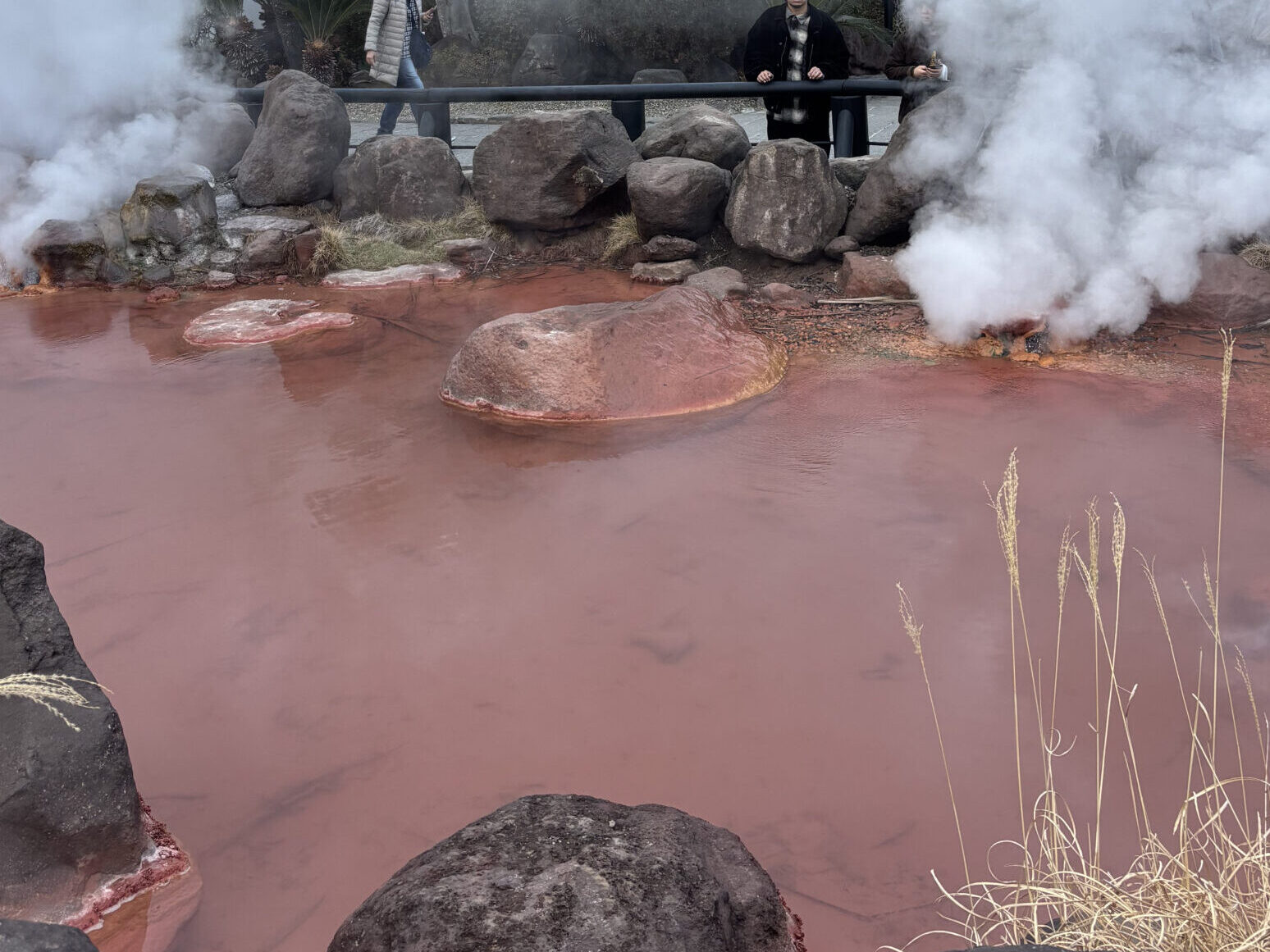
The story behind the name “Hell” dates back over a thousand years. Historical records in the ancient Bungo Fudoki describe the Kannawa-Kamegawa area as a place where steam, boiling water, and hot mud continuously erupted from the ground. The area was considered too dangerous to approach, leading local people to refer to it as “Hell”. Today, these geothermal vents have become one of Beppu’s most famous attractions, offering visitors a chance to witness hot spring sources reaching temperatures of nearly 100°C.
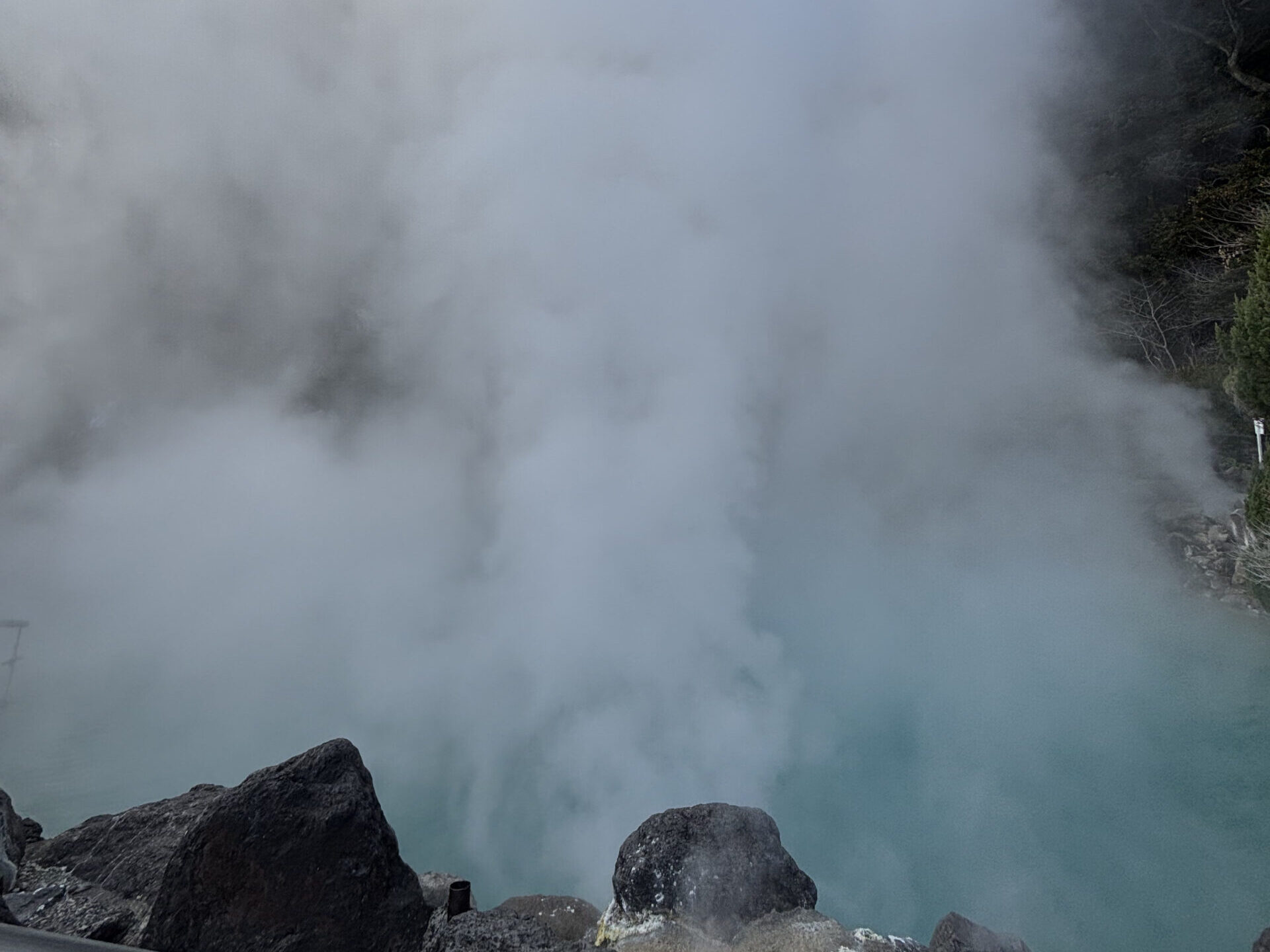
Jigoku Meguri features seven unique “hells”: Umi Jigoku (Sea Hell), Chinoike Jigoku (Blood Pond Hell), Tatsumaki Jigoku (Tornado Hell), Shiraike Jigoku (White Pond Hell), Oniishibozu Jigoku (Oniishi shaven head hell), Oniyama Jigoku (Demon Mountain Hell), and Kamado Jigoku (Cooking Pot Hell). Each features its own striking geothermal scenery, from Umi Jigoku’s vivid cobalt-blue waters and Chinoike Jigoku’s naturally red pond coloured by iron-rich minerals to the regularly erupting geyser at Tatsumaki Jigoku and the milky-white waters of Shiraike Jigoku. These four hells have also been designated as National Places of Scenic Beauty for their remarkable geological formations and natural beauty. Meanwhile, Oniishibozu Jigoku is known for its bubbling grey mud pools, Oniyama Jigoku uses its naturally heated waters to raise crocodiles, and Kamado Jigoku features a collection of geothermal pools with varying colours and temperatures.
As the seven hells are spread across different areas of Beppu, arranging a private vehicle is highly recommended. This makes it easier to travel between each location efficiently, allowing you to explore all seven hells comfortably within the day.
Experience Beppu’s Culinary Specialities
Beppu’s geothermal environment has shaped not only its famous hot springs but also its local food culture, giving rise to dishes that have become synonymous with Oita Prefecture.
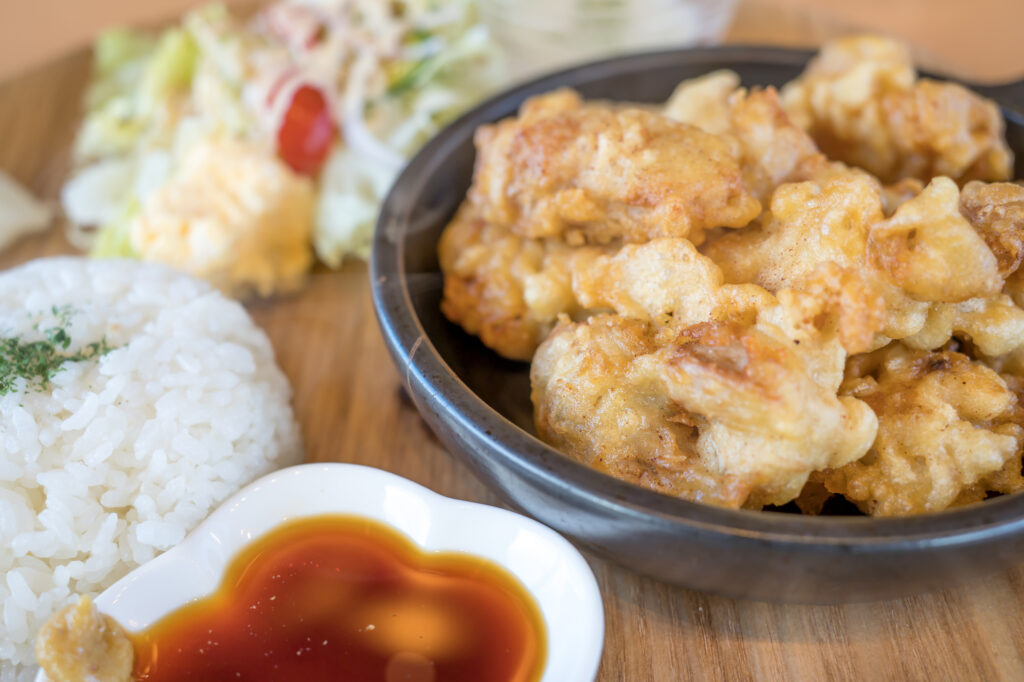
One of the region’s best-known specialities is Toriten, or chicken tempura, a beloved comfort food that has been enjoyed in Beppu and Oita since the 1950s. Unlike Japanese fried chicken, which is coated in flour or potato starch, Toriten is made by marinating chicken thigh with soy sauce and garlic before coating it in a light tempura batter and deep-frying it until golden and crispy. It is traditionally served with a squeeze of kabosu, Oita’s signature citrus fruit, and enjoyed with mustard and ponzu or soy sauce, creating a light and refreshing flavour that pairs perfectly with rice.
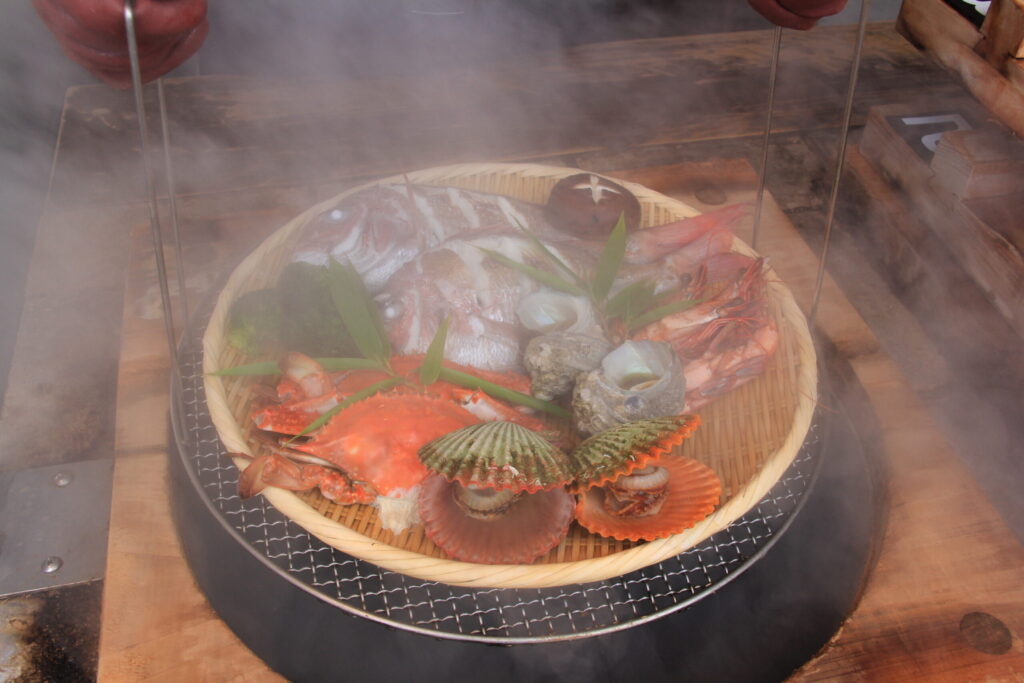
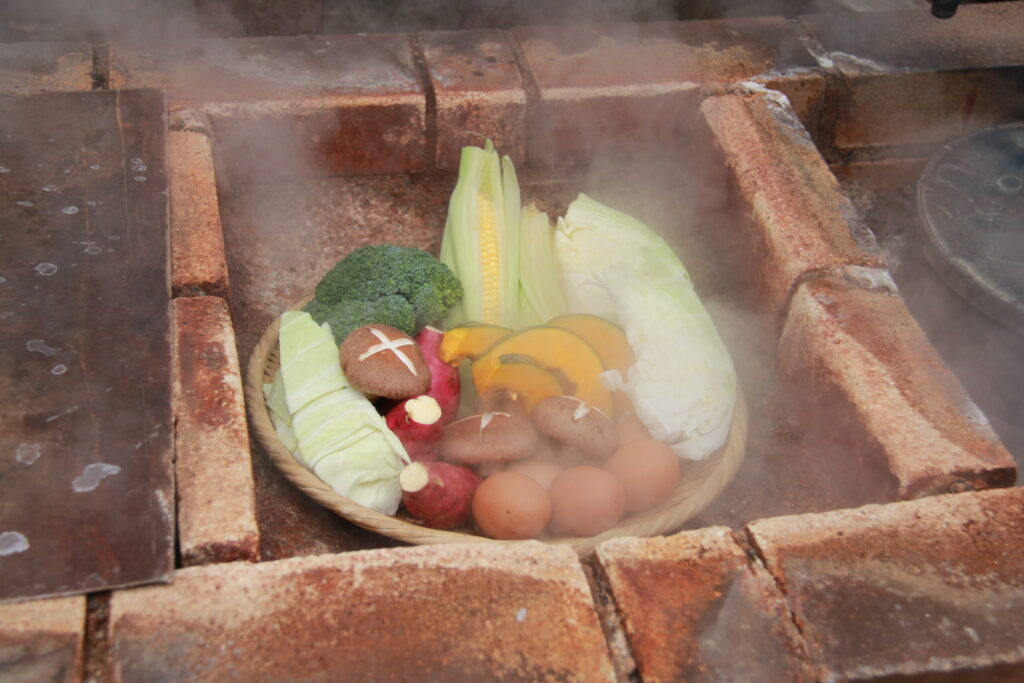
Another local speciality not to be missed is Jigoku-mushi, which translates to “hell-steamed” cuisine. Originating in Kannawa, one of Beppu’s historic hot spring districts, this traditional cooking method uses the natural steam from the area’s hot springs to gently cook a wide variety of ingredients. From fresh seafood such as shrimp, crab, scallops, sea bream, and horse mackerel to pork, chicken, beef, vegetables, and eggs, the geothermal steam helps concentrate the natural flavours while producing tender, flavourful dishes.
For generations, Jigoku-mushi has been served at local inns as part of Beppu’s hospitality and was traditionally prepared at toji-yado, hot spring therapy inns where guests staying for extended periods could cook their own meals using geothermal steam. Today, visitors can try this traditional cooking method at several places around Kannawa, with some allowing guests to bring their own ingredients, while others provide everything needed to enjoy an authentic Jigoku-mushi meal.
Enjoy Panoramic Views from Jūmonjibaru Observatory
For breathtaking views overlooking Beppu, head to Jūmonjibaru Observatory, one of Oita Prefecture’s best viewpoints. Located on the Jūmonji Plateau at an elevation of approximately 500 metres, the observatory overlooks Beppu Bay, Hiji Town, and the city of Beppu, offering sweeping views of the city and coastline.
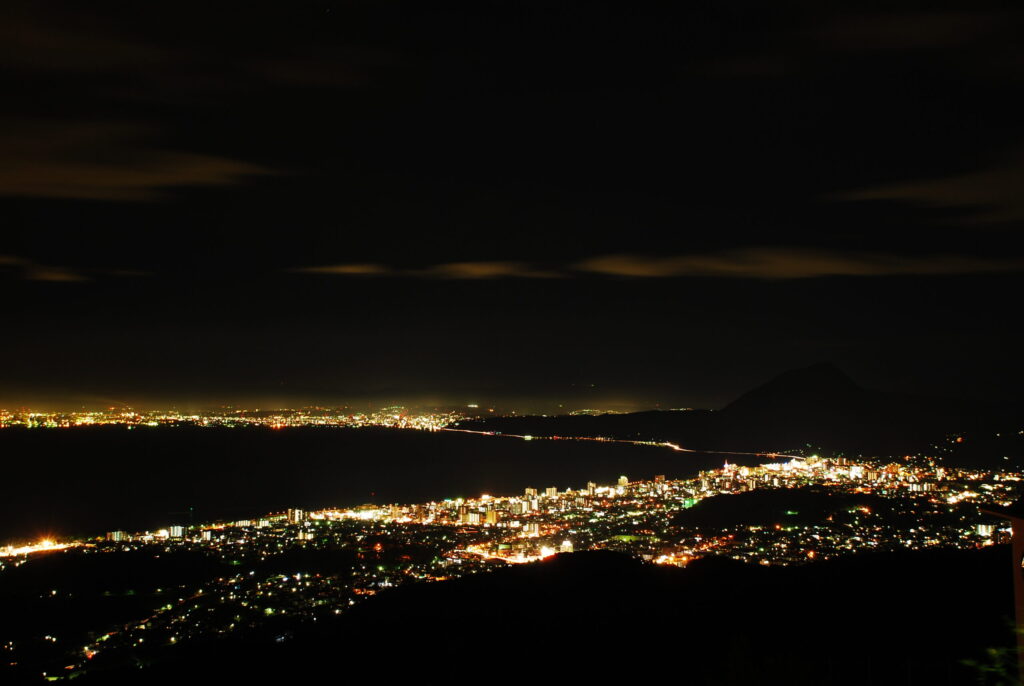
While the scenery is impressive throughout the day, many visitors choose to visit in the evening to watch the sky gradually change from sunset to the deep blue of night. As darkness falls, the lights of Beppu begin to illuminate the bay, creating one of Oita Prefecture’s most well-known night views. Conveniently located just a 20-minute drive from Beppu’s city centre, Jūmonjibaru Observatory is well worth adding to your Beppu itinerary.
Getting to Beppu
Beppu is easily accessible from Fukuoka, making travel from Beppu to Fukuoka, or vice versa, easy while exploring Kyushu. Oita Airport offers domestic flights from Tokyo (Haneda) and Nagoya (Centrair), as well as international connections from Taiwan and South Korea.
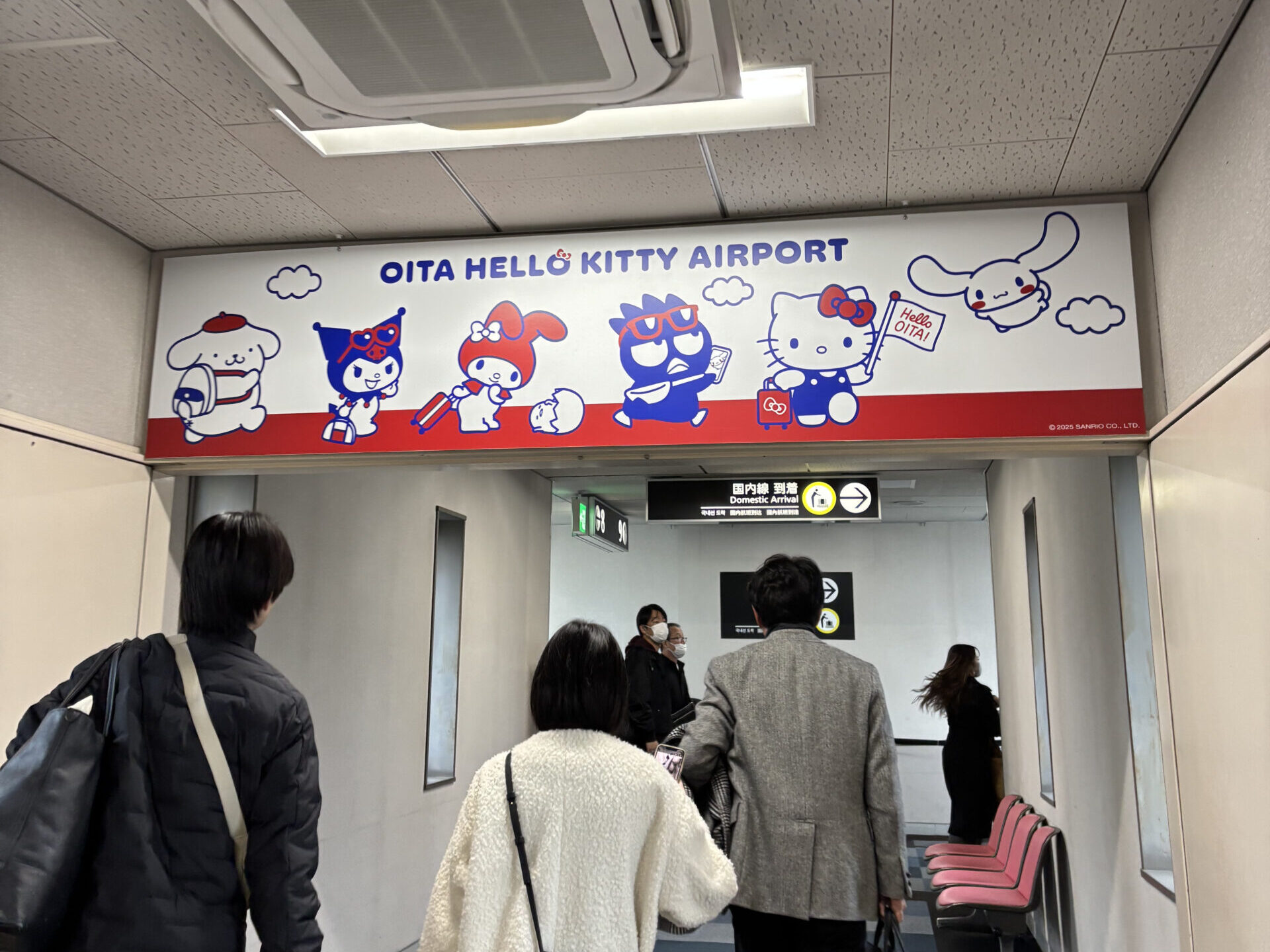
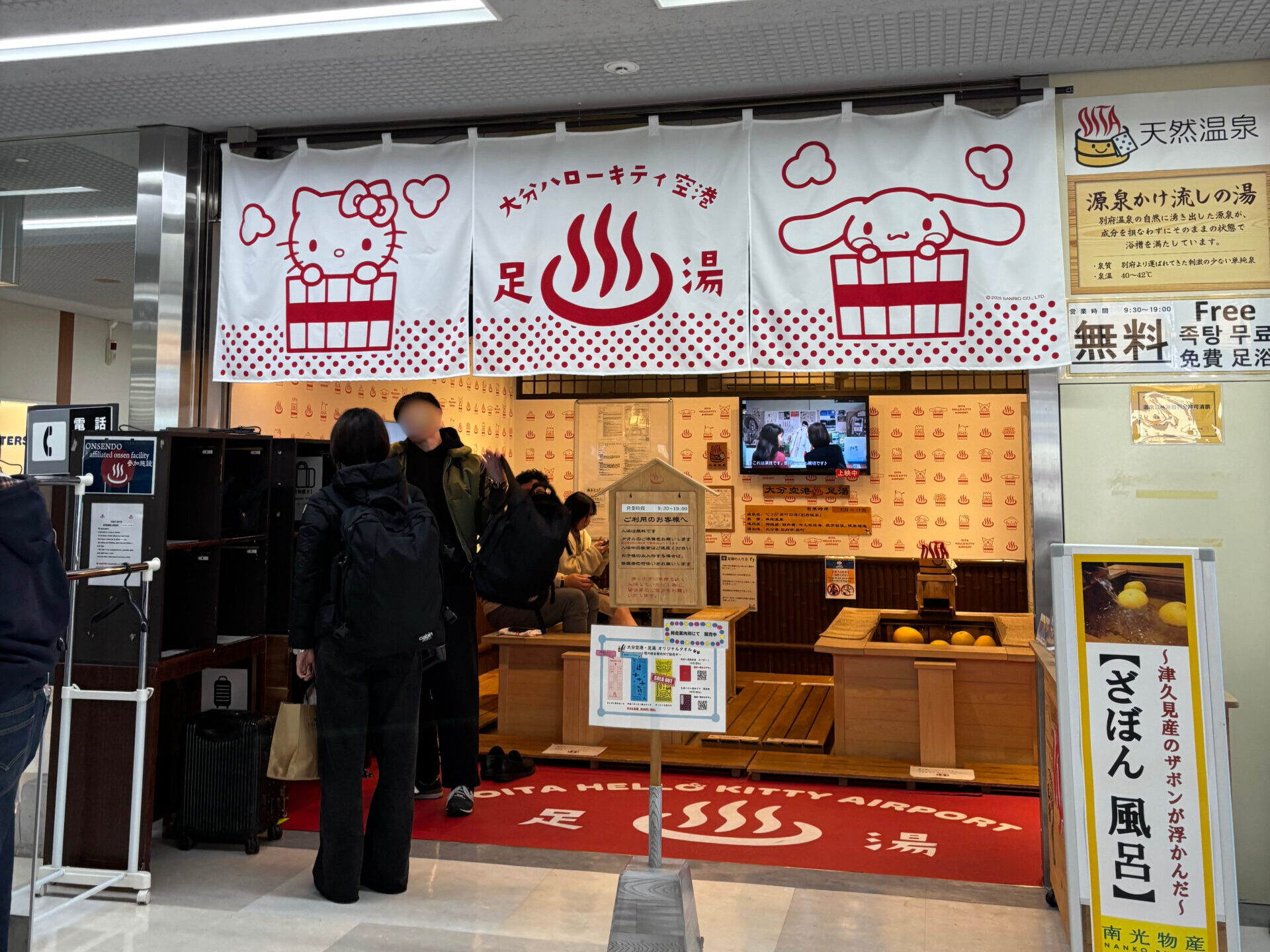
And if you’re a Sanrio fan, there’s good news for you! Oita Airport has been transformed into “OITA HELLO KITTY AIRPORT,” with Hello Kitty and other popular Sanrio characters appearing throughout the terminal. Look out for themed decorations and photo spots during your visit, available until 31st March 2027.
For travellers arriving from Fukuoka or planning to visit multiple destinations across Oita, travelling by private vehicle offers added convenience. As many of Beppu’s attractions are spread across different parts of the city, having your own private transport makes it easier to travel between them comfortably and at your own pace.
Experience an Unforgettable Safari Adventure
If you are looking to end your time in Oita with something completely different, head to African Safari, an interactive safari park designed to recreate the animals’ natural habitats. Here, you can observe a wide variety of animals displaying their natural behaviours in environments that closely reflect where they live in the wild.
The Safari Zone recreates six different natural environments, including mountains, grasslands, rocky terrain, forests, watersides, and sandy areas, allowing the animals to roam in surroundings that closely resemble their native habitats. As you explore the park, you may spot them basking in the sun, playing with one another, feeding, or relaxing, offering a more natural viewing experience than traditional animal enclosures. Beyond the Safari Zone, the Interaction Zone gives visitors the opportunity to get up close with a variety of animals.
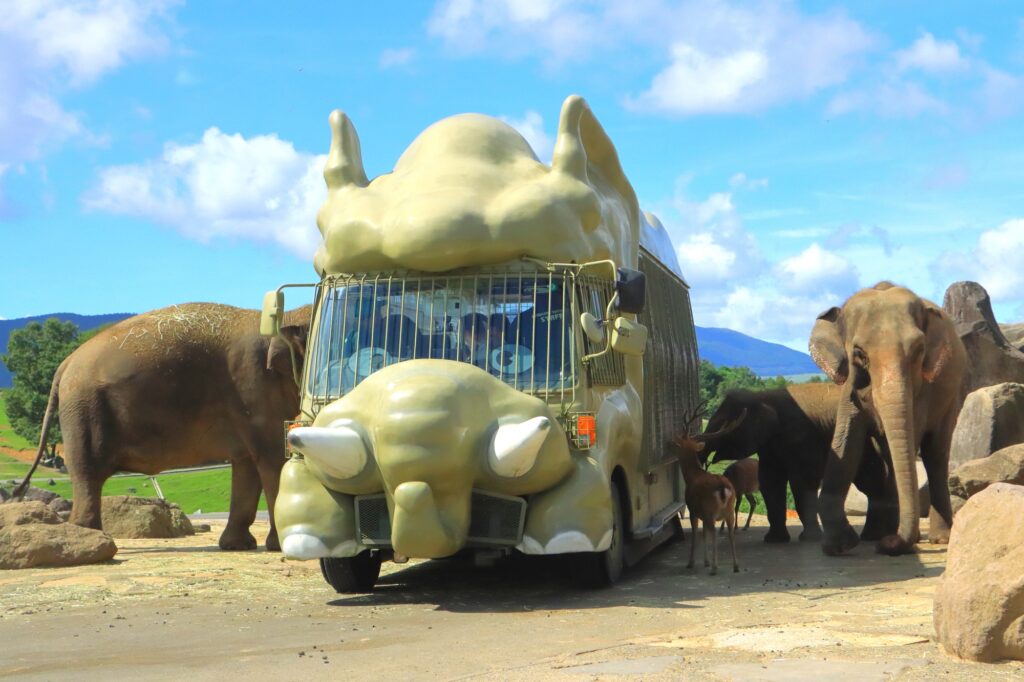
One of the highlights of a visit is the Jungle Bus, which takes you through the safari park for an up-close encounter with the animals. Along the way, you will also have the opportunity to feed selected animals from the safety of the bus, making it an unforgettable experience for visitors of all ages.
Travelling by private vehicle makes it easy to include African Safari in your Oita itinerary, especially if you are visiting several attractions during your trip. With the flexibility to plan your route around the places you want to visit, you can spend more time enjoying Oita without having to rely on fixed public transport schedules.
If you need help planning your route, contact Japan Navi Journey to arrange private transport and create an itinerary based on your travel plans.
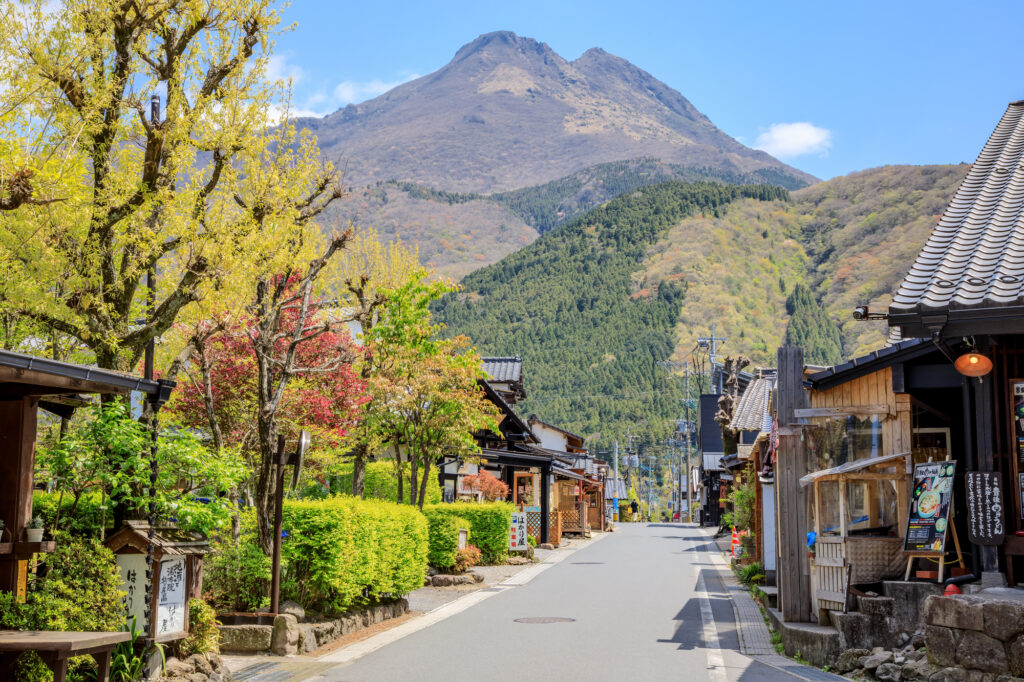
From the relaxing hot springs and quaint streets of Yufuin to Beppu’s steam-filled scenery, local specialities, and the wildlife experience at African Safari, Oita offers plenty to discover throughout your trip. Whether you are visiting for the onsen, food, nature, or a mix of everything, there are many ways to experience a different side of Kyushu.
And your trip does not have to stop in Oita. With destinations such as Kumamoto, Miyazaki, and Fukuoka nearby, you can easily continue exploring more of Kyushu and discover even more of what the region has to offer.
The next time you are in the Land of the Rising Sun, don’t just stick to the usual favourites. Take some time to explore places outside the main cities. You might just discover something you did not expect. Check out our travel guides for more inspiration and discover even more local travel experiences across Japan.