Hirosaki and Hakodate in Winter: A 4 Day Itinerary from Aomori to Hokkaido
Planning a winter trip to Aomori and Hokkaido?
From snow-covered Hirosaki Castle and the pink Winter Sakura illumination to ice fishing on a frozen lake, winter brings plenty of seasonal experiences to Hirosaki and Hakodate. If you are travelling in December, you can also enjoy Christmas illumination around Hakodate, while February brings even more snow activities and seasonal events.
Hirosaki is a castle town in Aomori Prefecture, while Hakodate is a port city at the southern tip of Hokkaido. Although they are located on different islands, the two destinations are connected by the Hokkaido Shinkansen via the Seikan Tunnel beneath the Tsugaru Strait.
This four-day itinerary starts from Shin-Aomori Station and ends in Hakodate, with one night in the Mount Iwaki area and two nights in Hakodate. Along the way, you can try snowshoeing, ice fishing and other winter activities, making it suitable even if it is your first time experiencing heavy snow in Japan.
At Japan Navi Journey, we work closely with local communities across Japan. This itinerary was planned together with Hirosaki City and Hakodate City to introduce some of the winter experiences you can enjoy across Aomori and southern Hokkaido.
Read on as we share our four-day winter itinerary from Hirosaki to Hakodate.
When Is the Best Time to Visit?
If you are planning to follow this winter itinerary, February is one of the best months to visit Hirosaki and Hakodate, especially during the first half of the month when more winter activities and seasonal events are available.
Many of the activities depend on snow and ice conditions. Ice fishing at Onuma usually takes place from early January to mid-March, while snowmobile activities on the frozen lake generally have a shorter season in February when the ice is thick enough.
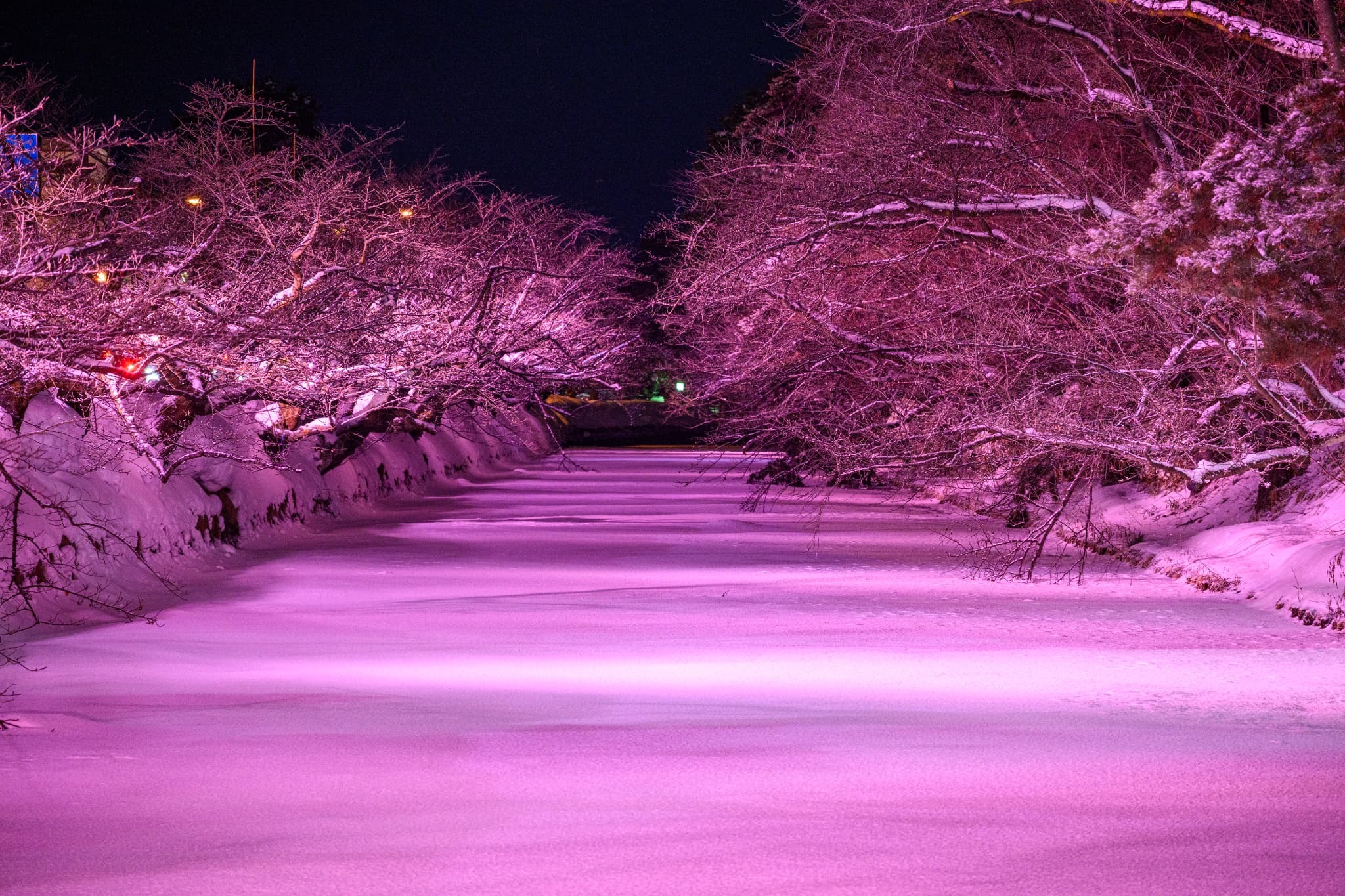
In Hirosaki, you can also see the Winter Sakura illumination from December to the end of February. Snow that settles on the bare branches of the cherry trees is lit with pink lights, making the trees look like they are covered in cherry blossoms. The scenery is especially beautiful when there has been enough snowfall to cover the branches.
Early to mid February is also a good time for seasonal events. The Hirosaki Castle Snow Lantern Festival, where snow lanterns and snow sculptures are displayed around Hirosaki Park, will be held from 10 to 14 February in 2027. In Hakodate, the Hakodate Winter Fireworks are usually held on Fridays and Saturdays in February.
December is another option if you would like to see the Hakodate Christmas Fantasy, a winter event held around the bay area with a large Christmas tree and Christmas illumination. However, the lake at Onuma may not yet be frozen enough for activities such as ice fishing and snowmobile sled rides.
As activity periods and event dates can change depending on snow, ice and weather conditions, we recommend checking the latest information before your trip.
What Should You Wear?
Temperatures in Hirosaki and Hakodate can stay below freezing during February, while the Mount Iwaki area receives particularly heavy snowfall.
Bring a waterproof outer layer, gloves, a hat and winter shoes with good grip, as roads and pavements can become icy. Trains, shops and other indoor spaces are usually well heated, so wearing several layers that are easy to remove can be more comfortable than relying on one thick layer.
If you are joining snow activities during your trip, Japan Navi Journey can also arrange suitable winter gear for you. This can be included as part of your personalised tour, so you do not have to prepare or bring everything yourself. We can adjust the arrangements based on your itinerary and planned activities, making it easier to travel between destinations and enjoy the winter experiences along the way.
Day 1: Explore Snow Covered Hirosaki and See the Winter Sakura
Travel from Tokyo to Hirosaki and Enjoy Niboshi Ramen for Lunch
If you are travelling from Tokyo, take the Tohoku Shinkansen from Tokyo Station directly to Shin-Aomori Station. The journey takes a little over three hours on the fastest services, taking you from the city to the snowy scenery of Aomori without the need to change trains.
From Shin-Aomori Station, transfer to the JR Ou Line for Hirosaki Station, which takes around 30 to 40 minutes.
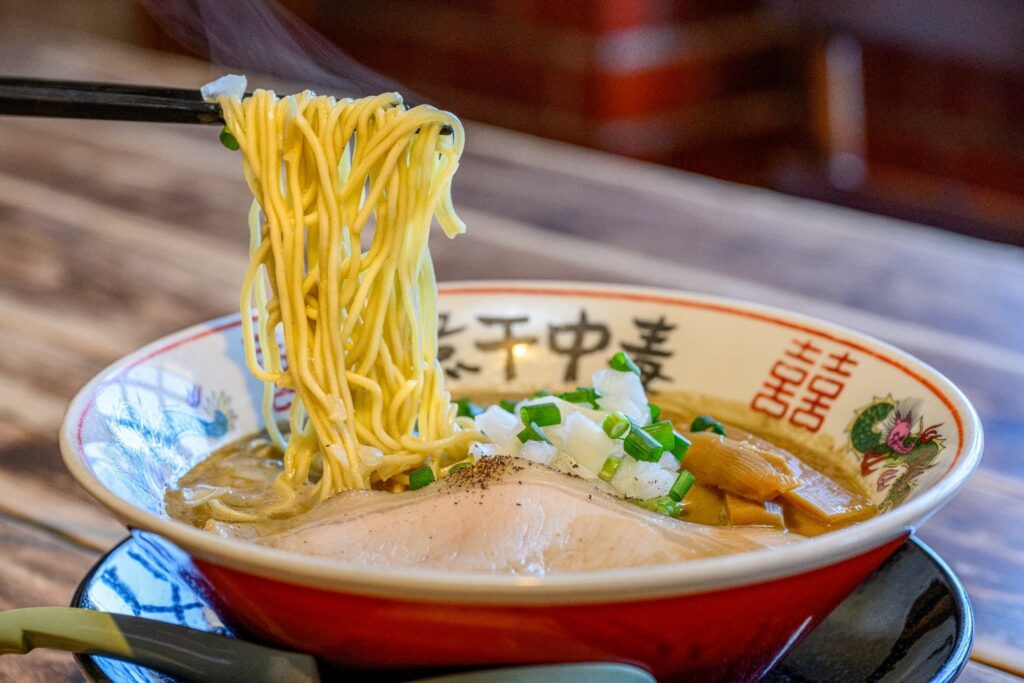
After arriving in Hirosaki, warm up with a bowl of niboshi ramen for lunch. A local favourite in the Tsugaru region, niboshi ramen is made with a broth using dried sardines, giving it a rich and distinctive flavour. It is also a comforting meal to have after arriving in cold and snowy Hirosaki.
See Hirosaki Castle Covered in Snow
Hirosaki Park may be best known for its cherry blossoms in spring, but winter offers a completely different view of the park.
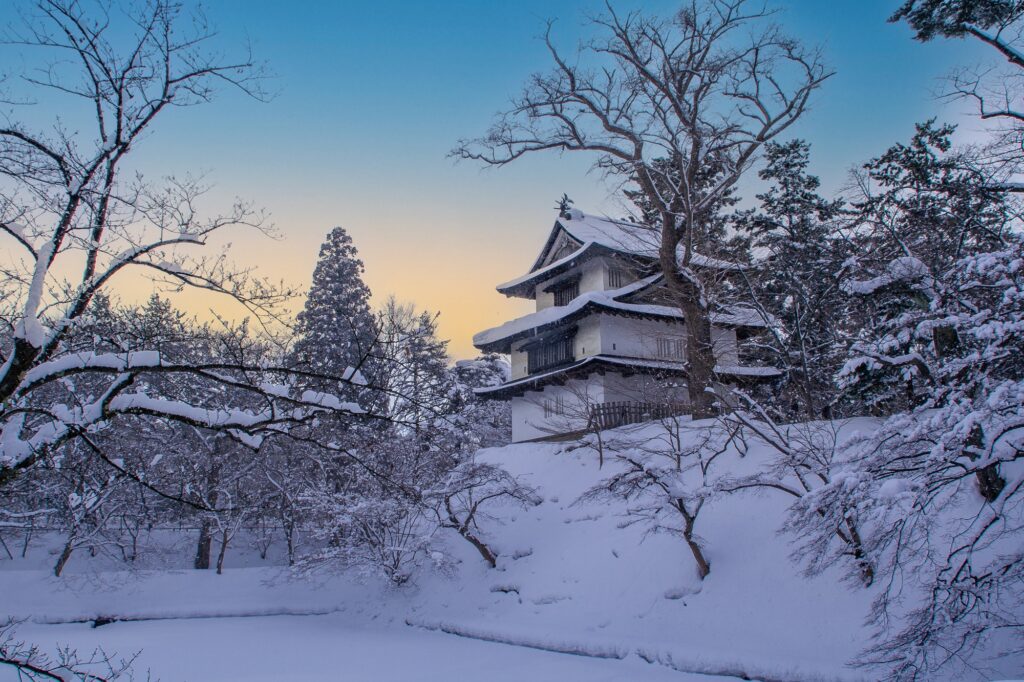
The park remains open during the season, allowing you to walk through the snow-covered grounds and see Hirosaki Castle with snow on its roof.
As you explore the park, look out for yukitsuri, a traditional method used to protect tree branches from the weight of heavy snow. Ropes are attached from the top of a tall pole to the branches below, creating an umbrella-like shape.
Did you know? The decorations at the top of the yukitsuri poles in Hirosaki Park are handmade by park staff, with different designs created each year. See if you can spot the different designs during your visit!
See Hirosaki’s Winter Sakura
As evening approaches, head towards the outer moat near Otemon Gate for one of Hirosaki’s best-known winter illuminations.
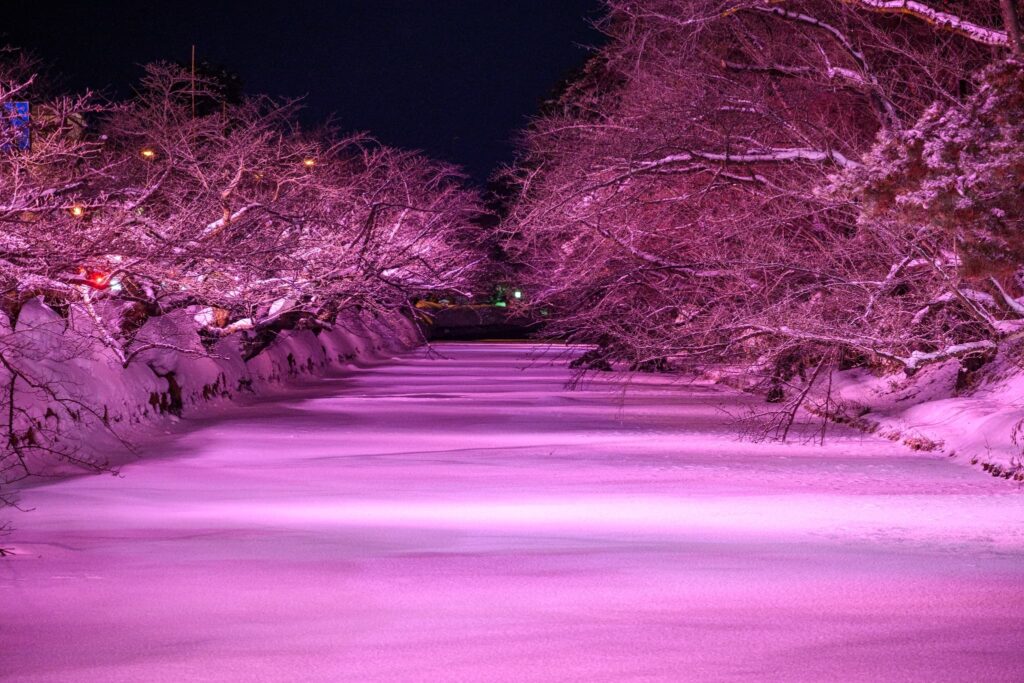
During winter, snow settles along the bare branches of the cherry trees lining the moat. Pink lights are then projected onto the trees, making the snow-covered branches resemble cherry blossoms.
Known as the Winter Sakura Light-Up, the illumination takes place every evening from December until the end of February. You can also explore other winter illuminations around central Hirosaki. The city has several Western style buildings dating from the Meiji (1868–1912) and Taisho (1912–1926) periods, including the Former Hirosaki City Library. During winter, areas around Otemon Square and Hirosaki City Hall are also illuminated in the evening.
Stay at a Hot Spring Inn near Mount Iwaki
Spend the night in the Iwaki area, around 30 minutes from central Hirosaki. There are private houses rented to one group at a time and hot spring inns such as Asobe-no-Mori Iwakiso.
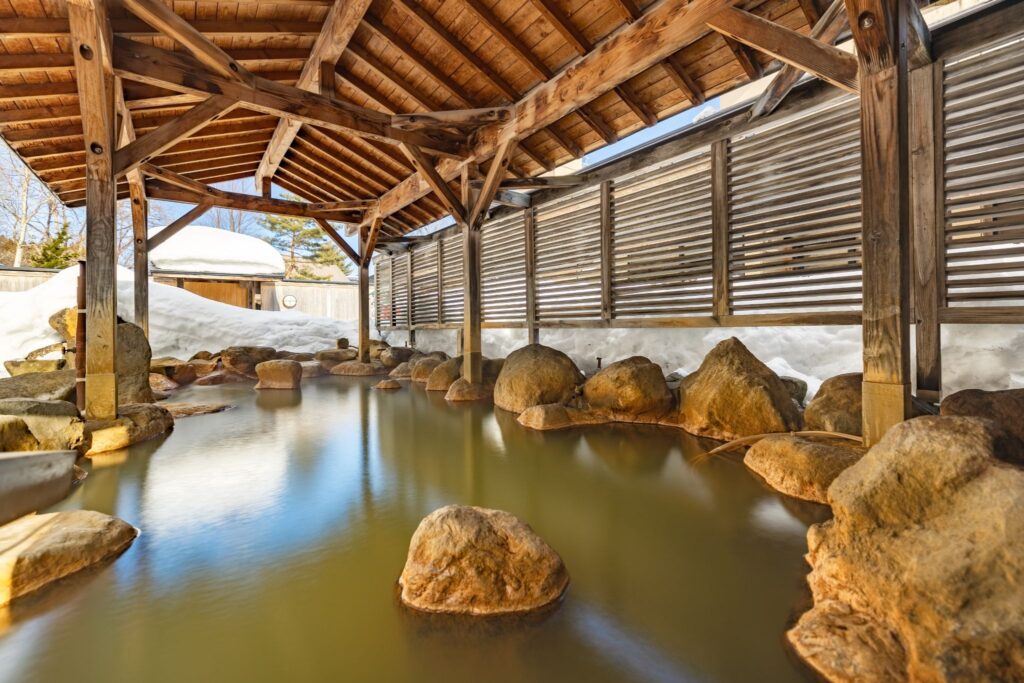
After a day outside in the snow, warm up in an onsen and, depending on your accommodation, enjoy an outdoor bath with views of the snow.
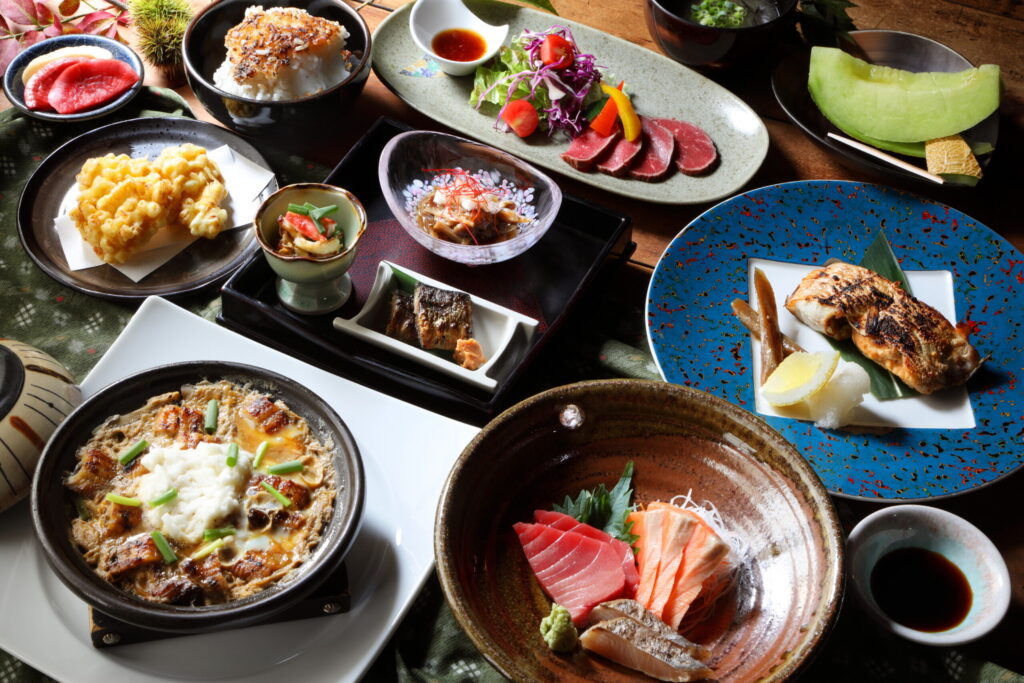
At traditional Japanese ryokan, guests can savor exquisite Kaiseki cuisine—a multi-course dinner crafted with seasonal, locally sourced ingredients. Blended with the rich culinary heritage of the Tohoku region, these dishes offer a uniquely memorable dining experience. While Japanese cuisine encompasses a wide variety of dining styles, we highly recommend experiencing Kaiseki during your stay at a traditional ryokan.
Winter is also a good time to try some of Aomori’s local dishes. Our recommendations include kenoshiru, a soup made with finely chopped root vegetables, and jappa-jiru, a warming cod soup. Another local dish to look out for is Aomori style oden, which is served with ginger miso sauce.
Day 2: Try Snow Activities near Mount Iwaki and Travel to Hakodate
Go Snowshoeing near Mount Iwaki
At 1,625 metres, Mount Iwaki is the highest mountain in Aomori Prefecture. During winter, the area around the foot of the mountain receives heavy snowfall, making it a great place to experience Aomori’s winter scenery up close.
One activity you can try here is snowshoeing. Snowshoes make it easier to walk over deep snow, and no previous experience is required, so beginners can join too.
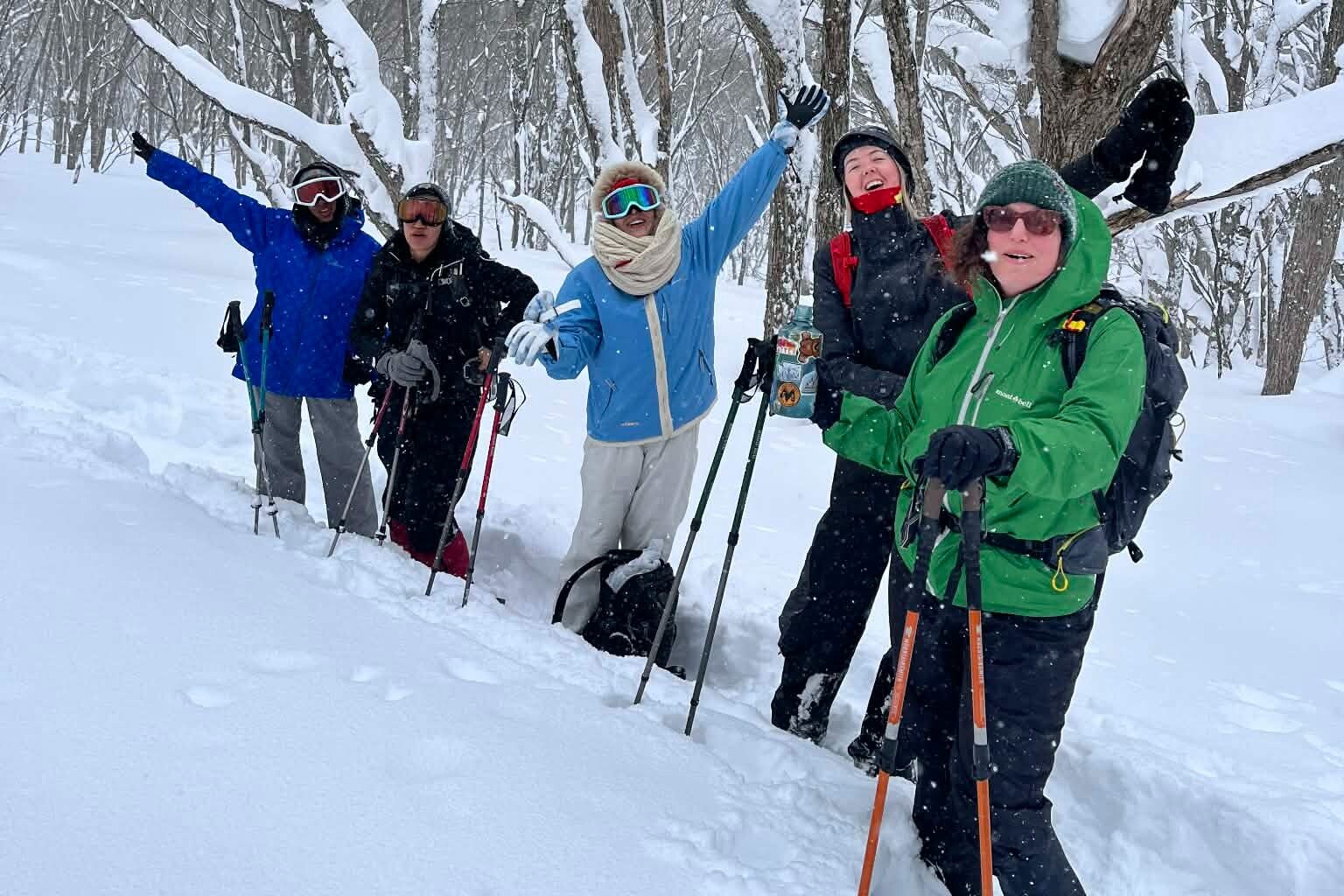
During the guided experience, you can walk through the snow-covered area and stop along the way for coffee and a warm local snack.
For something different, you can also try a fat bike, a bicycle with extra-wide tyres designed for riding over snow.
Make Your Own Snow Lantern or Snow Sculpture
Another activity we recommend after snowshoeing is making your own snow lantern or snow sculpture. You can pack and shape the snow to create your own design, making it a fun hands on winter activity to try in the Iwaki area.
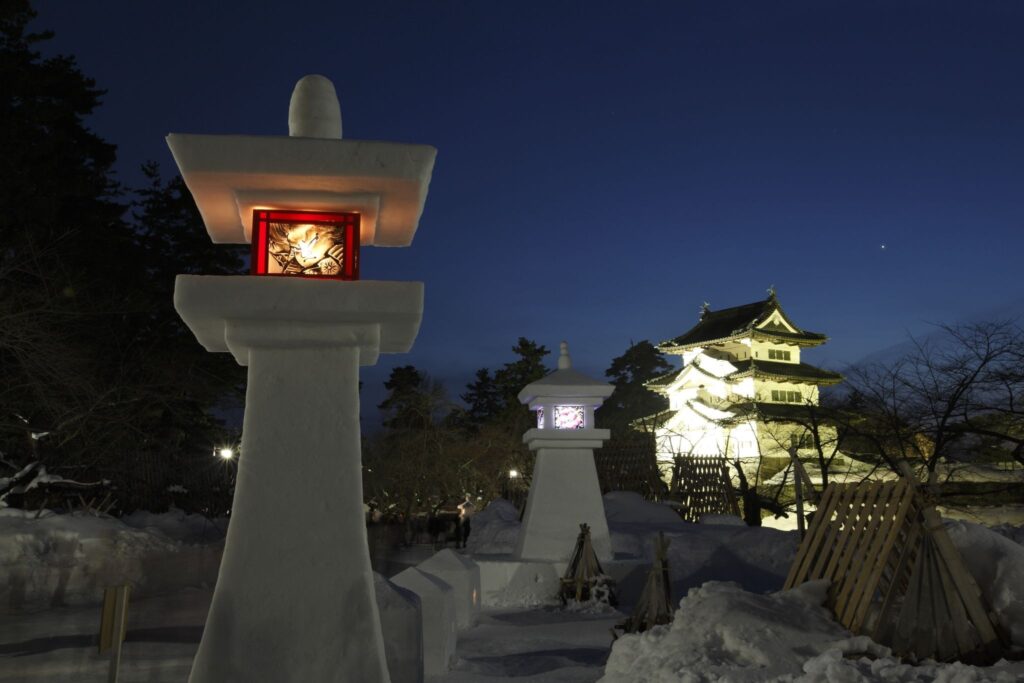
If you are visiting in February, you may also be able to catch the Hirosaki Castle Snow Lantern Festival, an annual winter event that has been held at Hirosaki Park since 1977. Around 150 handmade snow lanterns, together with snow sculptures, are displayed throughout the park. You can also see around 300 small candle lit igloos near the lotus pond, as well as large snow sculptures and Hirosaki Castle illuminated at night.
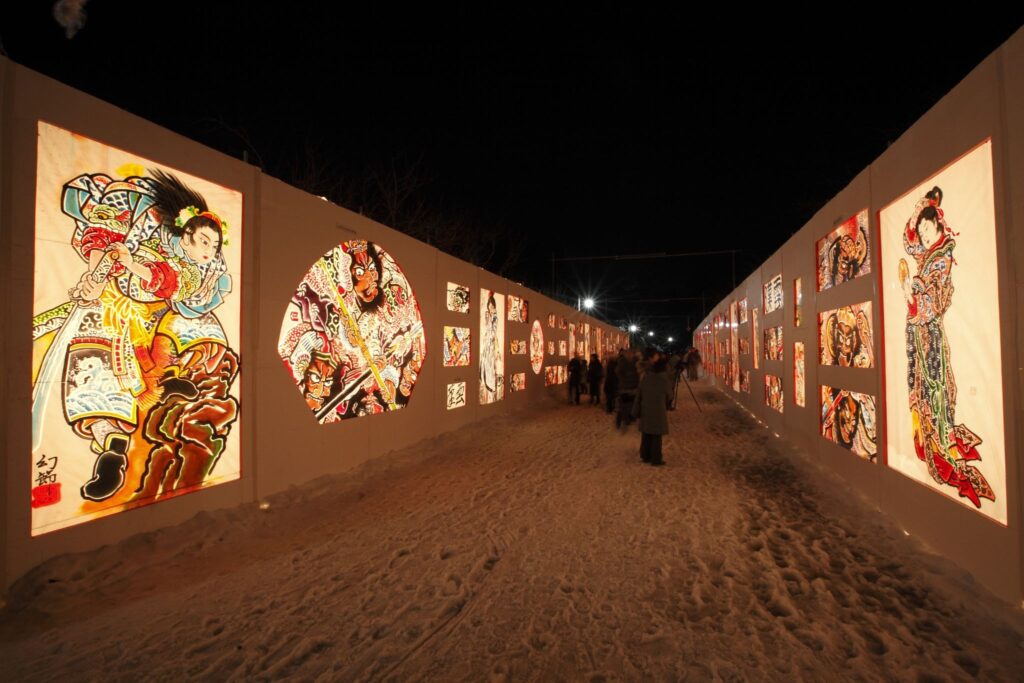
The festival is a great addition to your itinerary if your travel dates match the event period.
Travel to Hakodate and See the City at Night
In the afternoon, travel from Hirosaki to Shin-Aomori Station and board the Hokkaido Shinkansen to Shin-Hakodate-Hokuto. Along the way, the train passes beneath the Tsugaru Strait through the Seikan Tunnel, connecting Aomori and Hokkaido. From Shin-Hakodate-Hokuto Station, transfer to the Hakodate Liner for Hakodate Station. The journey from Hirosaki to Hakodate takes around three hours.
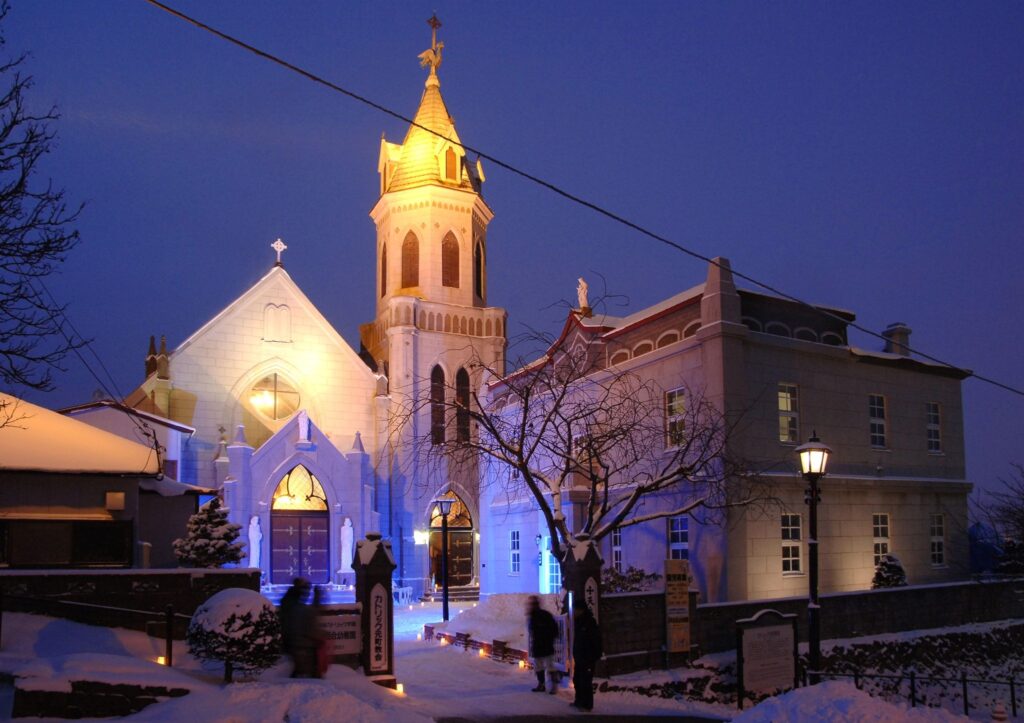
Arriving in Hakodate in the evening, head to the Motomachi area, where you can see churches and Western style buildings illuminated at night. Hakodate opened to international trade in 1859, and many of these buildings reflect the influence that followed.
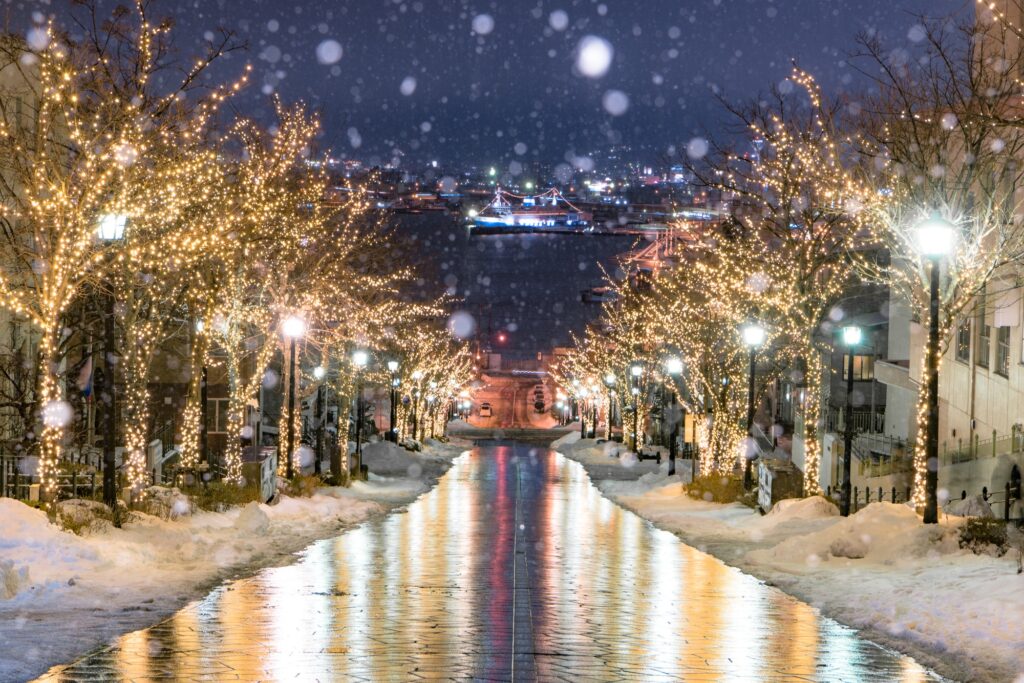
One of the places to visit is Hachimanzaka, a slope that leads down towards Hakodate’s harbour. During winter, the trees lining the street are illuminated, adding to the evening scenery.
From Motomachi, continue to Mount Hakodate for a view of the city from above. The ropeway takes around three minutes to reach the top of the 334 metre mountain. Winter often brings clearer air, making the city lights particularly easy to see at night. It can be very cold at the observation deck, so remember to keep your winter layers on.
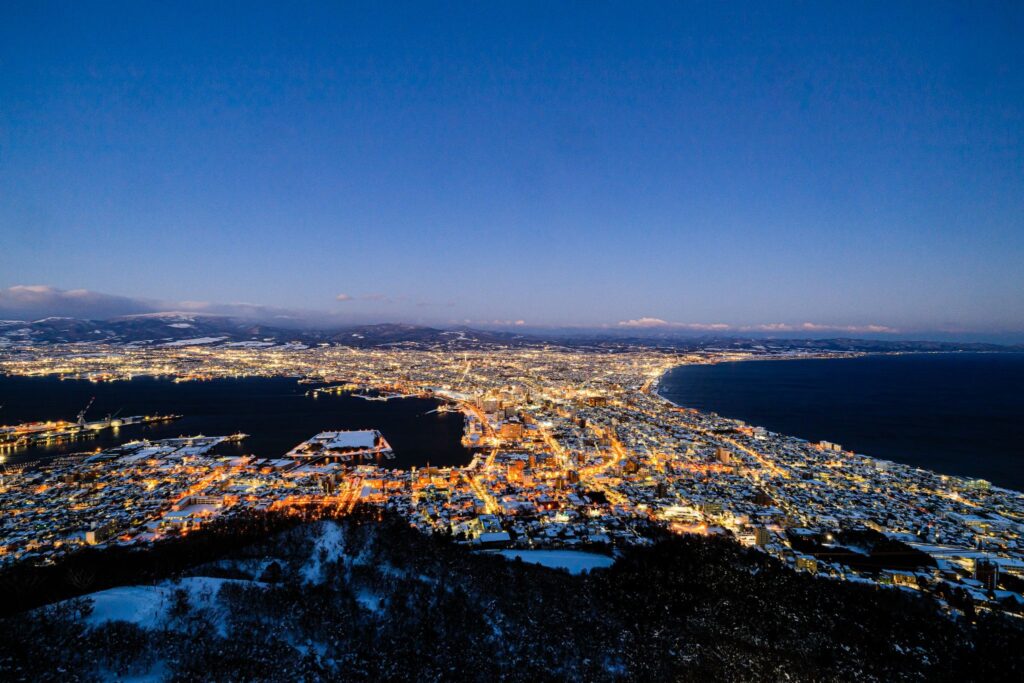
For the night, stay near Hakodate Station, which is a convenient base for starting the next day’s itinerary.
Day 3: Experience Winter Activities at Onuma
On your third day, travel from Hakodate to Onuma, where you can spend the day enjoying winter activities on and around the frozen lake.
Driving on snowy and icy roads can be challenging if you are unfamiliar with winter conditions. At Japan Navi Journey, we can arrange a private car with a local driver, so you can travel comfortably between Hakodate and Onuma without having to drive on the winter roads yourself.
Start with Breakfast at Hakodate Morning Market
Before leaving Hakodate, start your morning at Hakodate Morning Market, located just beside Hakodate Station.
The market dates back to 1945, when local farmers began selling vegetables from stalls near the station after the end of World War II. Today, it covers around three hectares and has approximately 250 shops selling a wide range of Hokkaido produce, from fresh seafood such as crab and salmon to fruits and vegetables.
For breakfast, we recommend trying a kaisendon, a bowl of rice topped with fresh seafood. Depending on the stall, you can choose from ingredients such as crab, sea urchin, salmon roe and scallops. It is a good place to enjoy some of Hakodate’s fresh seafood before making your way to Onuma.
Enjoy Winter Activities at Onuma Park
From Hakodate, travel around 40 minutes by private car to Onuma Quasi National Park, where the lakes freeze over during the colder winter months and you can try several activities on the ice.
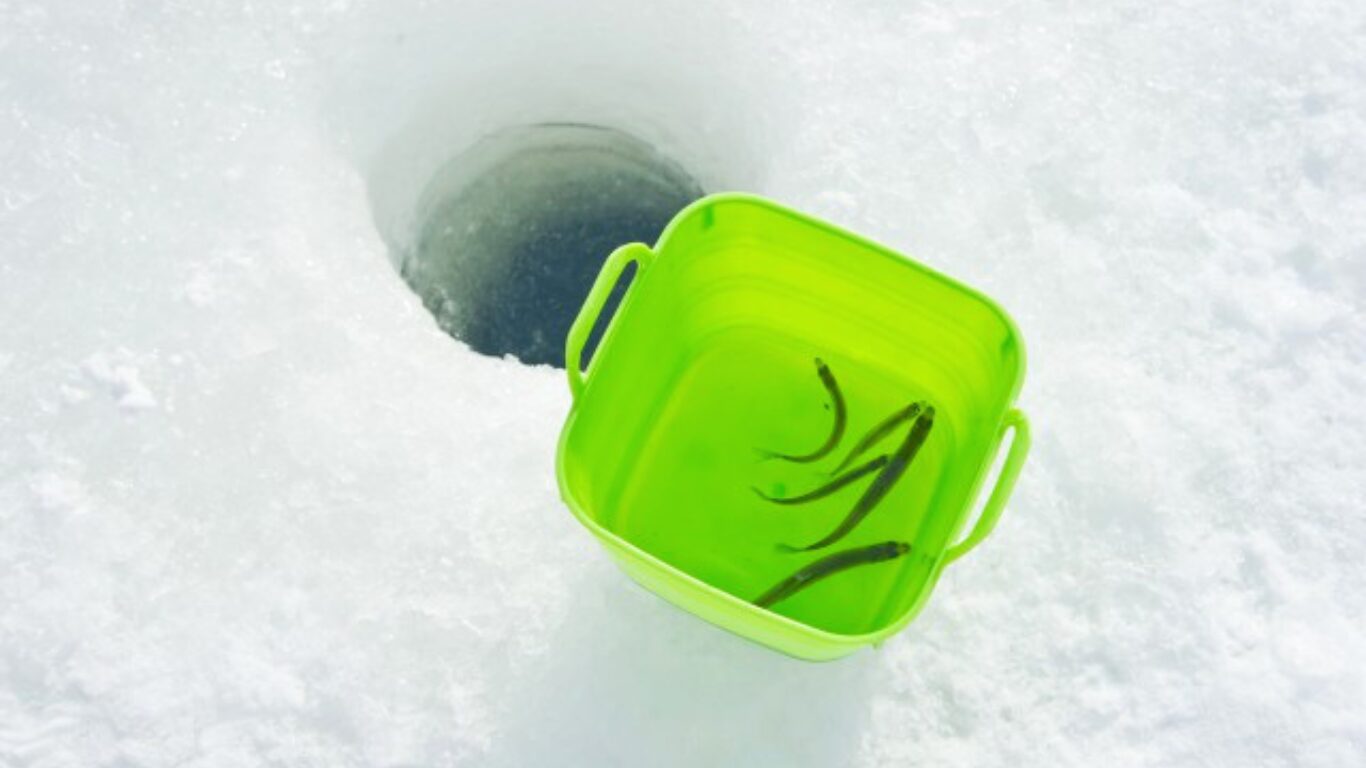
Start with wakasagi ice fishing, one of the popular winter experiences at Onuma. A small hole is made in the ice before you lower your fishing line into the water and wait for Japanese smelt to bite.
After fishing, your catch can be prepared as tempura and enjoyed freshly cooked. Several operators offer ice fishing experiences around Onuma, and Japan Navi Journey can help arrange an option based on your group and travel plans. Other activities, such as snowmobile rides, may also be available depending on the snow and ice conditions.
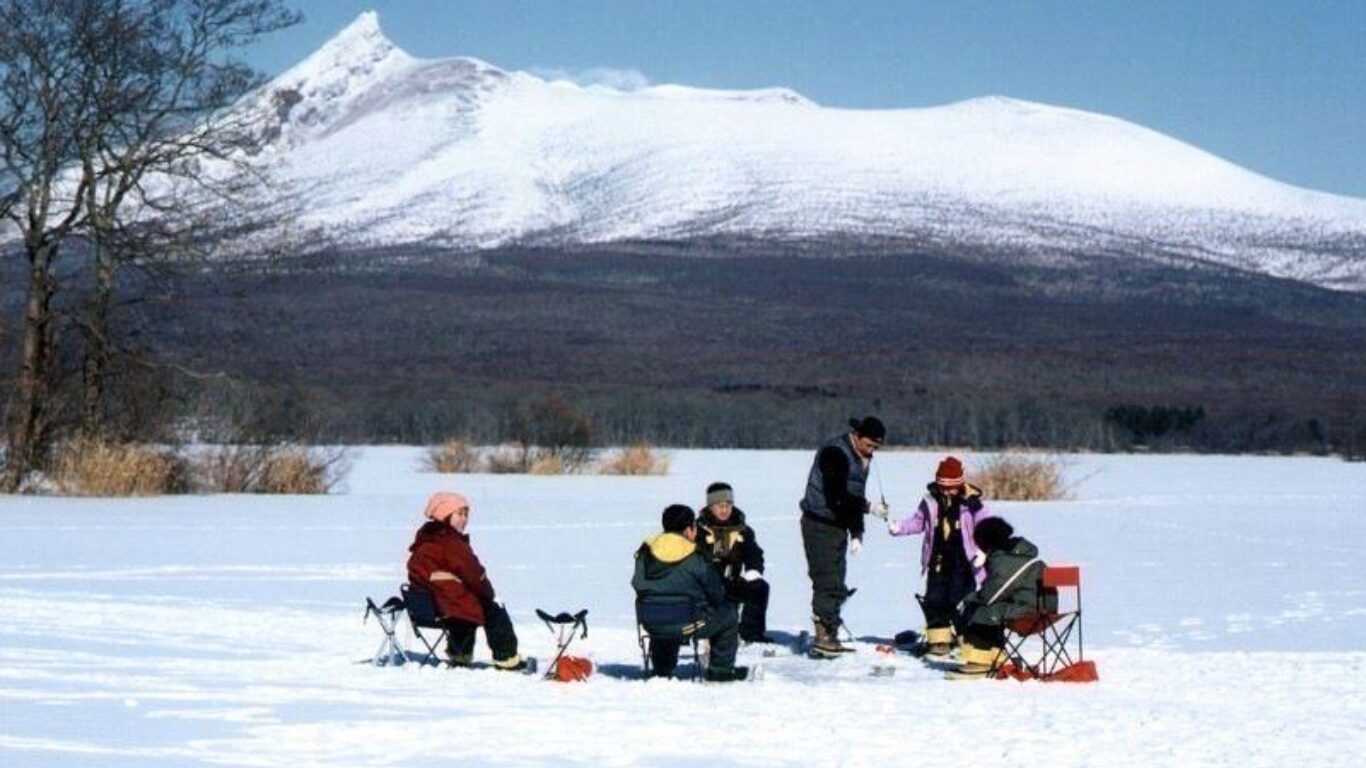
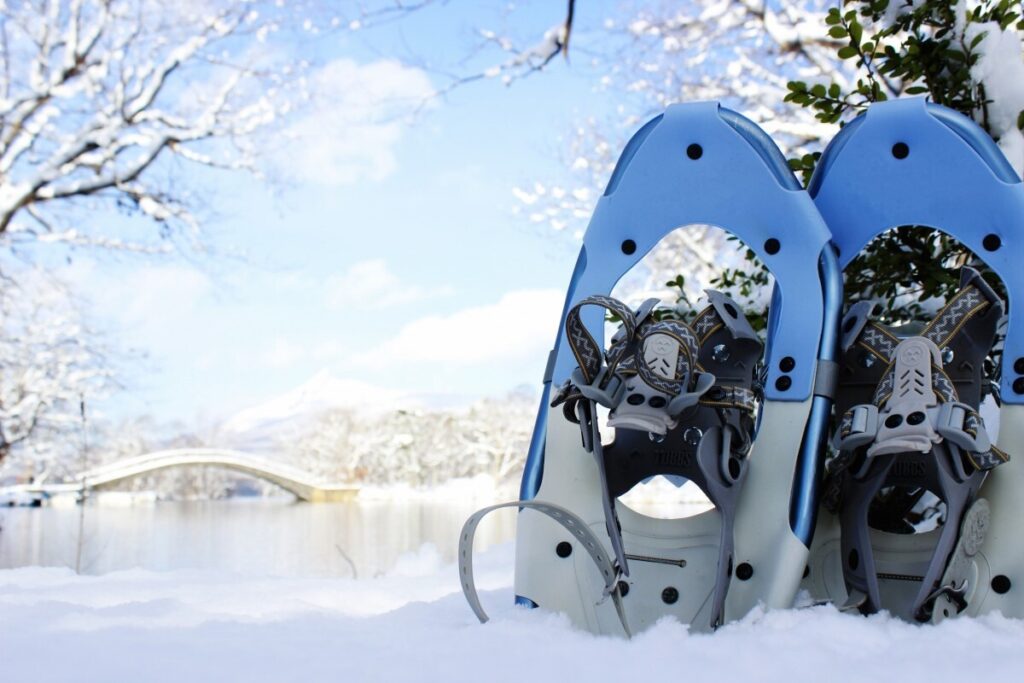
You can also try snowshoeing at Onuma. Unlike the snowshoeing experience near Mount Iwaki earlier in the trip, here you can walk along the frozen lake and take in the winter scenery across Onuma. It is an easy activity for beginners to try and is also suitable for families with children. The necessary equipment is provided, so you do not need to prepare or bring your own snowshoes.
After spending time outdoors, recharge with Onuma dango, a local sweet that has been sold in the area since 1905. These bite-sized rice dumplings come with two flavours in each box and are made fresh daily, so they are best enjoyed on the same day.
See the Hoshi no Yume Illumination at Goryokaku
Back in Hakodate, visit Goryokaku, the city’s star-shaped fort completed in 1864.
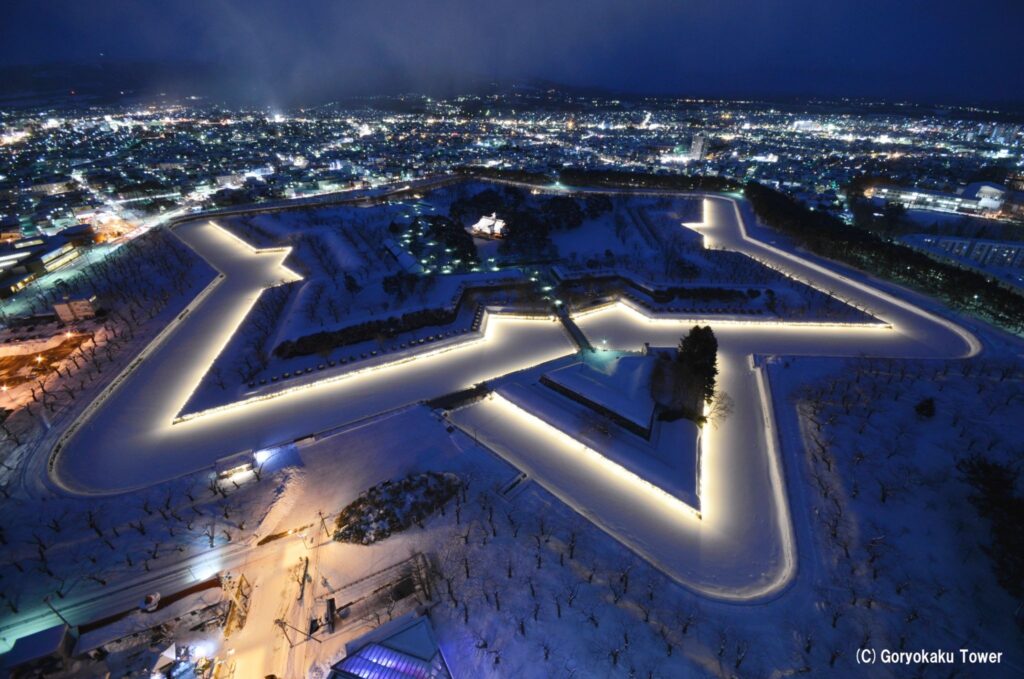
During winter, around 2,000 lights outline the moat as part of the Hoshi no Yume illumination. At ground level, you can walk alongside the illuminated moat. For a clearer view of the fort’s five-pointed shape, head up Goryokaku Tower and look down from the observation deck.
When the moat freezes and the area is covered in snow, the illuminated outline of the star stands out against the white surroundings.
The lights are switched on around sunset and finish relatively early in the evening, so it is best to visit before dinner.
Enjoy Jingisukan for Dinner and Stay at Yunokawa Onsen
After visiting Goryokaku, end the day with Jingisukan, one of Hokkaido’s well known local dishes. Lamb and vegetables are grilled together on a dome shaped iron pan, and you can cook them at the table as you eat.
Jingisukan has long been enjoyed across Hokkaido and is recognised as part of Hokkaido Heritage. Today, it remains a popular local dish and can be found at many Jingisukan restaurants across Hokkaido.
Did you know? In Hokkaido, Jingisukan is also closely associated with spring cherry blossom viewing. At Goryokaku Park in Hakodate, it is common to enjoy freshly grilled Jingisukan under the cherry blossoms. If you are planning a future visit to Hakodate in spring, this is one local experience you can consider trying.
After dinner, head to Yunokawa Onsen for your final night in Hakodate. Located along the coast, Yunokawa is one of the city’s famous hot spring areas and is a short drive from Goryokaku. End the evening with a soak in the onsen before your final day in Hakodate.
Day 4: Meet Hakodate’s Hot-Spring Monkeys and Cook with Locals in Shikabe
Start your final day at the Hakodate Tropical Botanical Garden in the Yunokawa area. The garden is home to a group of Japanese macaques, and during winter, from December to May, hot spring water is added to their pool. During this period, you can see the monkeys soaking in the warm water, making it a popular winter attraction in Hakodate.
Since you are already in Yunokawa, stop by the free public foot bath near the tram stop before leaving the area. Soak your feet in the warm water and remember to bring a small towel with you.
From Hakodate, continue by car to Shikabe, a coastal town around an hour away. Here, you can take part in a 90 minute cooking experience with the local “Hama no Kaasan”, members of the Shikabe Fisheries Cooperative Women’s Association.
Rather than simply trying the local seafood at a restaurant, you will prepare home style dishes together using seafood caught around Shikabe. The experience takes you through the cooking process, including preparing the fish, before sitting down to enjoy the dishes you have made together.
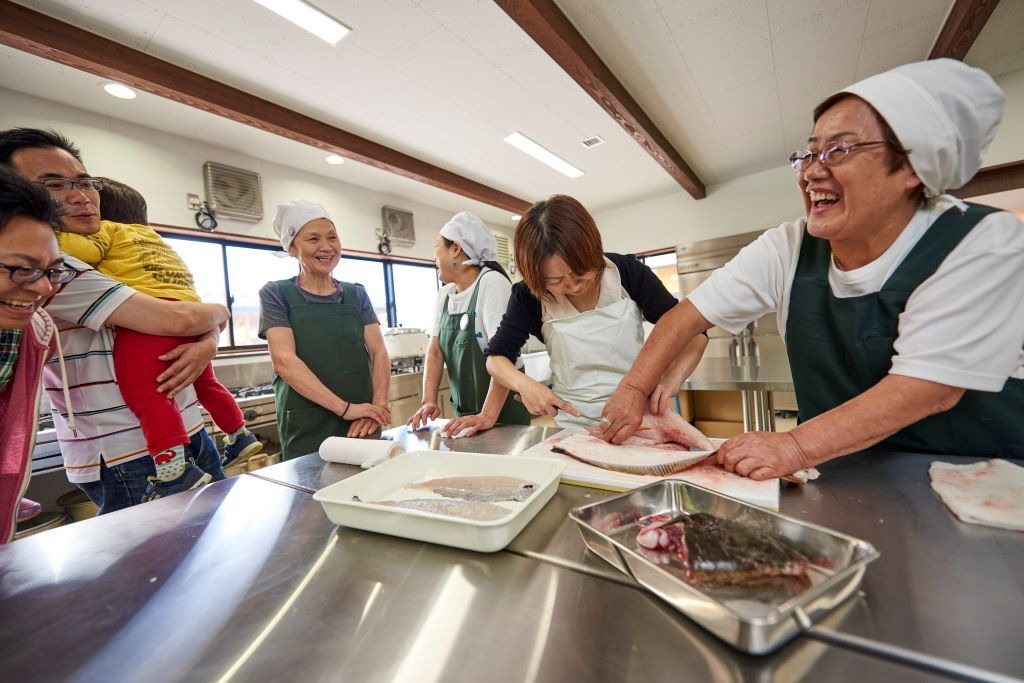
The menu changes with the seasons depending on the local ingredients available. During winter from December to March, dishes may include Sukeso Sanpei soup, Gokko soup and butter grilled scallops.
The cooking experience is available year-round, with the meeting point at Roadside Station Shikabe Geyser Park.
After your time in Shikabe, return towards Hakodate to continue your trip.
This brings your four day winter itinerary from Aomori to Hokkaido to an end. From the Winter Sakura illumination and snow activities around Mount Iwaki to ice fishing at Onuma, Hakodate’s winter sights and cooking with locals in Shikabe, these four days introduce you to different winter experiences across Aomori and southern Hokkaido.
From Hakodate, you can continue exploring more of Hokkaido or return to Tokyo for the next part of your trip.
Other Winter Events to Look Out For
If your travel dates match, there are several other seasonal events around Hirosaki and Hakodate that you may want to include in your itinerary.
Niogataki Ice Festival
Held in Nishimeya Village in February, the Niogataki Ice Festival takes place around Niogataki, a 33 metre waterfall at the foot of Mount Iwaki. During particularly cold winters, the flowing water gradually freezes and forms a large column of ice along the rock face.
During the festival, the frozen waterfall is illuminated at night, allowing you to see the ice formation from a different view after dark. Nishimeya Village is around 40 minutes from Hirosaki by car, making it possible to include as an additional winter stop during your time in the area.
As the size and condition of the frozen waterfall depend on the weather and temperatures each year, check the latest information before your visit.
Plan Your Winter Trip with Japan Navi Journey
Travelling through Aomori and Hokkaido in winter requires some additional planning, especially when activities depend on snow and ice conditions and some experiences need to be booked in advance.
If you are travelling from Singapore, you can first fly to Tokyo before continuing to Aomori by Tohoku Shinkansen or domestic flight. Japan Navi Journey provides travel support after you arrive in Japan, helping you arrange your trip from there.
For this four day itinerary, we can arrange transportation between Hirosaki, Mount Iwaki, Hakodate and Onuma, as well as a private car with a local driver where needed. We can also arrange English speaking guides, winter activities and accommodation based on what you would like to experience during your trip.
After completing the itinerary in Hakodate, you can continue exploring Hokkaido or return to Tokyo by train or domestic flight. We can help you plan these connections as part of your overall itinerary.
Whether you want to experience the snow around Mount Iwaki, try ice fishing at Onuma or visit Hirosaki and Hakodate in one trip, we can put the different arrangements together into a personalised winter itinerary.
Start planning your winter trip to Aomori and Hokkaido with Japan Navi Journey. Contact our team to create a personalised itinerary based on your travel plans.