
Experience 3 Eras in 1 Day: A Guide to Aizu, Fukushima

Did you know there is a place in Japan where you can travel back in time and experience three different eras in just one day?
I’m Yu, a travel consultant at Japan Navi Journey, where I help plan customised trips across Japan. I recently visited Aizu, an area in western Fukushima Prefecture with a long history tied to the samurai. During my visit, I stopped by some of its historical attractions, tried local food and got hands-on with one of Aizu’s well-known crafts.
Here are three of the places I visited:
- [Edo Period] Ouchi-juku: Walk through a former post town lined with traditional thatched-roof houses and see what the area would have looked like during the Edo period.
- [Late Edo Period] Tsurugajo Castle: Learn more about Aizu’s samurai history and the Boshin War at one of Aizuwakamatsu’s best-known landmarks.
- [Aizu Today] Akabeko Land: Paint your own akabeko, the traditional red cow figurine that has long been regarded as a symbol of good luck and health in Aizu.
Read on as I share what I experienced at each stop, the local food I tried and some useful tips for planning your own trip to Aizu.
Walk Through an Edo-Period Post Town at Ouchi-juku
My first stop of the day was Ouchi-juku, a former post town in southern Fukushima that took me back to the Edo period (1603–1867). It once stood along the Shimotsuke Kaido, which connected Aizu-Wakamatsu with Nikko-Imaichi and served as an important road between Aizu and the Kanto region.
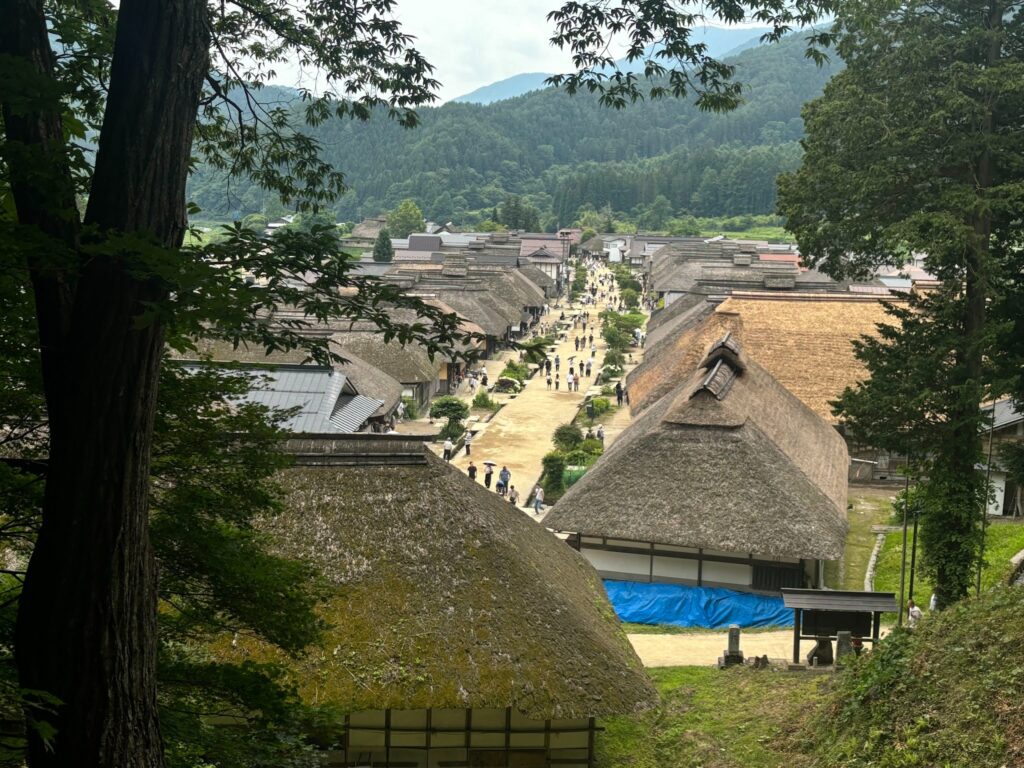
During the Edo period, Ouchi-juku was one of the places where people travelling along the highway could stop and rest. Records also show that Hoshina Masayuki, the first lord of the Aizu Domain, and his successor used this road when travelling to Edo, present-day Tokyo, for sankin-kotai, a system that required feudal lords to spend periods of time in Edo.
When transportation routes shifted following the Meiji Restoration, Ouchi-juku was no longer situated along a major travel route and saw little modern development. As a result, much of its former appearance remained. In 1981, it was designated a National Important Preservation District for Groups of Traditional Buildings, and today it attracts more than 800,000 visitors annually.
Residents have also made a conscious effort to maintain Ouchi-juku’s traditional appearance. They follow three principles: “Don’t sell, don’t rent, don’t destroy,” referring to the traditional properties in the village. Skills such as maintaining and rethatching the traditional roofs also continue to be practised by the community.
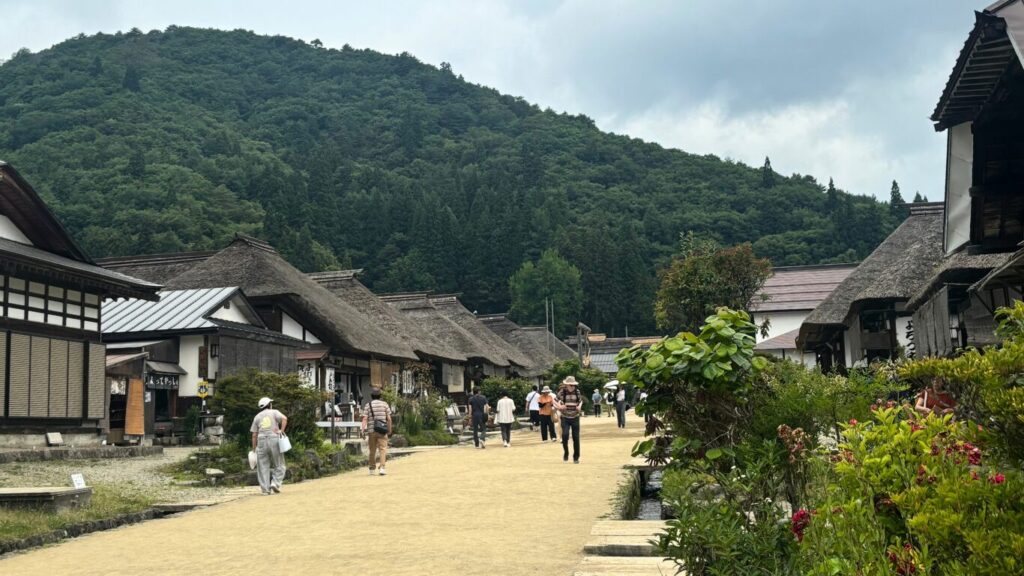
When I arrived, the first thing that caught my attention was the long row of thatched-roof houses lining the main street. With so many of these traditional houses still standing, you can get a sense of what Ouchi-juku might have looked like in the past. Many of these houses are now souvenir shops and restaurants, so I took my time walking around and stopping by some of them along the way.
See What Life Was Like at the Ouchi-juku Town Museum
While walking around Ouchi-juku, you can also stop by the Ouchi-juku Town Museum, located around the centre of the village.
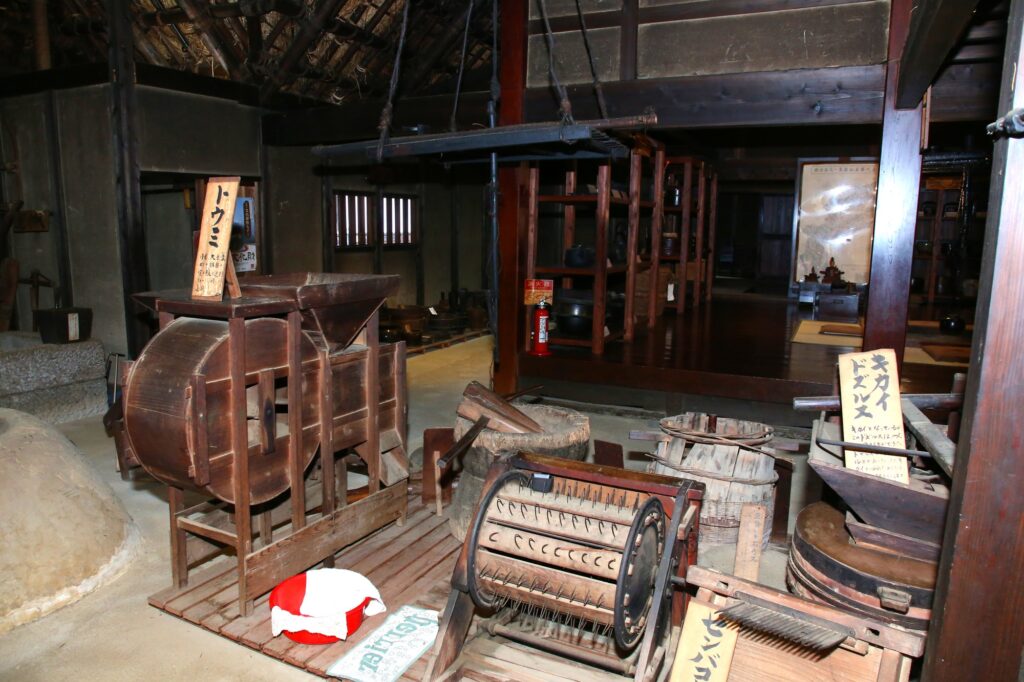
The museum is housed in a restored honjin, a type of main inn that accommodated feudal lords and other important guests during their travels. As records and drawings of Ouchi-juku’s original honjin were lost after the Boshin War, the building you see today was reconstructed in 1984 using other honjin along the same highway as references.
The interior recreates several features of a traditional honjin, from a separate entrance for the feudal lord to rooms and facilities used during their stay. Old household items and displays about thatched roofing can also be found inside, giving visitors a glimpse of what life in Ouchi-juku was like in the past.
Try Ouchi-juku’s Famous Takato Soba, With a Leek Instead of Chopsticks
Of course, I couldn’t visit Ouchi-juku without trying one of its most talked about local dishes, Takato Soba.
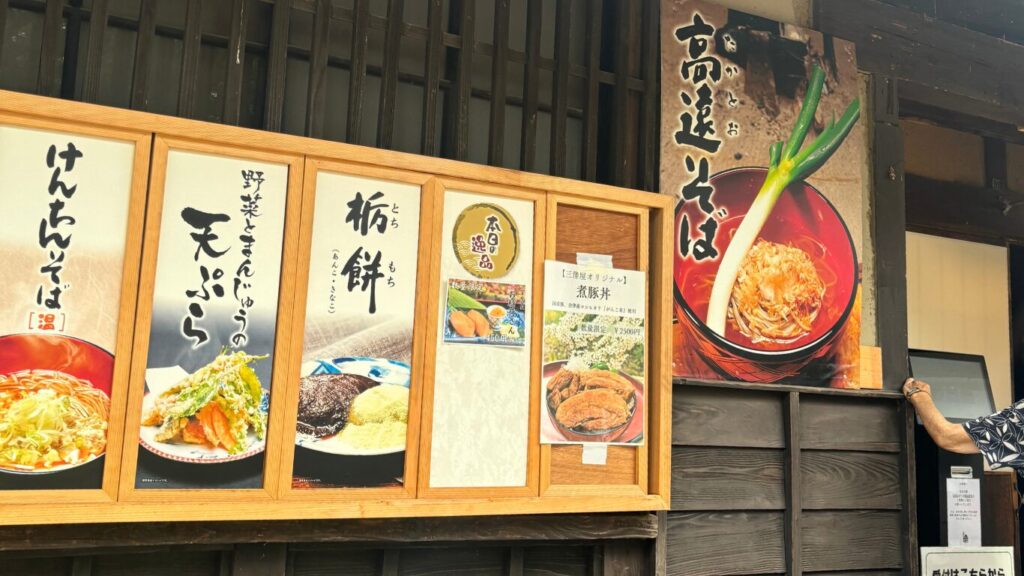
What makes it unusual is immediately obvious when the bowl arrives. Instead of eating the noodles with chopsticks, you are given a long leek to use as your utensil. You can also take bites of the leek as you eat, so it doubles as a condiment for the soba.
The story behind Takato Soba can be traced back to Hoshina Masayuki, who grew up in the Takato Domain in Shinano Province, an area known for buckwheat. After he later became the lord of the Aizu Domain, soba became widely eaten in Aizu and eventually became known locally as Takato Soba. Misawaya, a soba restaurant housed in one of Ouchi-juku’s traditional thatched-roof buildings, later introduced the idea of eating Takato Soba with a whole leek instead of chopsticks.
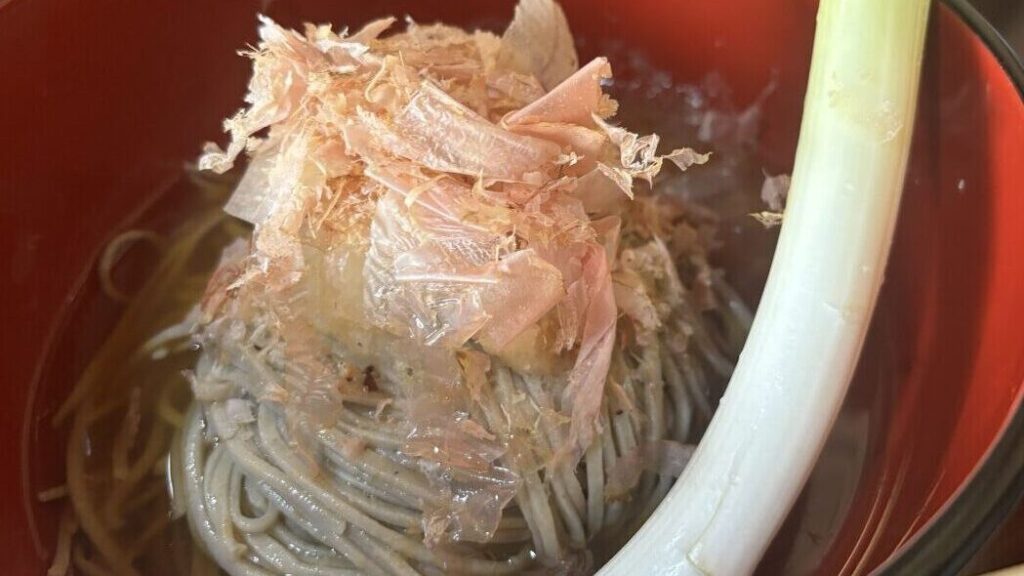
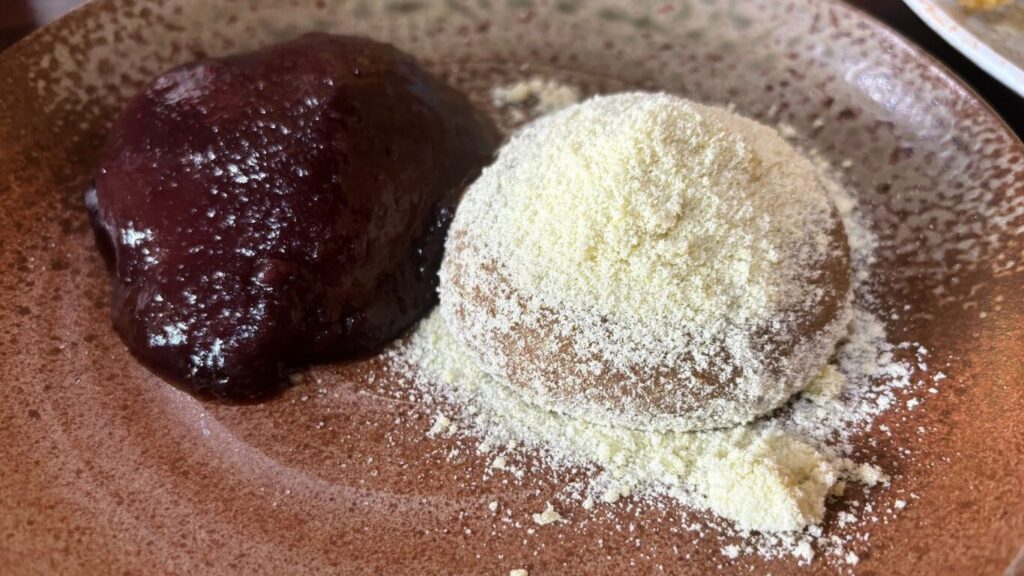
Using a leek instead of chopsticks was harder than I expected! It was also my first time biting into the leek while eating soba, which definitely made for a fun first-time experience.
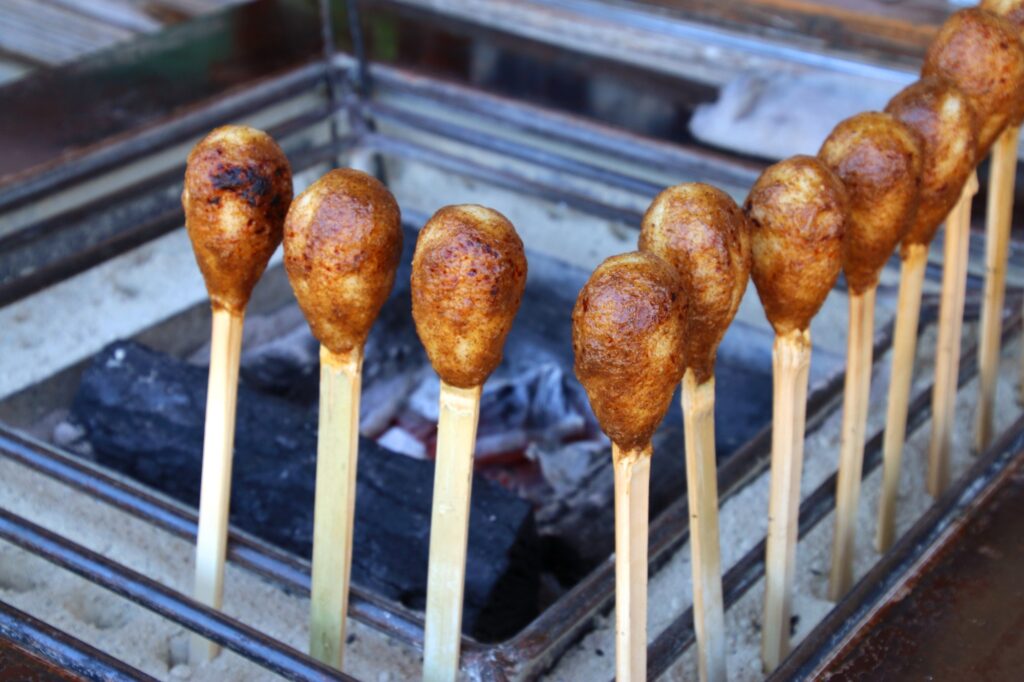
Takato Soba is not the only thing to eat here either. As I walked around Ouchi-juku, I came across plenty of snacks to try, including freshly grilled rice crackers, tama konnyaku (konjac balls) and agemochi (fried mochi). You can also try imomochi, a chewy potato-based snack seasoned with a sweet and savoury soy sauce glaze, or Shingoro, a local speciality made with rice and coated with junen miso, a sweet miso-based sauce made with perilla seeds. There is plenty to pick up while walking through the village, so it is worth saving some room after your soba.
See Aizu’s Samurai History Come to Life at Tsurugajo Castle
After Ouchi-juku, my next stop took me into the Late Edo period (1853–1867) at Tsurugajo Castle in Aizuwakamatsu. Also known as Aizuwakamatsu Castle, Tsurugajo Castle has seen some of the most turbulent periods in Aizu’s samurai history and has been selected as one of Japan’s 100 Famous Castles.
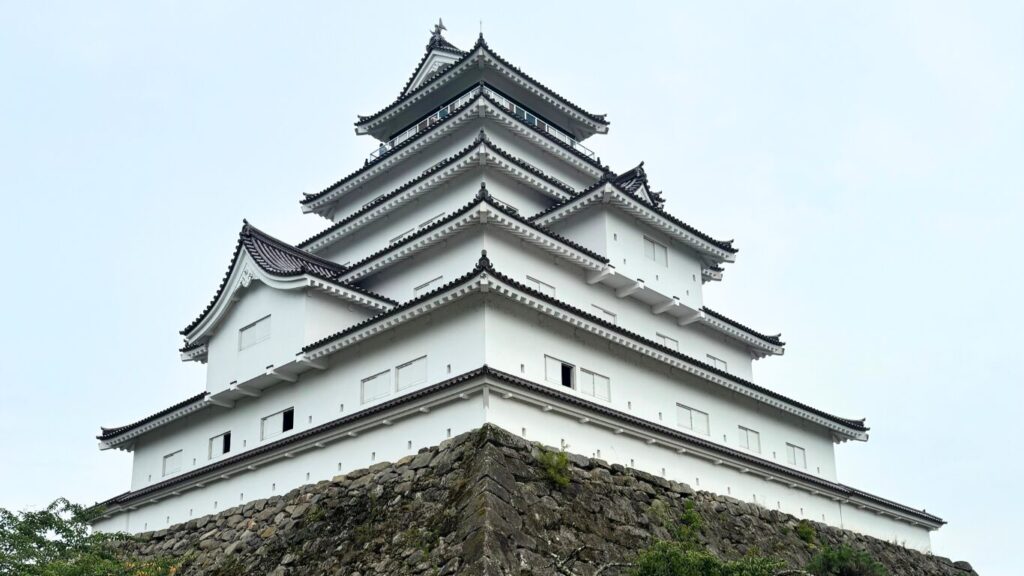
The castle’s history goes back to 1384, although it looked very different in its early years. It was later developed into a castle with stone walls and a keep by Gamo Ujisato, a Sengoku period warlord who governed Aizu, in 1593, and further renovations over the years eventually gave it a layout similar to what we see today.
One feature that immediately stands out is its red-tiled roof. Tsurugajo Castle originally had black roof tiles, but red tiles were later introduced after Hoshina Masayuki became lord of Aizu. Their reddish colour comes from an iron-rich glaze, which also helped improve insulation against Aizu’s cold and snowy winters. Today, Tsurugajo Castle is the only castle in Japan with red roof tiles on its main keep.
Learn About the Boshin War Inside Tsurugajo Castle
Tsurugajo Castle was also the site of fierce fighting during the Boshin War in 1868, when forces from the Aizu Domain fought against the new imperial government.
Aizu had remained loyal to the Tokugawa shogunate, and fighting eventually reached Aizuwakamatsu. Tsurugajo Castle came under heavy attack, but those inside held out for around a month before the Aizu Domain surrendered. The castle became known for withstanding the siege, although the original buildings were later demolished in 1874. The keep visitors see today was reconstructed in 1965.
You can learn more about this history inside the Wakamatsu Castle Tower Local Museum, which occupies the castle keep. The exhibitions cover Tsurugajo Castle, the successive lords of Aizu and the events surrounding the Boshin War, making it a useful stop even if you are not already familiar with Japanese history.
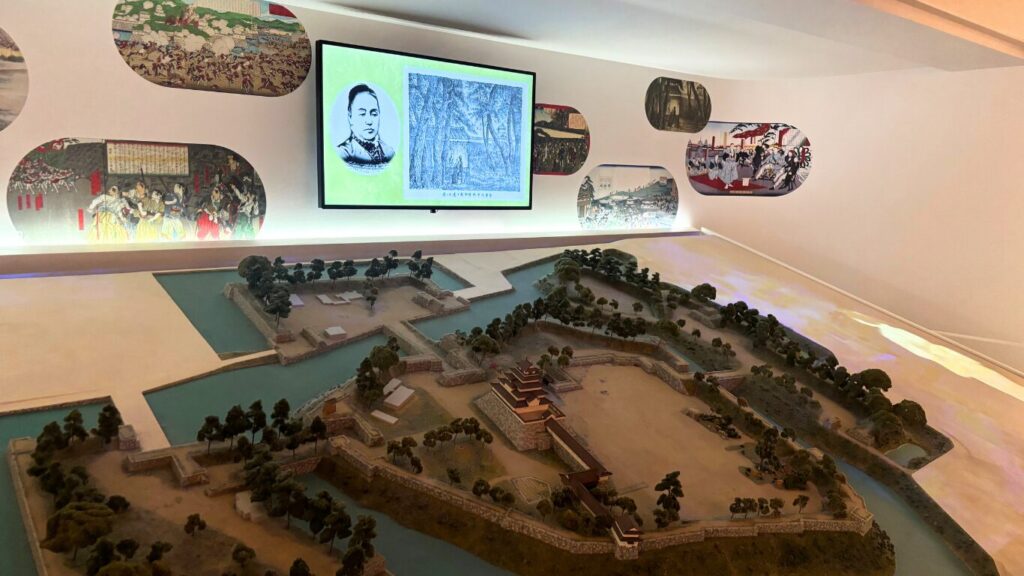
Some of the displays also use digital elements to make the history easier to follow, including videos and interactive exhibits. As you move through the different floors, the focus gradually shifts from the castle’s earlier history to the Late Edo period and the people connected to Aizu.
During my visit, I followed the designated route through the exhibition floors before making my way up to the top of the castle. Although you will need to take the stairs, the climb was not as tiring as I expected.
Take in the View From the Top of the Castle
Once you reach the fifth floor, you are rewarded with a 360 degree view over Aizuwakamatsu and the Aizu Basin.
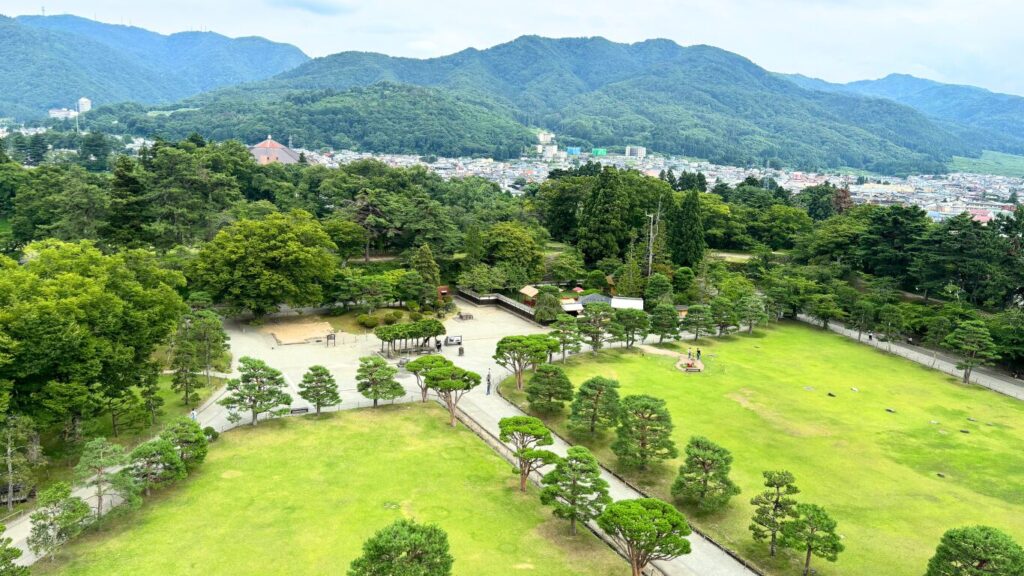
From here, you can see the city below, with the mountains around Aizu in the distance. It was one of my favourite views during the trip.
There is also a feature that lets visitors use their smartphones to compare the present-day scenery with how the area looked during the Edo period.
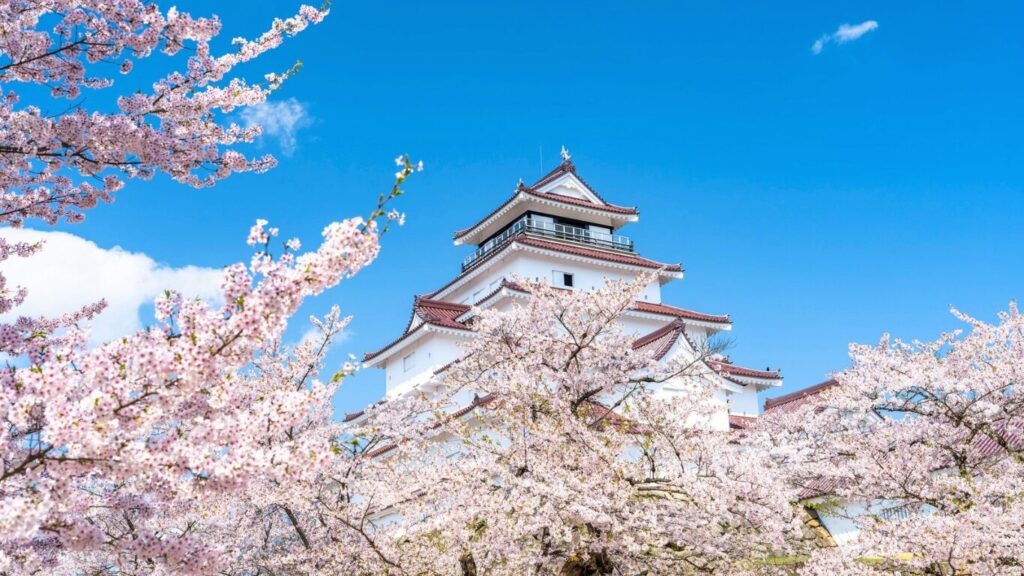
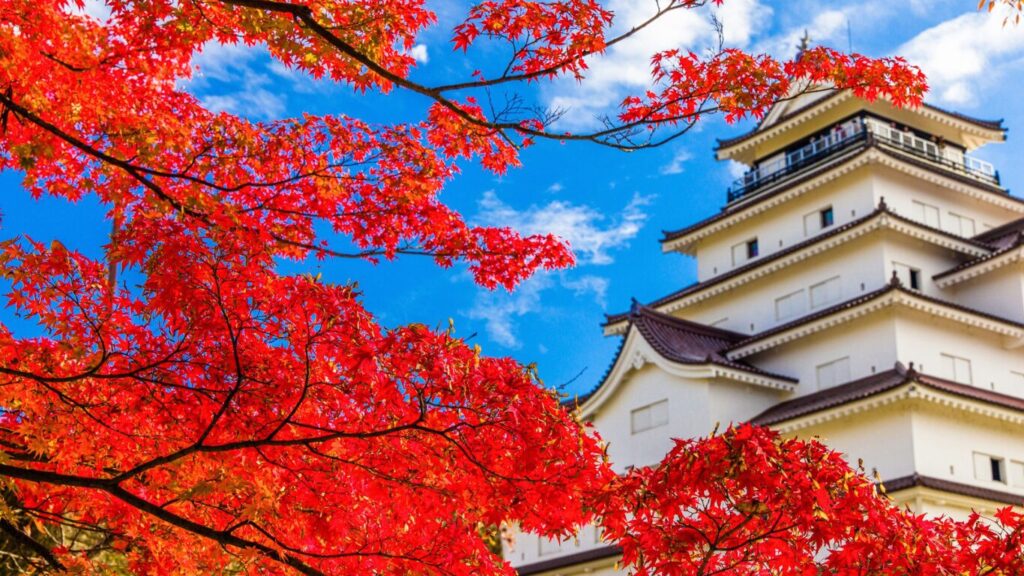
The scenery around Tsuruga Castle also changes with the seasons. In spring, the castle grounds are filled with cherry blossoms, with around 1,000 cherry trees typically blooming from mid to late April. Tsurugajo Castle Park has also been selected as one of Japan’s Top 100 Cherry Blossom Viewing Spots. Summer brings lush greenery around the castle and moat, while autumn colours usually appear from late October to mid-November, creating a striking contrast with the castle’s red roof tiles. In winter, the grounds are covered in snow, making the red-tiled castle stand out against the white scenery. This means you can expect a very different view depending on when you visit.
Try Aizu’s Local Horse Sashimi
After visiting Tsurugajo Castle, I heard that one of the local specialities not to miss in Aizuwakamatsu is horse sashimi, or basashi. Horse meat has long been part of the local food culture here, and you can find restaurants and izakayas serving it around the city.
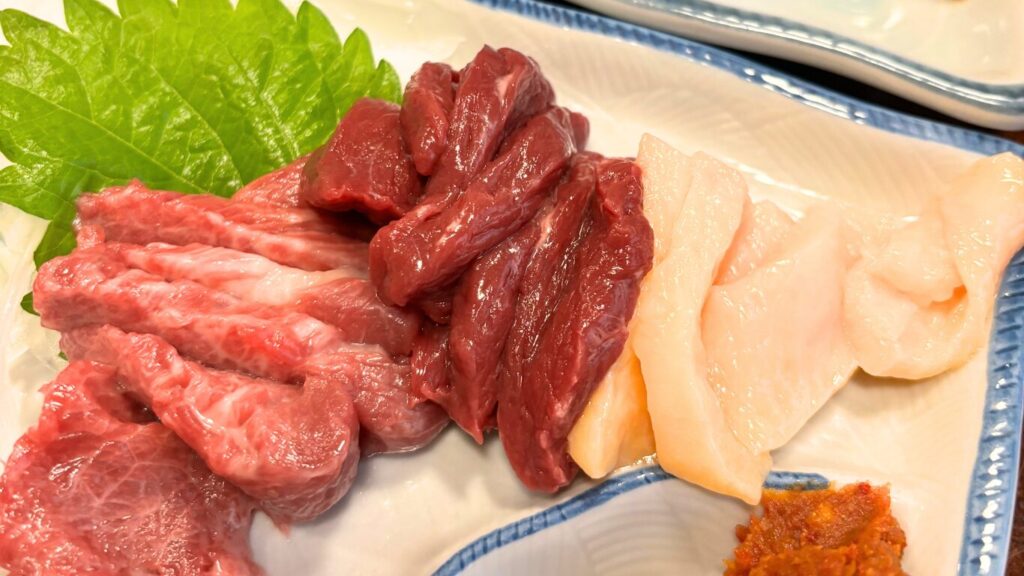
Horse meat is believed to have become part of the local diet around the time of the Boshin War, when it was given to injured soldiers brought into the area. It later became a common source of protein in Aizu-Wakamatsu households.
Eating it raw became popular later, and today basashi is regarded as one of Aizuwakamatsu’s local dishes. Aizu-style horse sashimi is typically served as lean slices and eaten with soy sauce and karashi miso, a spicy mustard miso condiment.
I tried it at an izakaya near Aizuwakamatsu Station. The horse sashimi had very little odour and a light, mild flavour, while the karashi miso added a spicy kick.
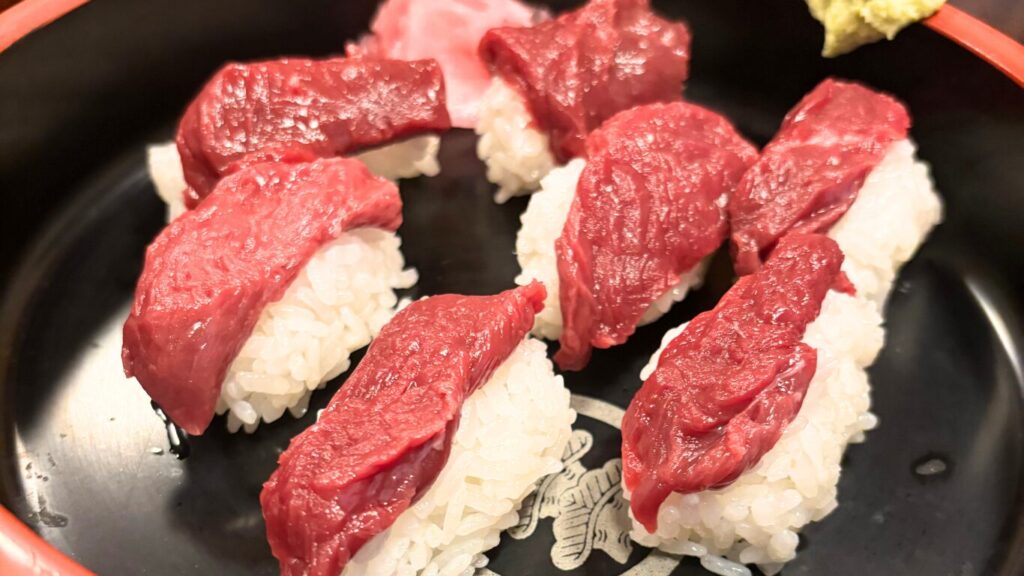
Interestingly, horse meat is also known as sakuraniku, which literally means “cherry blossom meat”. There are several theories about how it got this name. One dates back to the Edo period, when eating meat was restricted and different types of meat were sometimes referred to using the names of flowers and plants. Horse meat was called sakura (cherry blossom), while wild boar was known as botan (peony) and venison as momiji (maple).
Another theory is linked to the seasons. Horse meat was traditionally said to be at its best in spring, around the same time that the cherry blossoms bloom, as horses would have gained weight after feeding through autumn and winter. While there is no single confirmed explanation for the name, these stories add an interesting bit of food history behind sakuraniku.
If you are looking to try something different while in Aizuwakamatsu, this is one local speciality to look out for.
Get Creative with an Aizu Tradition at Akabeko Land
My final stop of the day was Akabeko Land. After spending much of the day travelling back in time and learning about Aizu, I switched things up and got hands-on with one of the region’s traditional folk crafts.
The akabeko is a traditional papier-mâché folk toy from Aizu, shaped like a small red cow with a head that gently sways back and forth when touched. While it has been part of Aizu culture for hundreds of years, the little red cow remains a familiar symbol of the region today and can be found on souvenirs and in different designs across Aizu.
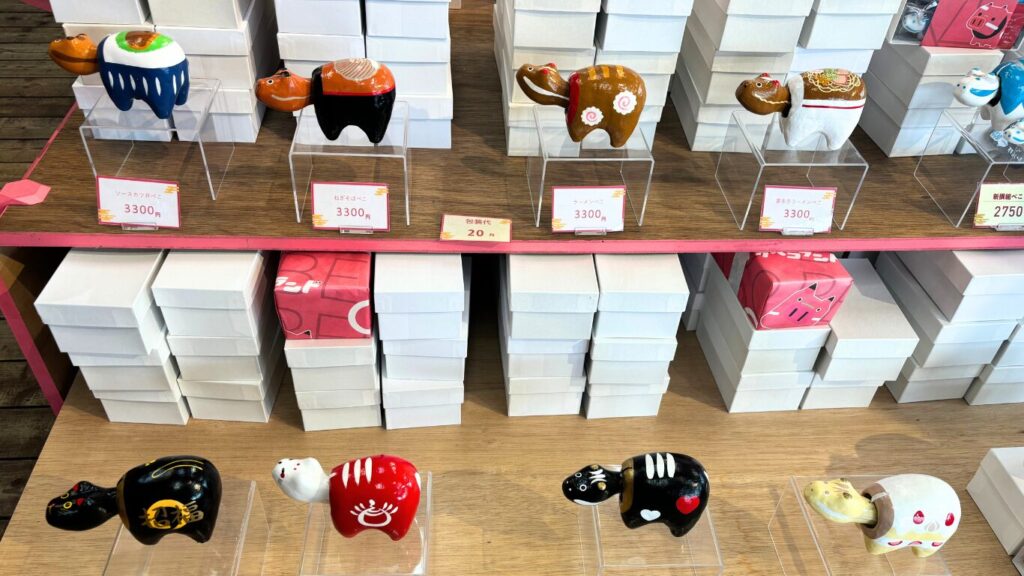
Its name comes from the local dialect, with “beko” meaning cow in Aizu. Although it is now a popular souvenir in Fukushima and the wider Tohoku region, akabeko has long been regarded as a good-luck charm in Aizu.
One of the best known stories behind the akabeko comes from Enzoji Temple in Yanaizu. According to the legend, when a temple hall was being built in 807, transporting the construction materials proved difficult. A group of oxen appeared to help, including a red ox that continued working until the hall was completed.
The akabeko’s red colour also carries its own meaning. Red was traditionally believed to ward off illness, and over time, the figurine became associated with good health and protection from misfortune. Akabeko were also given to celebrate the birth of a child or to wish someone a speedy recovery.
Paint Your Own Akabeko
Of course, the main reason I visited Akabeko Land was to paint my own akabeko. I visited the Iimoriyama store, where you can learn more about the folk toy before creating your own. There are also games and photo spots around the facility to check out before or after your painting session.
You can choose either a red or white base and create your own design using six different colours of paint. I chose the red version and added my own design to it. If you choose the white base, you can colour the entire figurine yourself, although you will need to allow more time for the additional paint to dry.
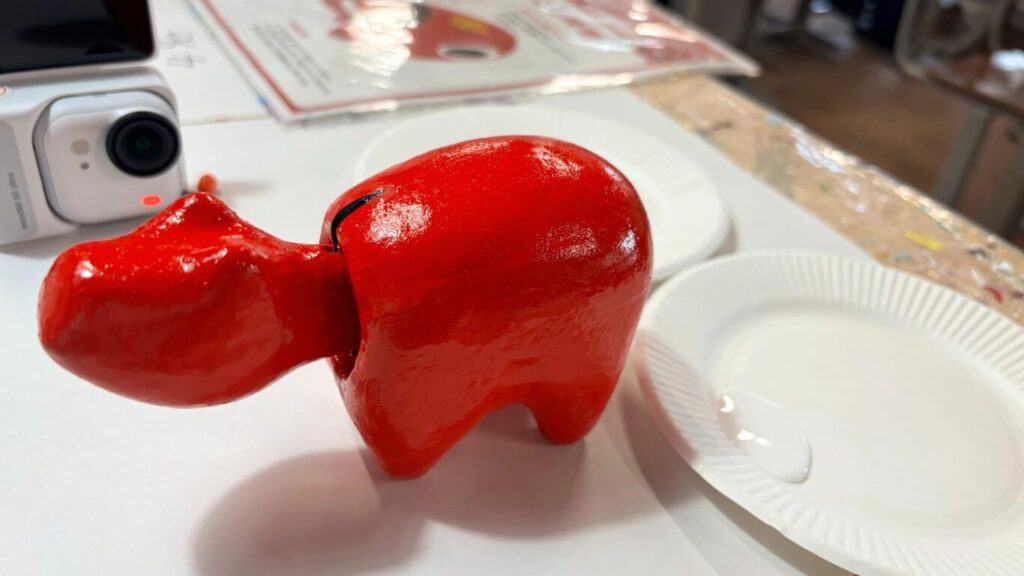
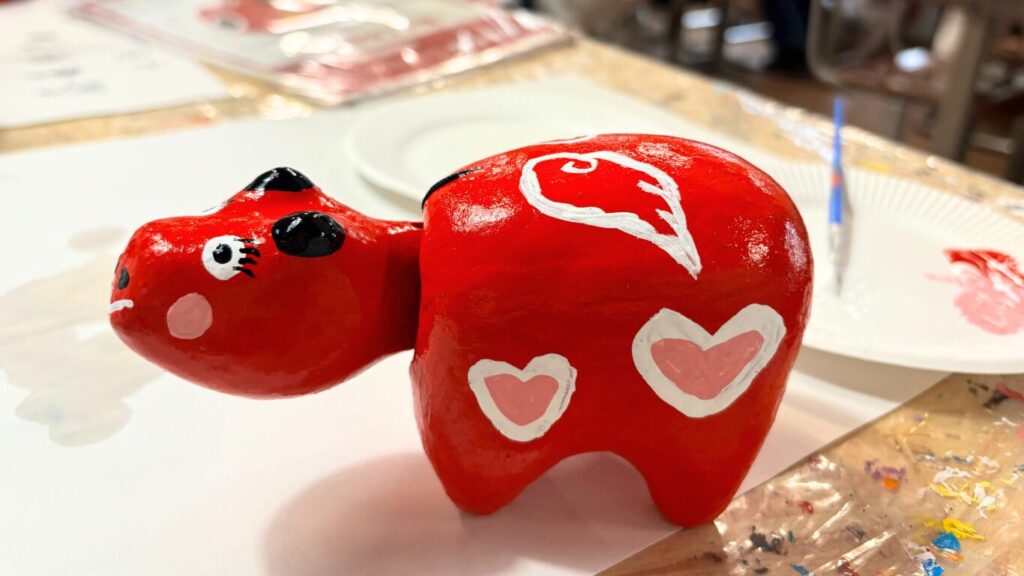
There are no particularly difficult steps involved either. During my visit, I saw everyone from young children to elderly visitors painting their own akabeko, so it is an activity that different age groups can enjoy.
Browse the Akabeko Souvenirs
Before leaving, I also had a look around the souvenir shop inside Akabeko Land, which was filled with different akabeko merchandise.
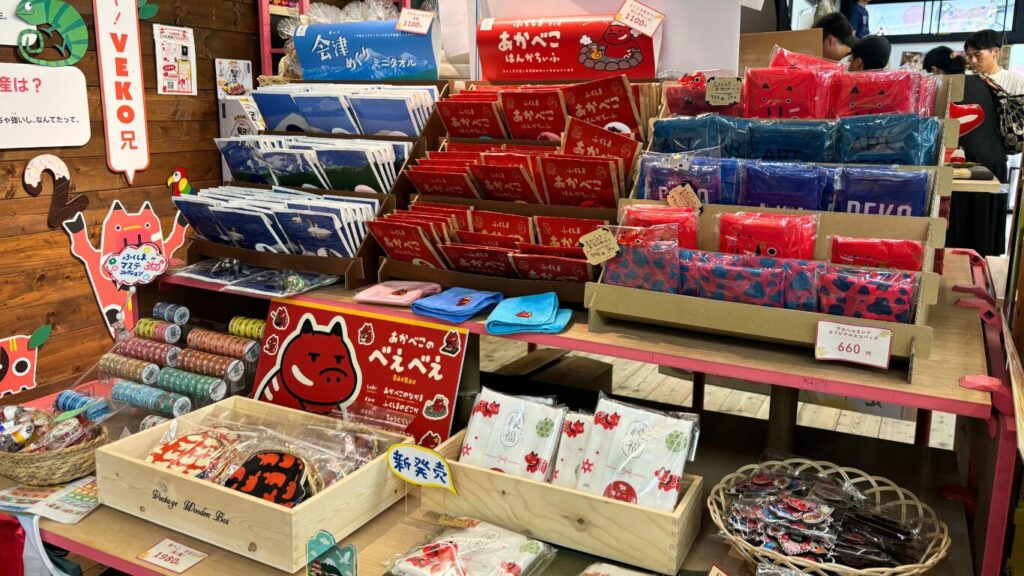
There was plenty to browse apart from the traditional red cow figurines, including akabeko-themed souvenirs that make great gifts for family and friends.
The akabeko painting was a fun way to round off my day in Aizu, and I got to bring my own creation home with me too.
Plan Your Own Private Tour Around Aizu
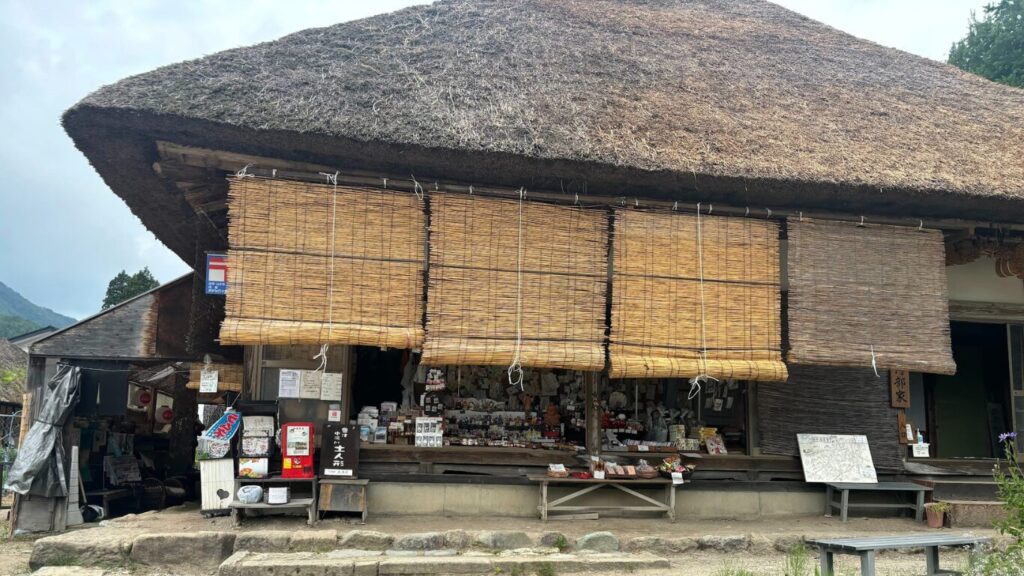
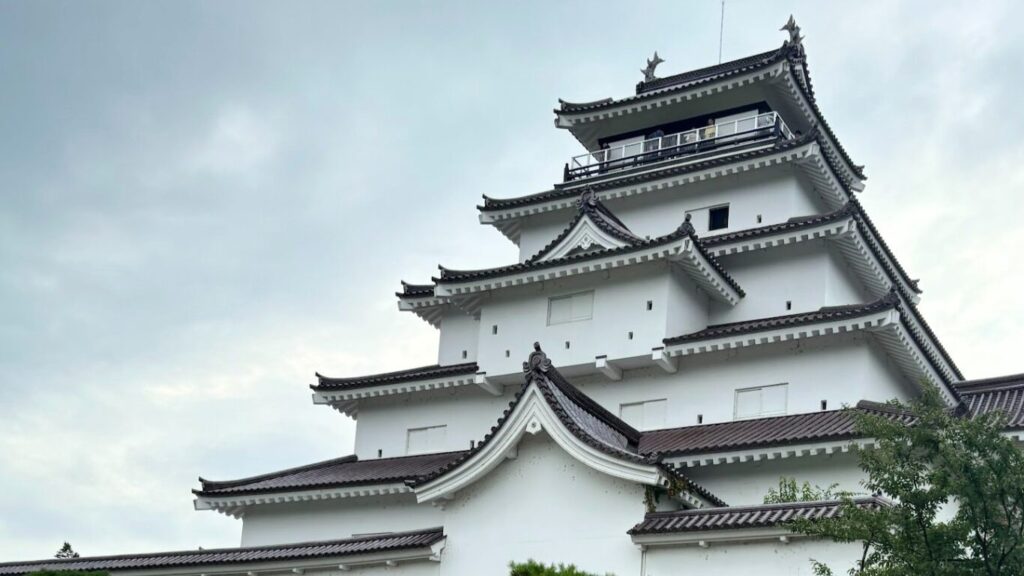
If you are planning to visit Ouchi-juku, Tsurugajo Castle and Akabeko Land in one day, travelling by private car makes it easier to move between the different stops without having to plan your day around public transport.
For my trip, I travelled entirely by private car, which meant I could travel directly from one attraction to the next and spend more time at each place. This was especially convenient for Ouchi-juku, which is located outside central Aizuwakamatsu.
You can also arrange a guided tour if you would like to learn more about the places you are visiting. A guide can take you through Aizuwakamatsu’s castle town or Ouchi-juku while sharing more about Aizu’s history and the stories behind what you see. At Akabeko Land, having a guide explain the meaning behind the akabeko can also add more context to the painting experience, so you are not simply painting the figurine without knowing the story behind it.
With Japan Navi Journey, we can arrange a private car and guided tour based on the places you would like to visit in Aizu. Your itinerary can also be customised depending on your interests, whether you would like to focus more on Aizu’s heritage, local food or hands-on experiences such as akabeko painting.
As arrangements need to be made in advance, we recommend making a reservation before your trip, especially if you already have specific places you would like to include in your Aizu itinerary. Contact us to start planning a customised Aizu tour based on the places and experiences you would like to include.
Continue Your Trip Through Tohoku
If you are travelling to Aizu from Tokyo, taking the Shinkansen (bullet train) to Fukushima is a convenient option. From there, you can continue your trip by private car, making it easier to travel between the different places you would like to visit in Aizu.
If you are planning to spend more time in Tohoku, you can also include Aizu as part of a longer trip with stops in Akita, Miyagi and Aomori. This gives you the chance to see how each part of Tohoku has its own character and places worth visiting.
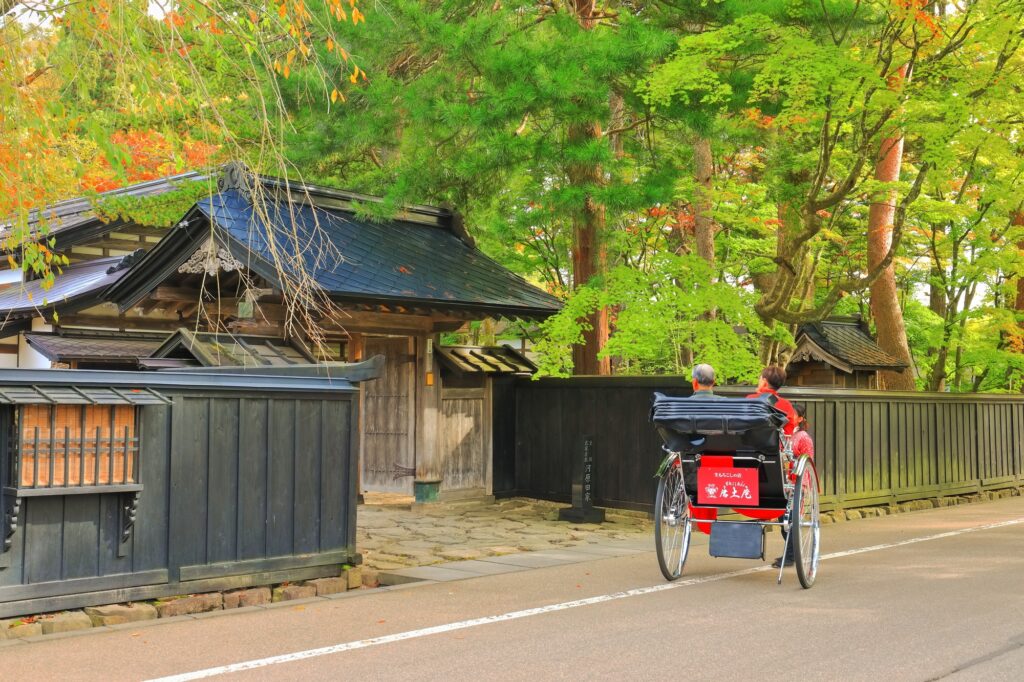
In Kakunodate, Akita, you can continue the samurai theme in an area often referred to as the “Little Kyoto of Michinoku.” The former castle town is known for its preserved samurai residences and distinctive black wooden fences. Following a visit to Aizuwakamatsu, Kakunodate gives you another perspective on the samurai towns and culture that developed across Tohoku.
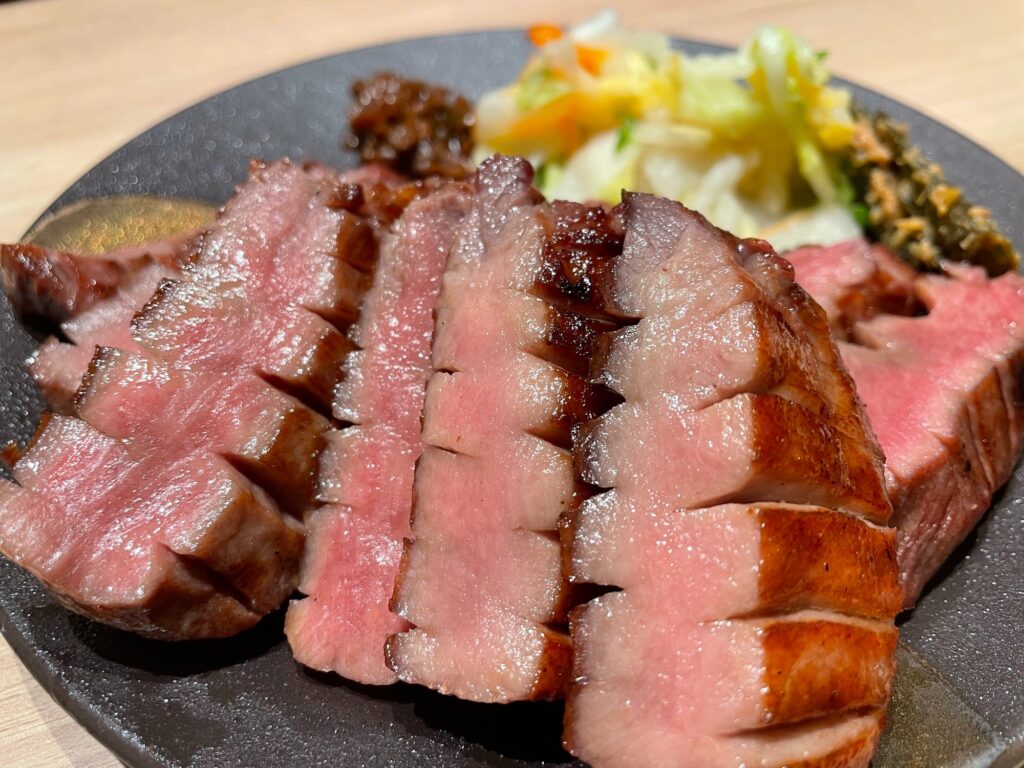
Over in Sendai, Miyagi, you can learn more about Date Masamune and visit places connected to him, including the Sendai Castle ruins, also known as Aoba Castle, and Zuihoden Mausoleum, where Date Masamune, the feudal lord who founded Sendai, is laid to rest. While you are in Sendai, Sendai beef is also a must-try, known for its tender texture and rich flavour.
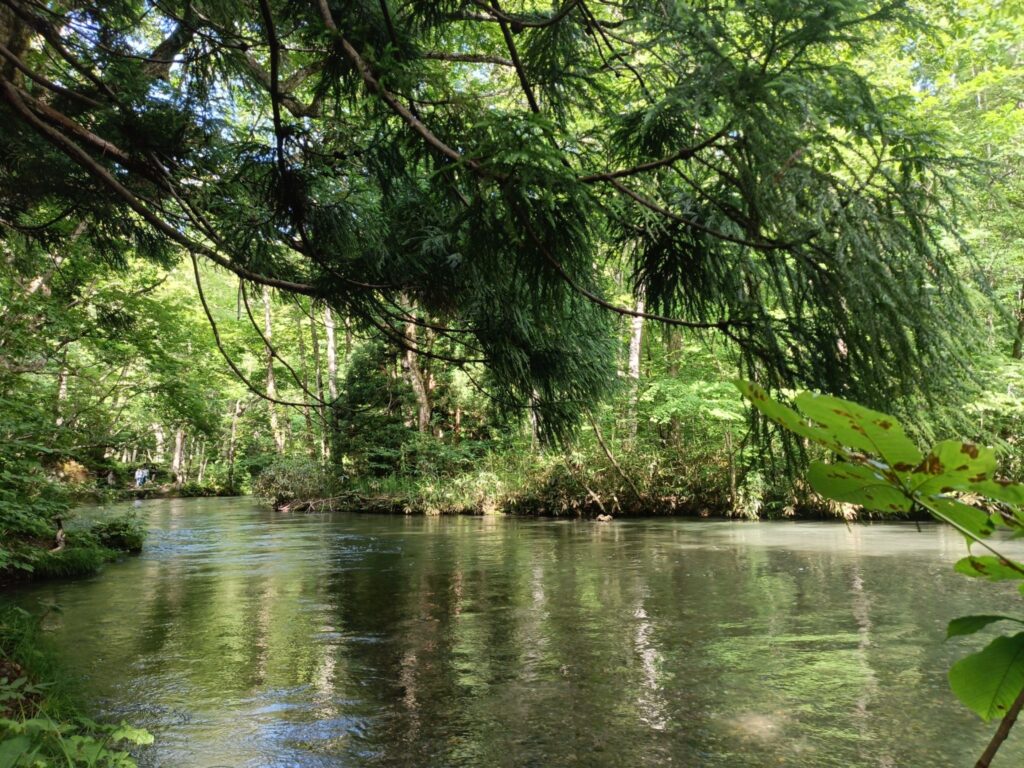
If you continue further north, Hirosaki and Oirase in Aomori offer something different again. Hirosaki is known for its castle-town setting, while Oirase Gorge takes you into nature with its forests, waterfalls and mountain stream.
With these places spread across different prefectures, travelling by private car also gives you more flexibility to build a Tohoku itinerary around the places you are most interested in visiting.
Want to see what a longer Tohoku tour could look like? Check out our 10-day winter itinerary, which takes you through Akita, Aomori, Aizu-Wakamatsu, Ouchi-juku, Sendai and more, with highlights including snow-covered landscapes, onsen and local food. View the full Tohoku tour itinerary here.
For my first trip to Fukushima, I was surprised by how much I managed to experience in Aizu. From walking through the Edo-period streets of Ouchi-juku and learning about Aizu’s samurai history at Tsurugajo Castle to painting my own akabeko, each stop showed me something different about the region.
Thinking of adding Aizu to your next Japan trip? Japan Navi Journey can help you put together a customised tour of Fukushima or a longer trip through Tohoku, depending on where you would like to go and what you would like to experience. We can also arrange private transport and guided tours to make travelling between the different stops easier.
If you are interested in experiencing a similar tour yourself, feel free to contact me, Yu, for more details. I’d be happy to help you plan an itinerary based on what you would like to experience in Aizu.
The next time you are in the Land of the Rising Sun, don’t just stick to the usual favourites. Take some time to explore places outside the main cities. You might just discover something you did not expect. Check out our travel guides for more inspiration and discover even more local travel experiences across Japan.